The great escape from the Grand Union Leicester line
This is quite a long post for a relatively short section, but it was quite eventful.
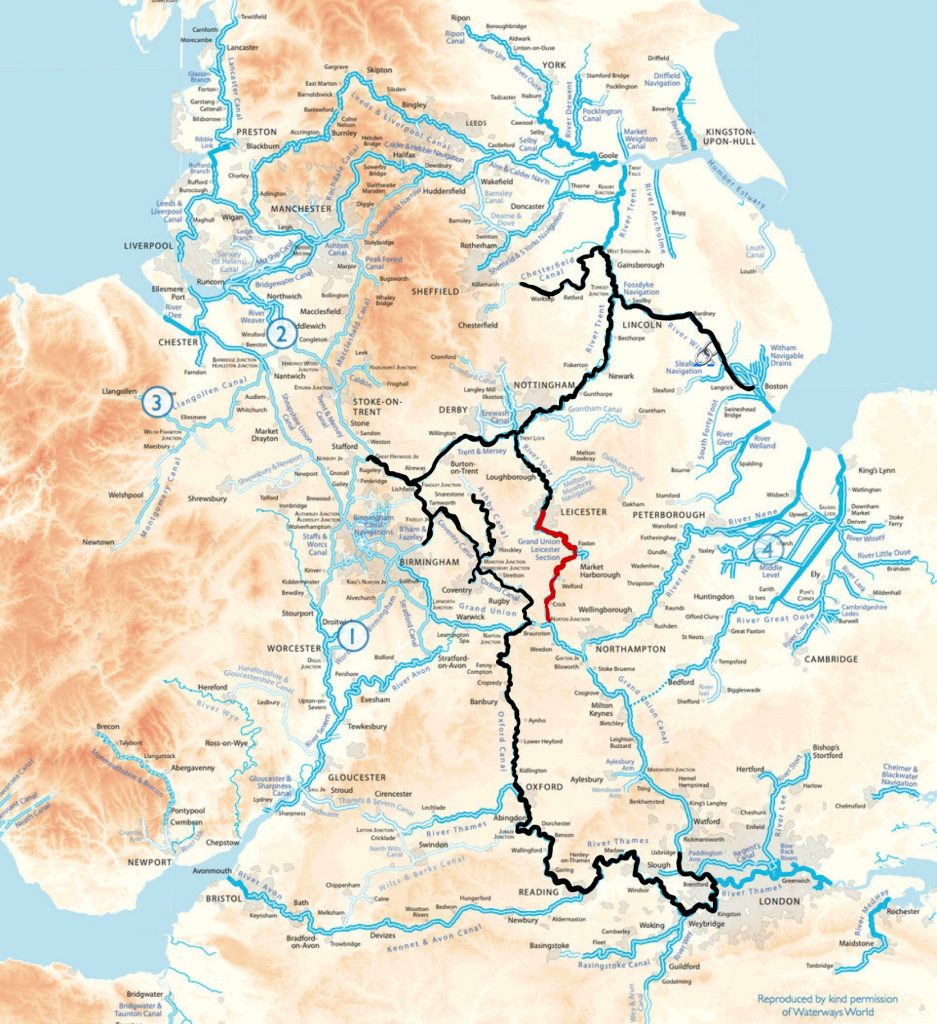
Going south from Leicester the navigation becomes the Grand Union Leicester Line. It divides into three parts:
- Leicester to Foxton: 24 locks spread out over 17 miles stepping up the canal to the Foxton locks. This was a very difficult part as the water levels were extremely low.
- Summit pound including Foxton and Watford staircase locks. The summit is 20 miles lock free and the most beautiful part of this canal. It is flanked by spectacular staircase locks on both sides.
- Watford to Norton junction: After coming down from the summit there are only two miles to go to the junction with the Grand Union main line.
History of the Leicester line
As ever a little bit of history about the Leicester line, and it is fascinating. The Grand Union Leicester line was developed by a separate company to the Grand Union (then Grand Junction) canal, the Leicestershire & Northamptonshire Union Canal Company (what a mouthful).
By 1794 the river Soar had been made navigable from the Trent to Leicester. The first canal section was built from Leicester to Market Harborough by 1809. The locks and bridges were built wide to accommodate two narrowboats side by side.
The Grand Junction canal between Birmingham and London was already open at that time and the end goal was a connection to that canal. The missing section between the existing line and the Grand Junction canal was completed by 1814 including the famous staircase locks at Foxton and Watford. The canals were soon after united by creating the Grand Union Canal Company and this part was called the Grand Union Leicester line.
But here is the catch: the canal was built with wide enough bridges, but the Foxton and Watford locks were built with the width of one narrowboat only, which blocked wider boats from going through. This was a severe limit on the commercial viability of this canal.
The solution was conceived as an incline plane that could transport wide boats in big tubs (called caissons) up and down a slope driven by powerful steam engines. The incline plane next to the Foxton locks was opened in 1900, at a time when the railways had already taken a substantial chunk out of the canals’ business.
The undertaking was doomed. The company did not have the funds to build the same at Watford so wide boats still couldn’t pass through.
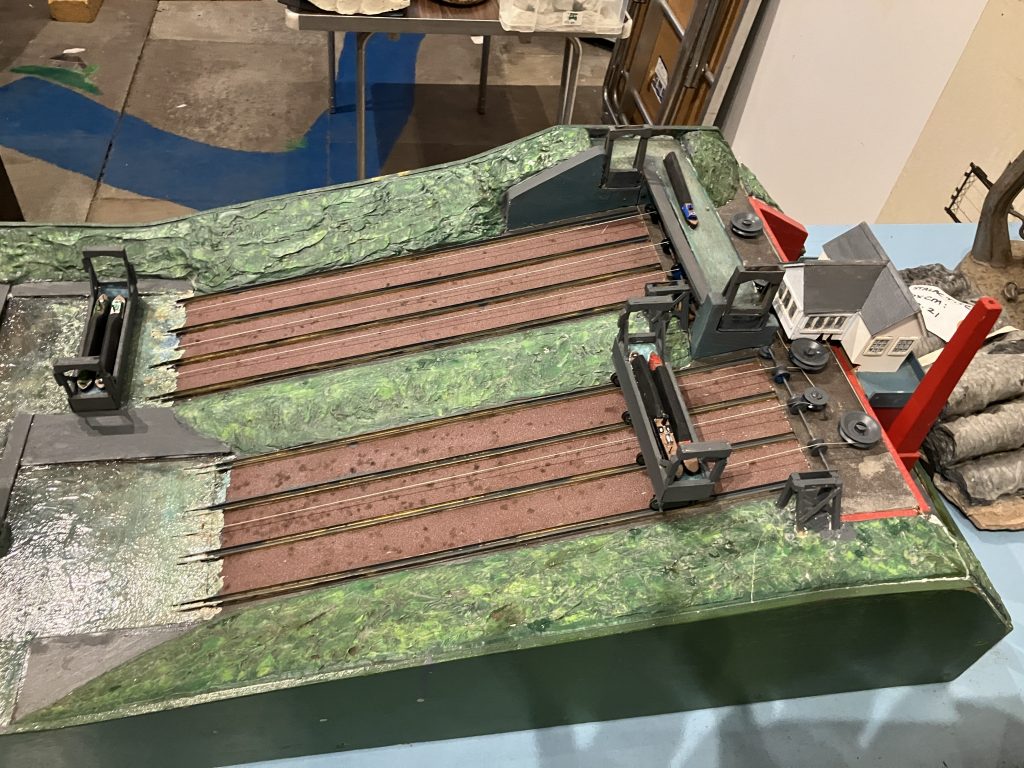
The incline plane was closed after only 10 years of operation and all traffic reverted to the locks. Today only the boiler house survives which houses a small museum about the Foxton site.
Leicester to Foxton
Now back to my journey. I left Leicester on my own as my lock buddies from before Leicester had already left a day earlier. We all knew that restricted opening times had been imposed on a stretch ahead comprising 21 locks because of low water levels, but it was not yet cause for alarm.
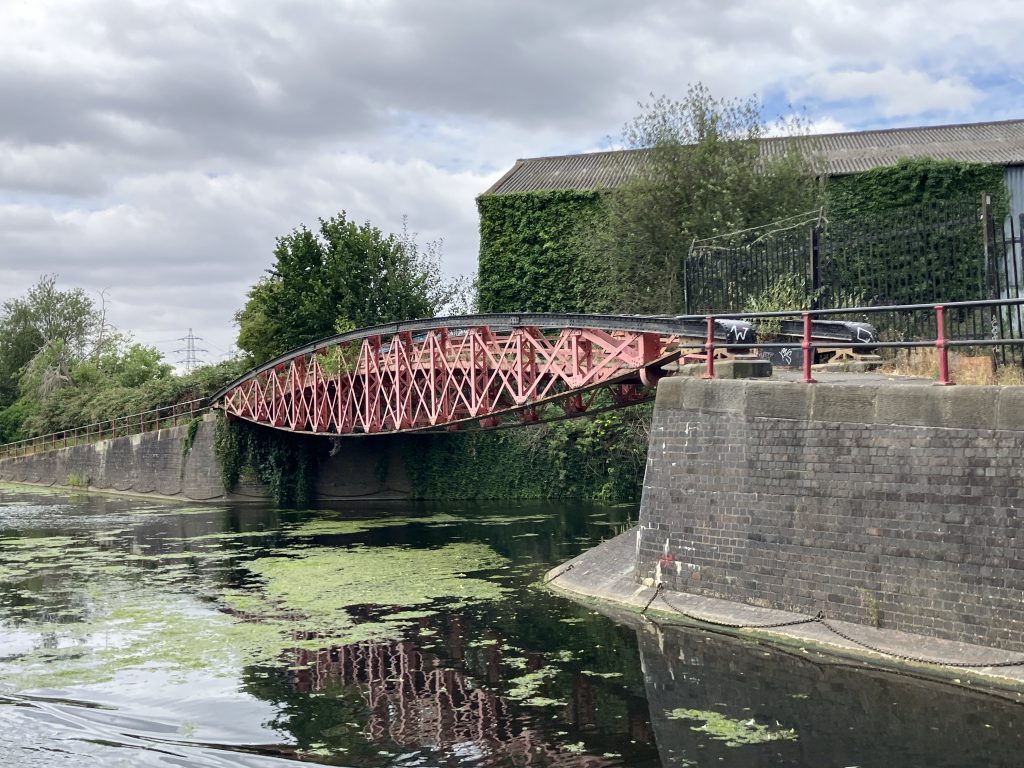
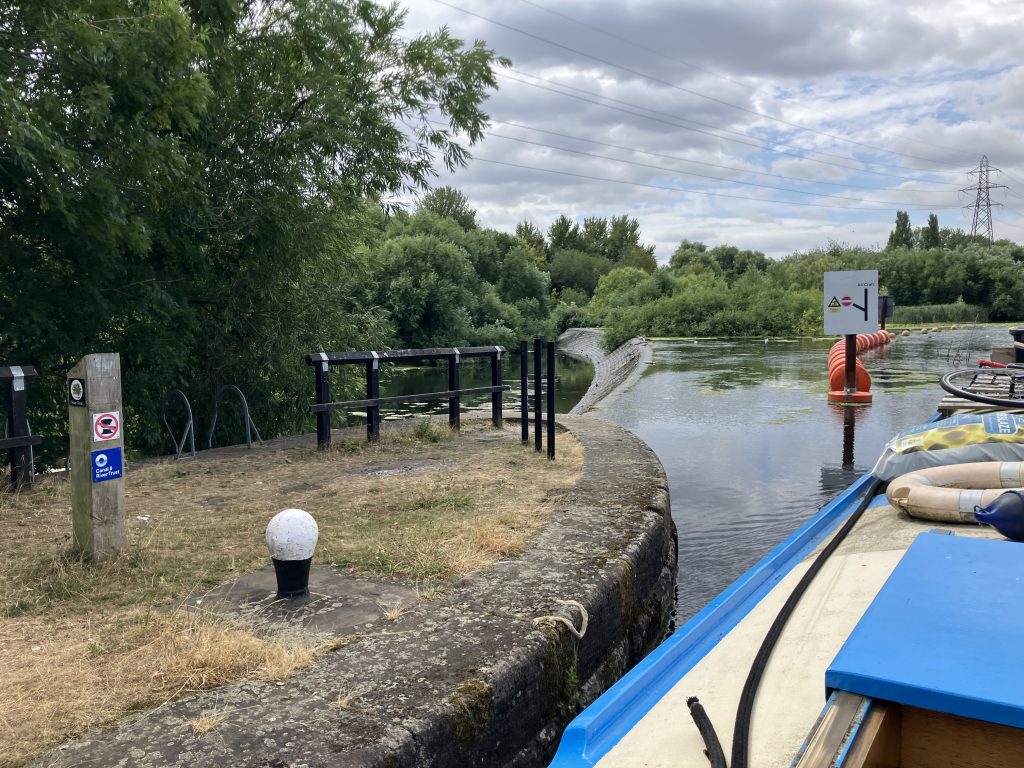
Just out of Leicester, the river Soar joins the canal for a bit again and the navigation once again meanders around some tight bends. If vegetation was challenging the other side of Leicester, this side was almost impossible. Imagine a curtain of leaves that obscure a tight bend just ahead or going through a curtain of soft willow branches only to find that there is a solid branch an arm thick just behind it ready to sweep everything off the roof. I am steering the 60ft boat from the back and the bow may well be in trouble, but I can’t see it.
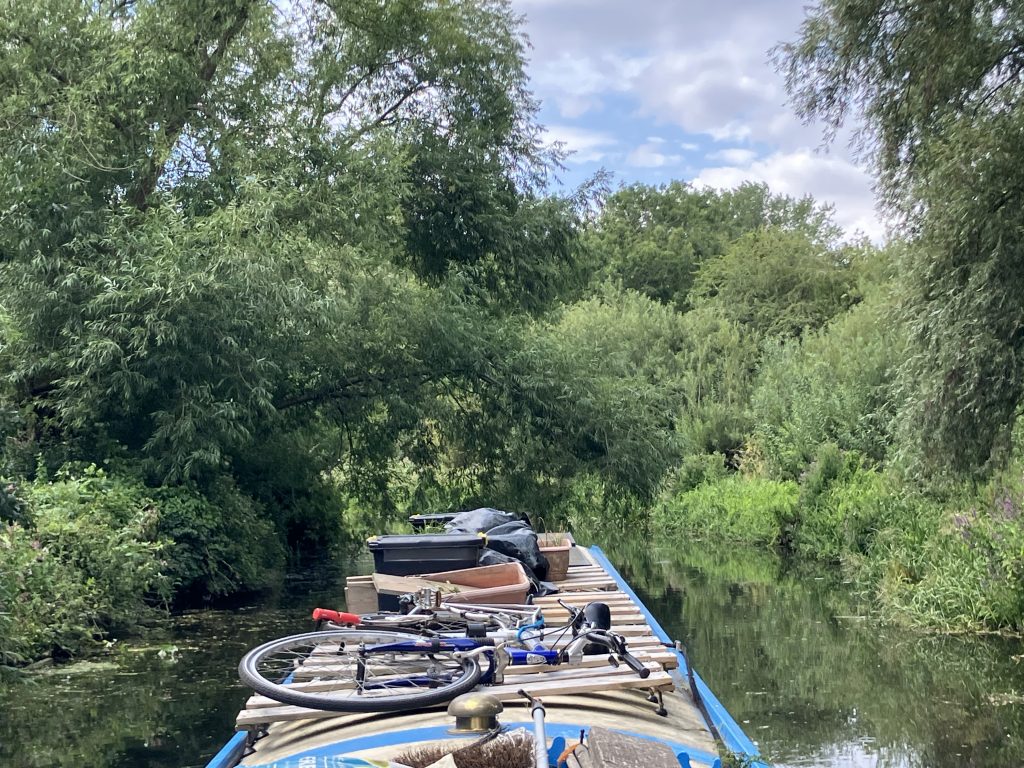
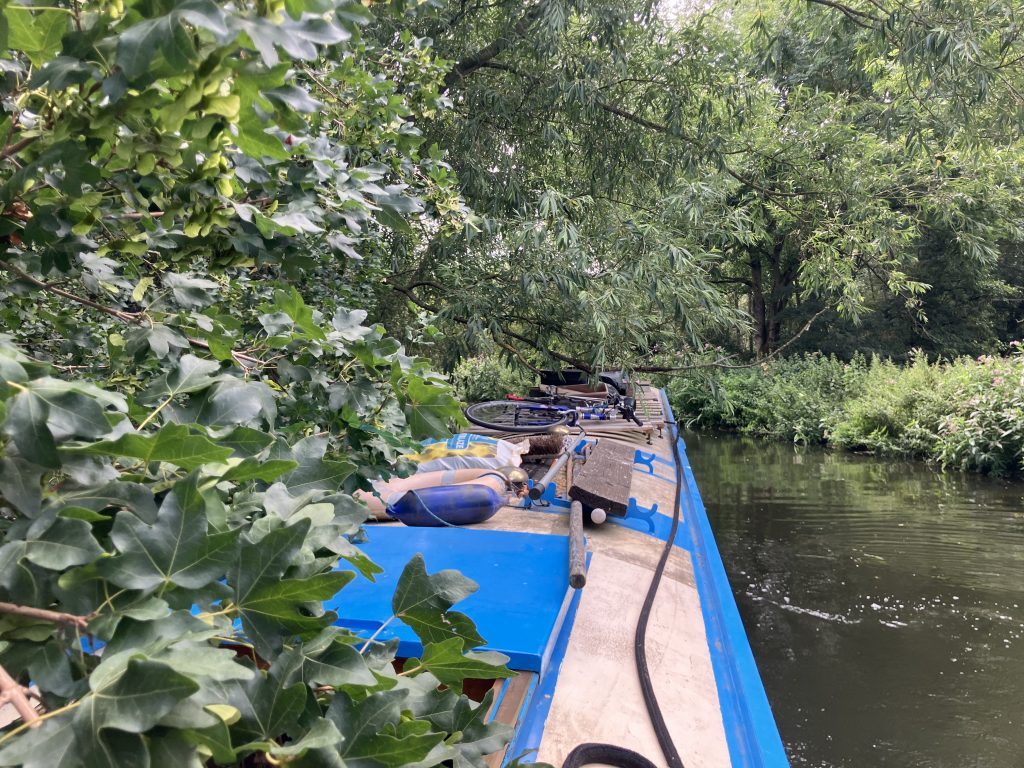
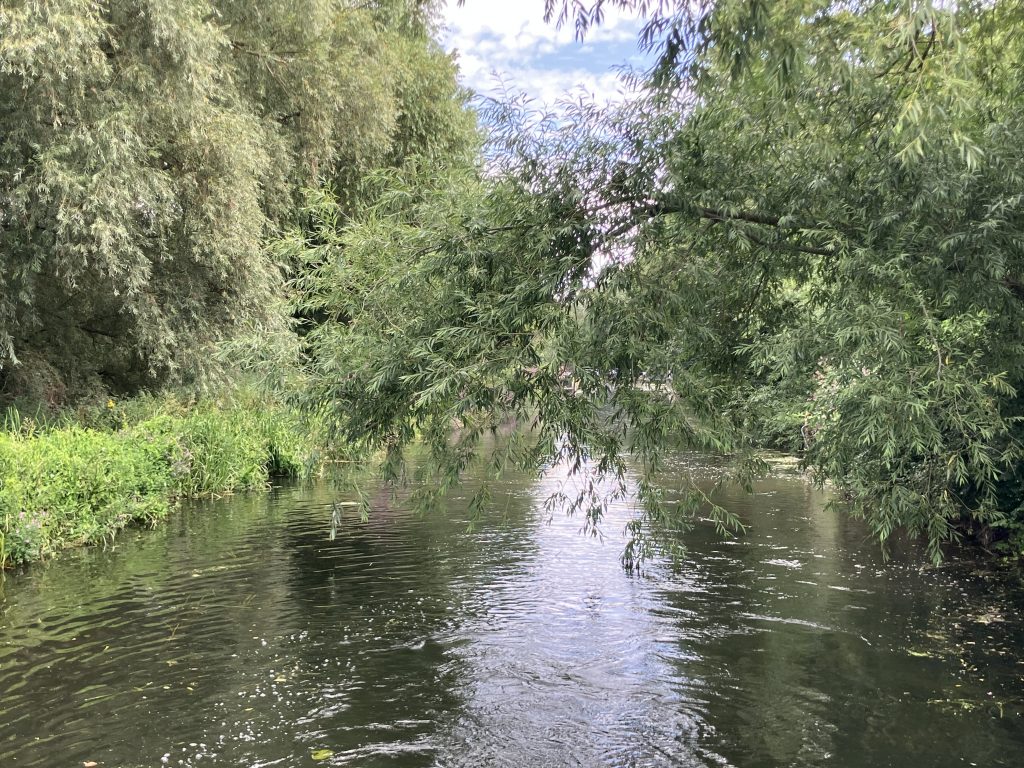
After having struggled through the jungle, I rejoined my lock buddies at moorings just before the time-restricted section. I was planning to spend a few days there to relax in nice countryside after the urban environment of Leicester. The Australian couple from the Soar was also there. It is so nice to meet people again and again as we are all going the same way.
The next day a new notice came through saying that the restricted stretch was actually going to close “indefinitely” in a week’s time due to extremely low levels. That focused minds and the next morning all four boats from the moorings set off when the lock was unlocked in the morning. We went in two pairs to share the locks and I set off with the Australians.
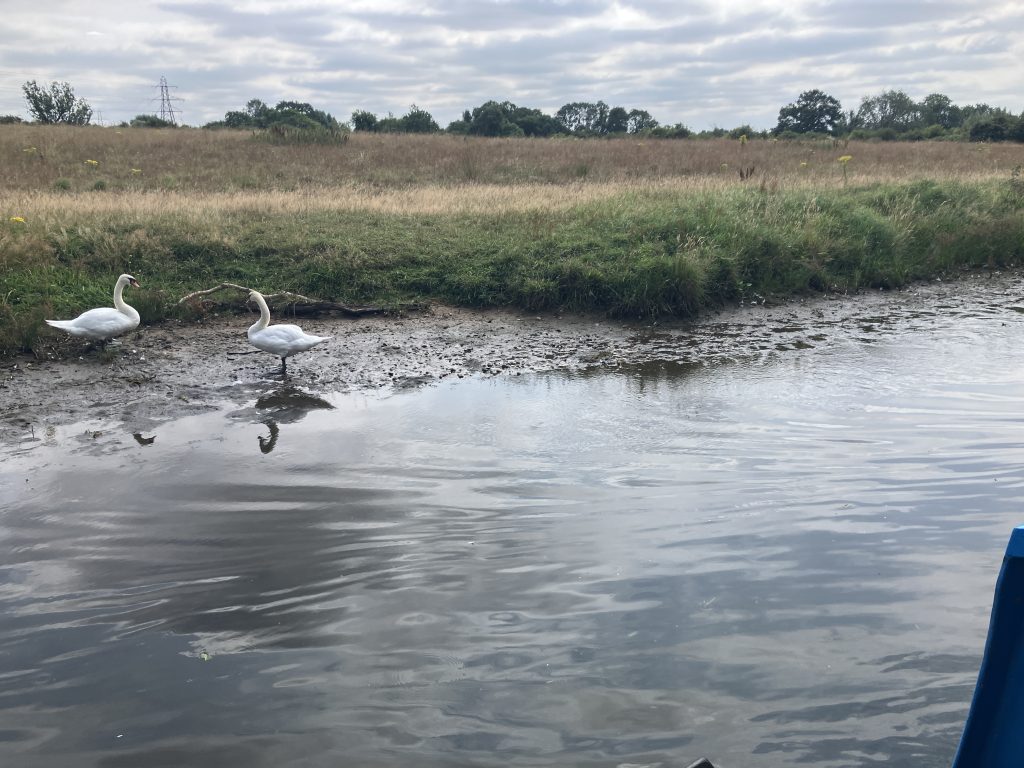
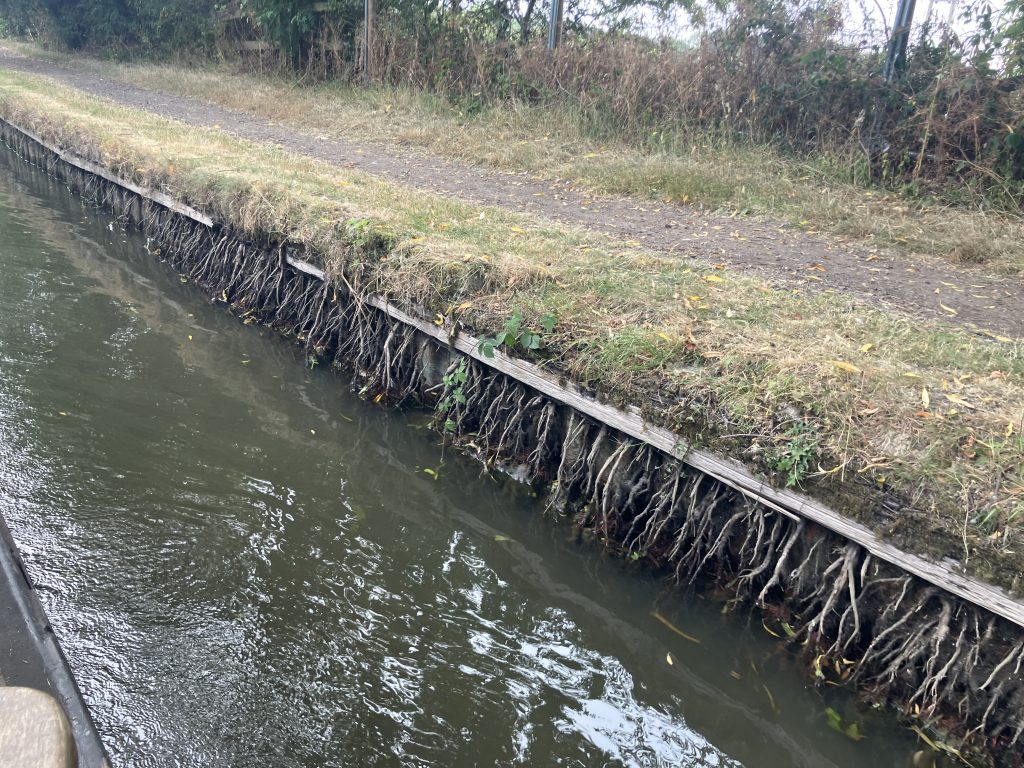
Our first taste of the water problems came, when the Australians grounded on a particularly shallow bend. I could still move, but at a snail’s pace. I crept forward to the next lock and opened the paddles on both sides to let some water through the lock and refloat the boat. It took a while but finally the water came up by about 2 cm, which was enough to refloat them and get the other two boats behind through as well.
Everything went OK after that until I made one of the most stupid mistakes I could have made.
Coming out of a lock and being distracted by chatting to my lock buddy I let my centre line drop in the water.
The inevitable happened. The rope wrapped itself tight around my propeller and the engine stopped very suddenly with a loud CLUNK. That was the end of my cruise for the day. After helping me get to the side and mooring up to deal with the situation, the other three boats chugged on.
I had cleared my propeller of weed many times over the last weeks, but the tightly wound rope defeated me. After sawing at it for a good 15 minutes with my trusted knife and getting nowhere I decided that there was only one way: get in the water and try to unwrap it. The water was only about waist deep and pleasantly warm. I could feel the loose end under water and was able to slowly unwind it. I was happy to find that nothing was damaged and after some more cursing and a hot shower I put it behind me as a lesson learnt the hard way.
So now I had lost my lock buddies and I didn’t meet any other boats going my way anymore. I had to negotiate the remaining 17 big locks on my own over the next few days to make the deadline before the locks closed.
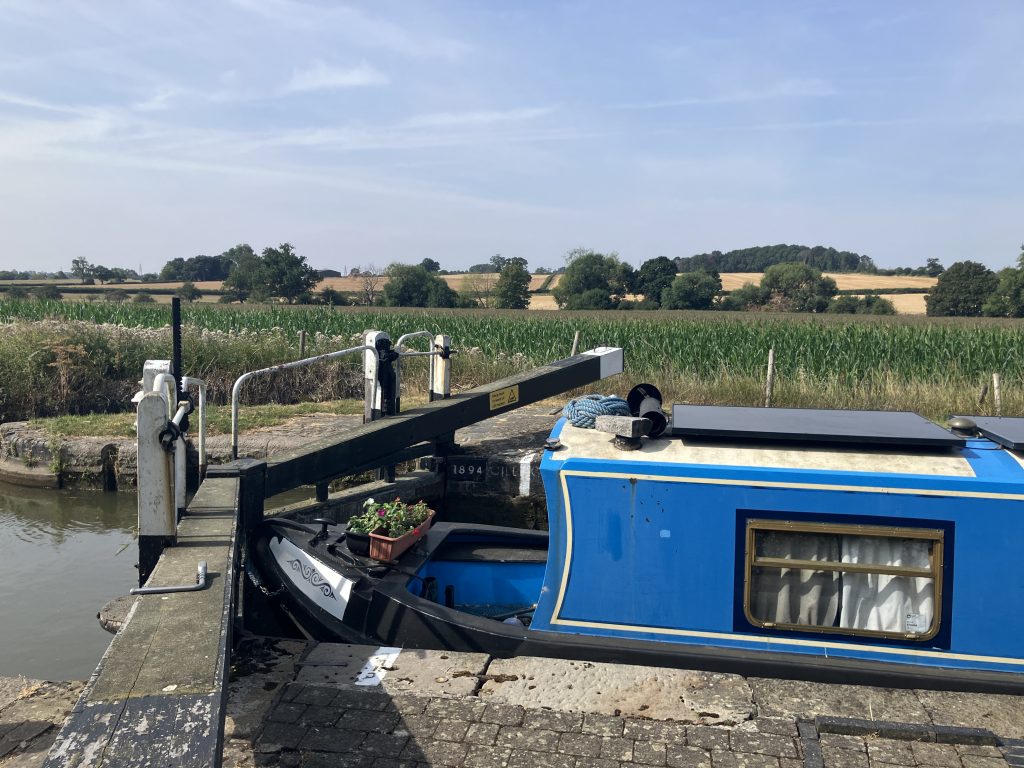
It was awful and some of the most difficult boating I have ever done. All these things happened:
At the top of one lock, the pound was very low. Against all evidence I tried to leave the lock, but got grounded about a boat length from the lock. No chance going anywhere. With a great amount of rocking, blasting reverse and using my pole I was able to retreat back into the lock, tie the boat up and walk half a mile to the next lock to let some water down.
As I watched the water level rise, it suddenly occurred to me that I had tied up the boat quite tightly in the lock and I suddenly had visions of the boat tilting as the level rose. I almost ran back to the boat and fortunately it was still fine. The water level was soon high enough to proceed to the next lock.
Further on a second pound was also almost empty. This time I was clever enough not to attempt to navigate through it, but straight away walked up to let water down.
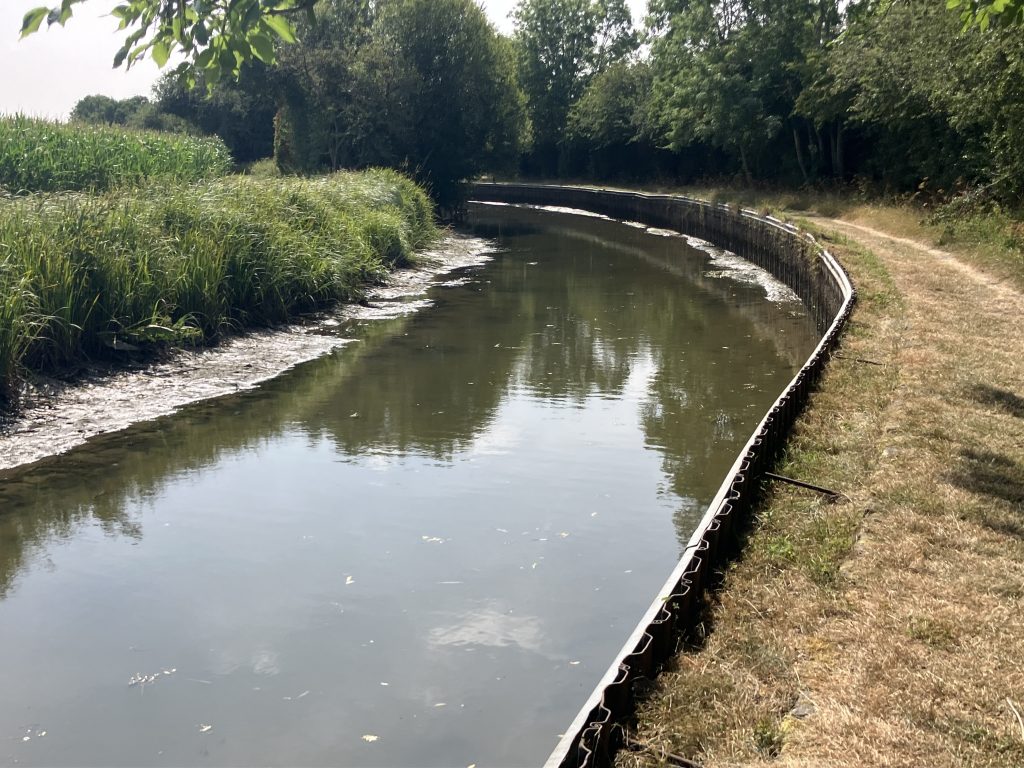
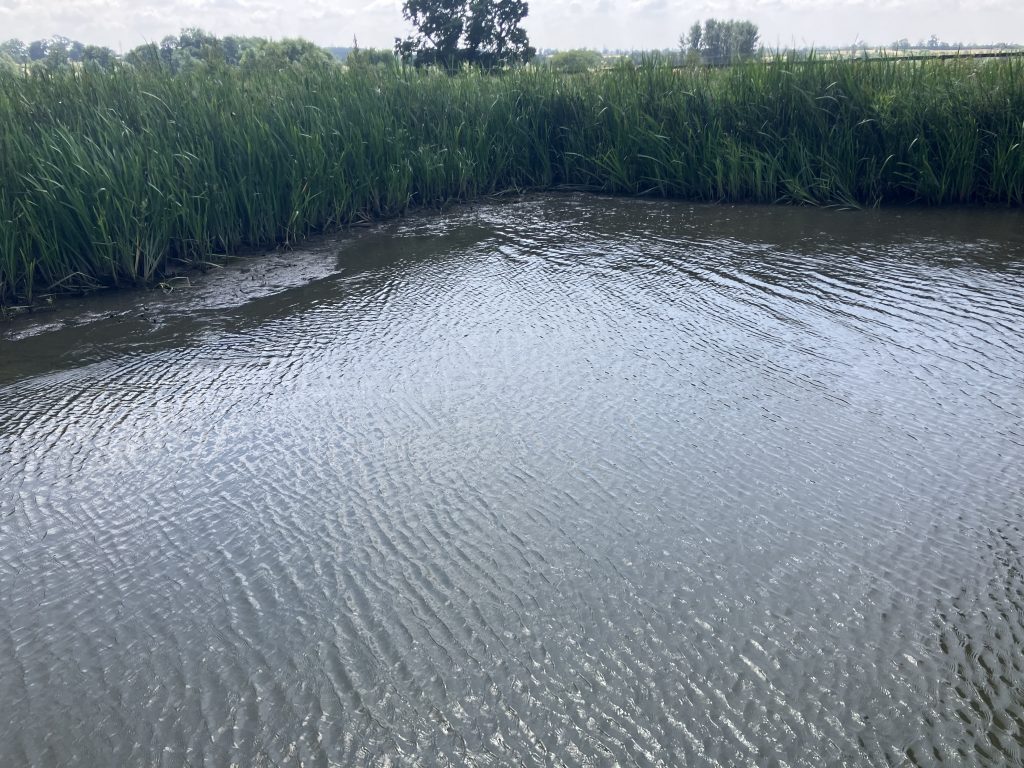
A number of locks had bottom gates that just would not stay closed. As these are wide locks it requires walking (or rather running) around to keep closing the gates faster than they open again. Even cracking a paddle open to encourage the gates to close did not help. On one lock I had to wait for some walkers to hold the gates closed while I started to let water in.
A recently fallen tree almost blocked the canal and I was just about able to scrape through.
At one lock a big widebeam came out of the lock backwards as I was approaching. The poor man had got stuck further up and reversed down five locks to get to a place where he could turn around. It was so shallow though that he really struggled. When I left the lock 15 minutes later, he was still across the canal. If he did make it, there was no way he would have been able to get past that fallen tree.
Have I mentioned that it was also pretty hot weather and I was really not up to doing this hard lock work in these conditions.
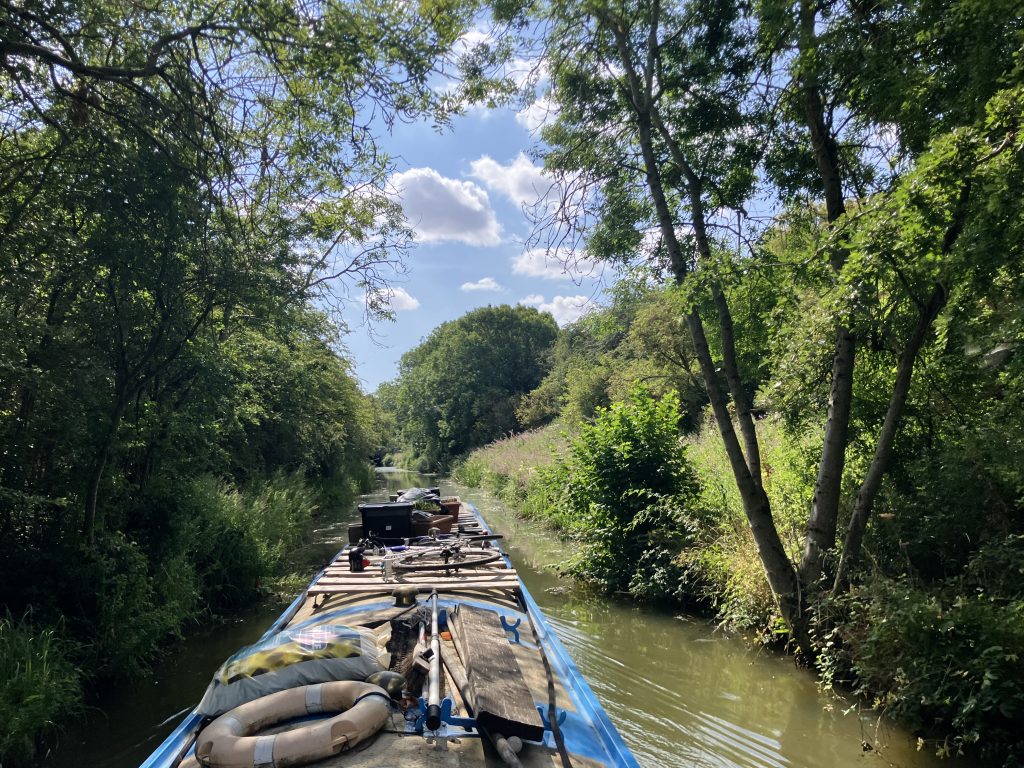
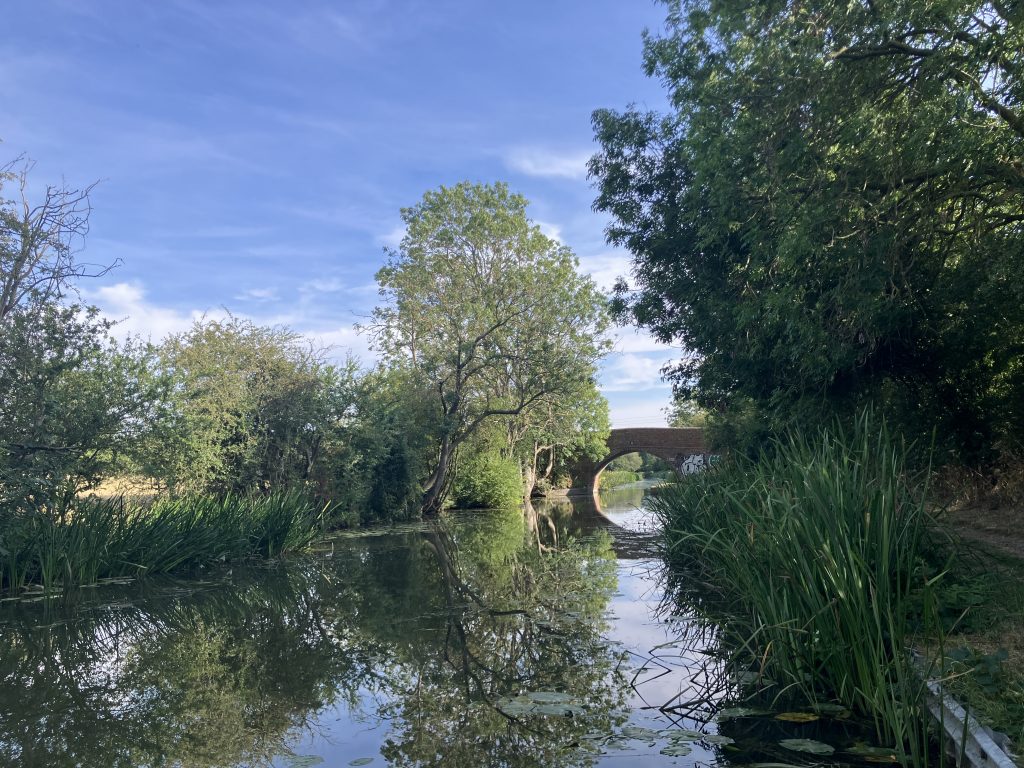
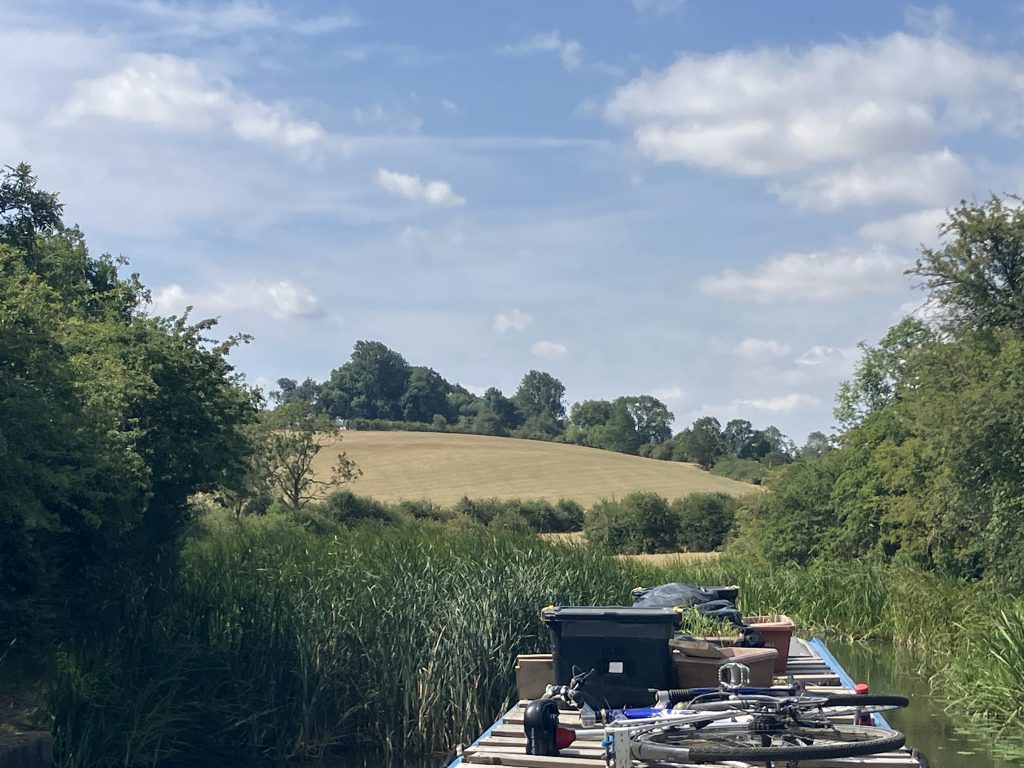
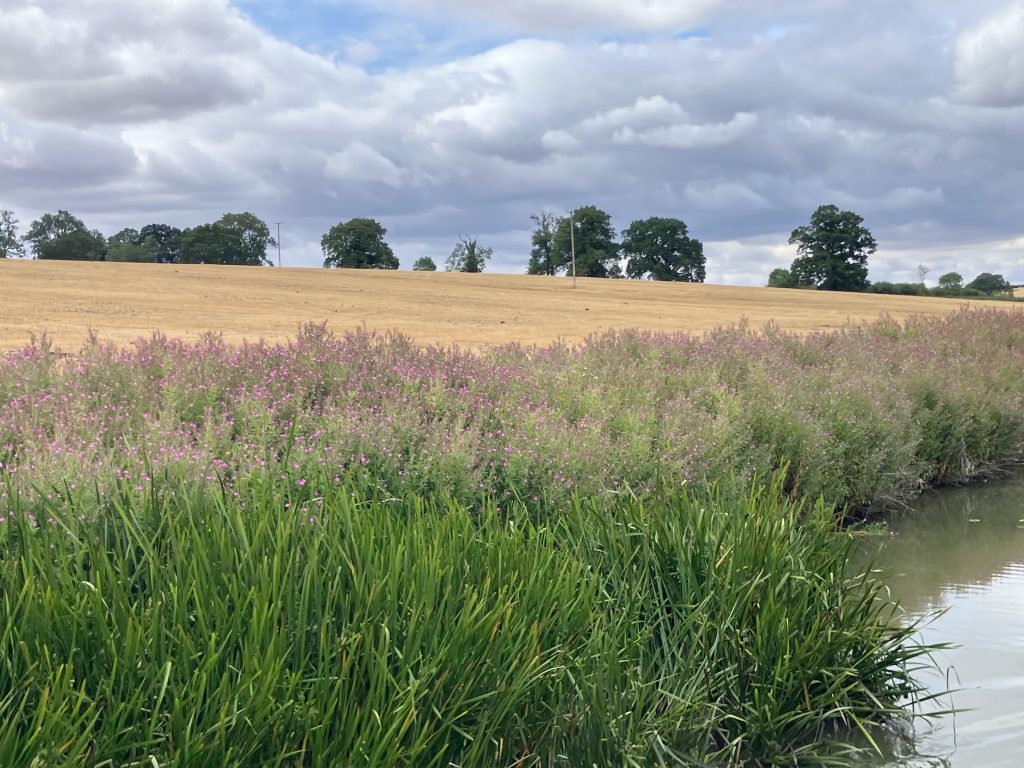
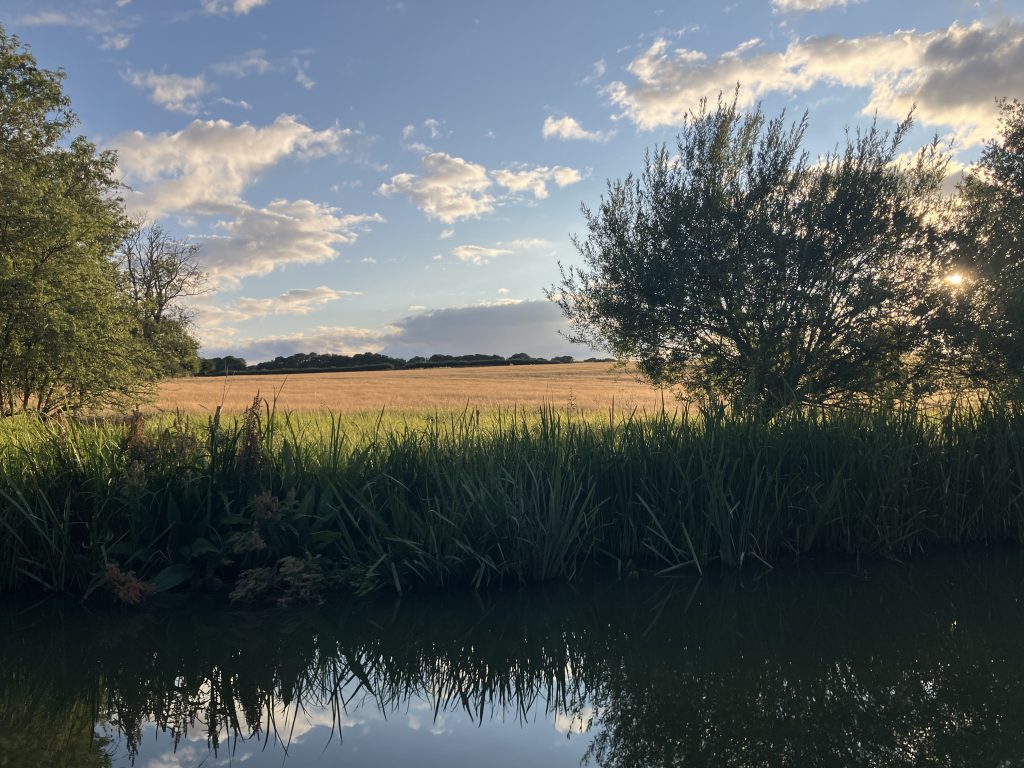
But it was not all doom and gloom. Despite the hard work I could also appreciate how pretty this section is:
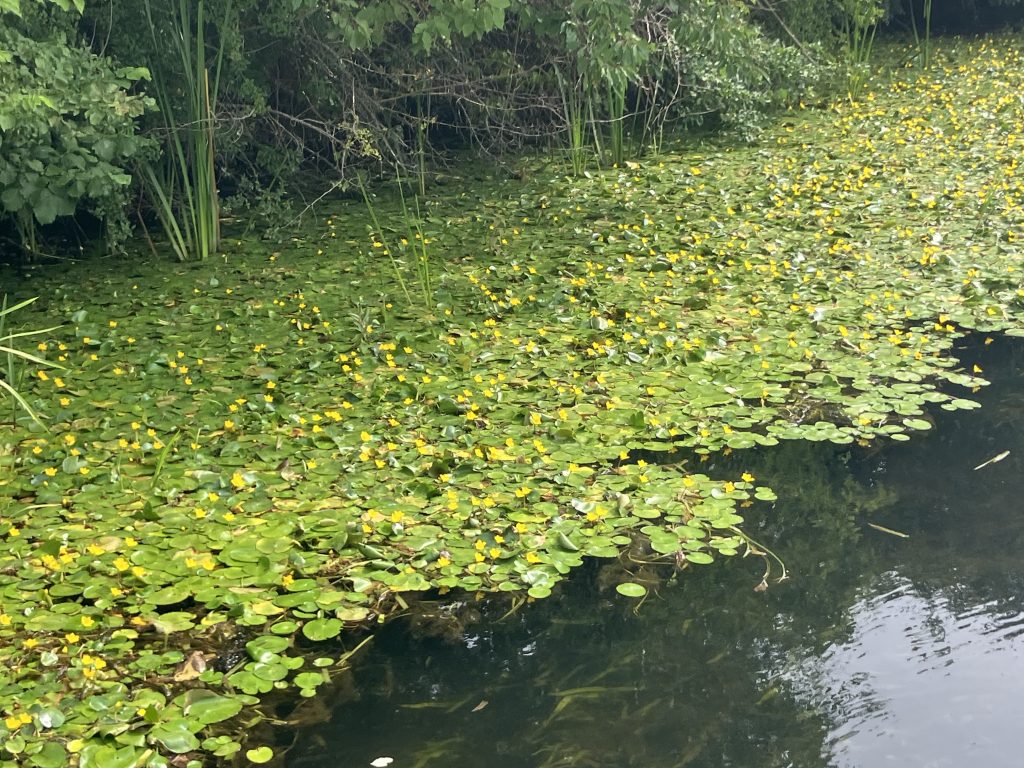
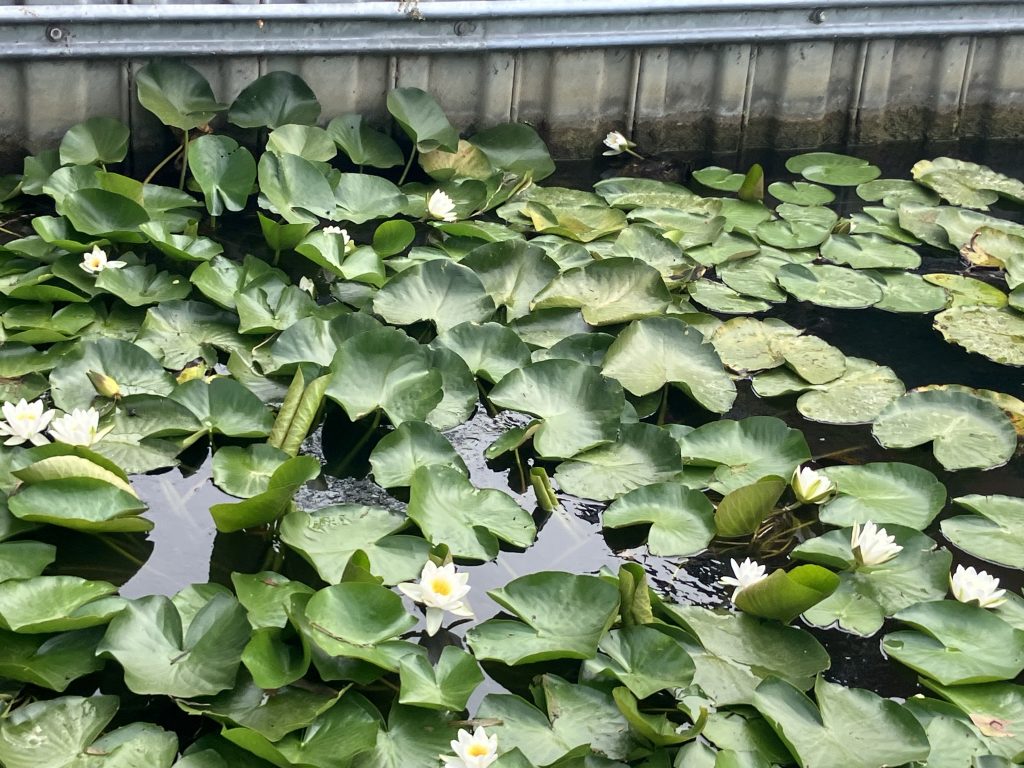
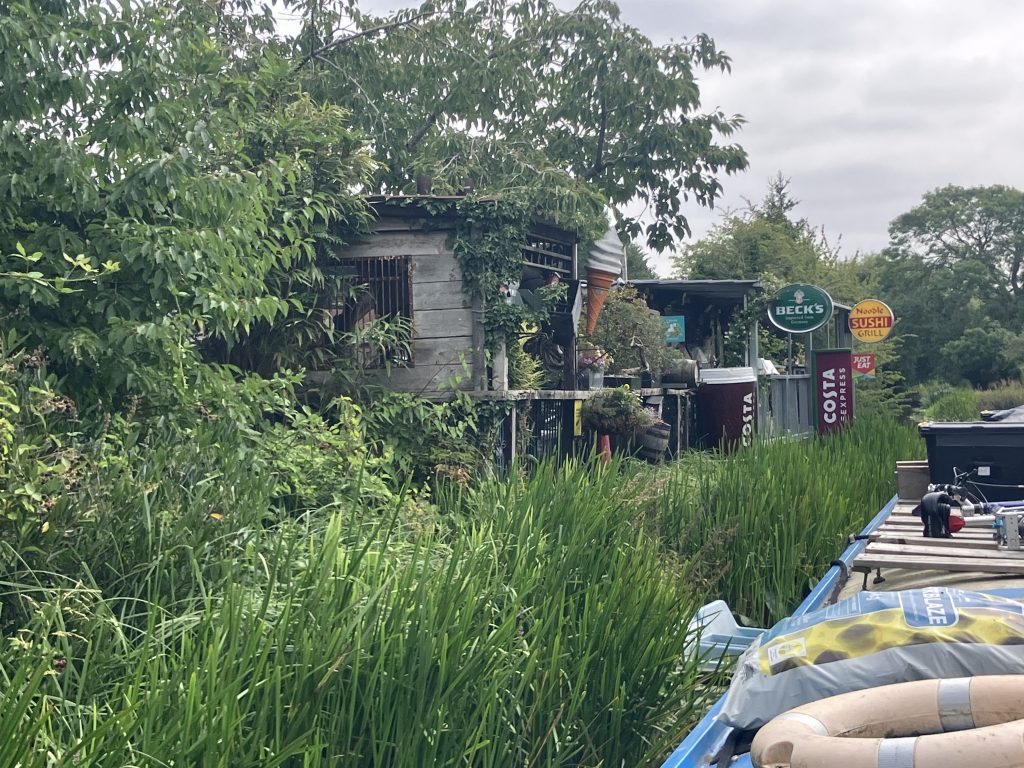
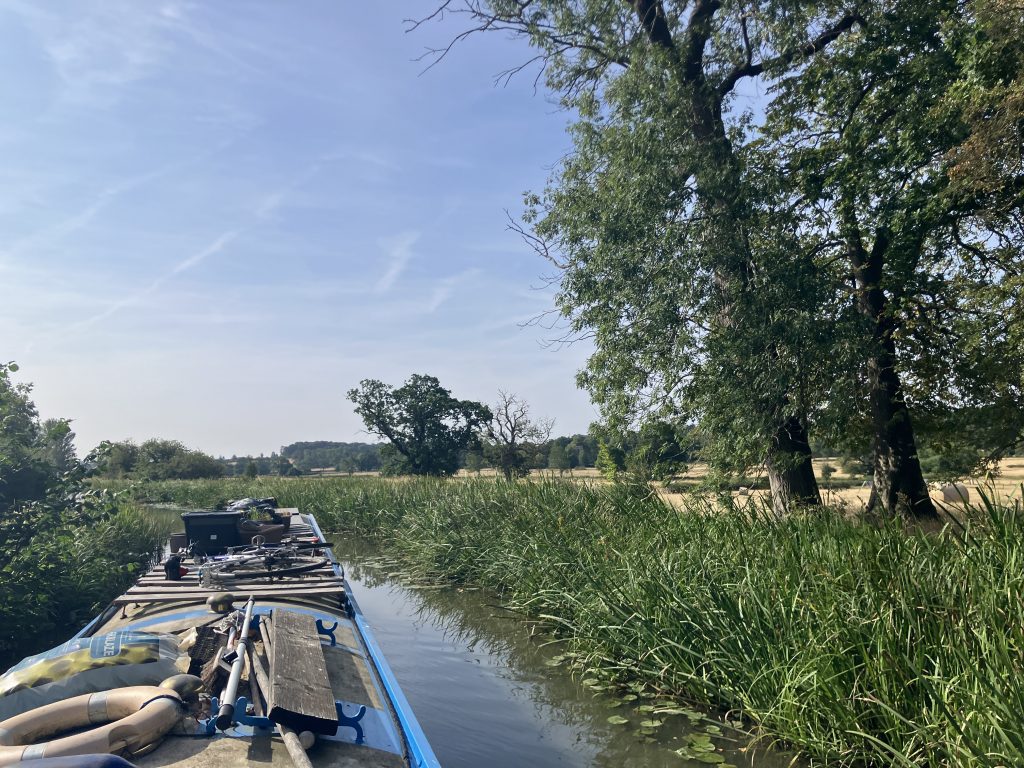
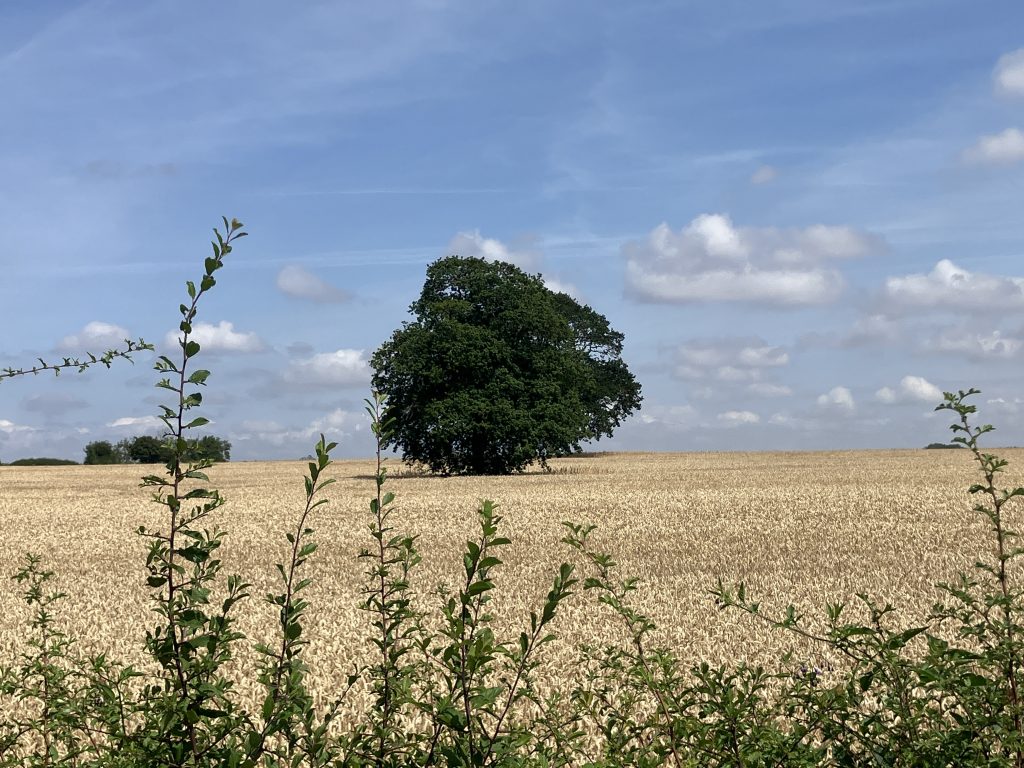
Finally I went through the last of the restricted locks about two hours before it was locked up for the day. Shortly after a new notice was sent saying that the water situation was even worse than expected and that the locks would now not reopen at all anymore (this was four days before the previously announced date). I heard that boats still stuck in this section at the time needed to call CRT to be escorted out individually. A little more warning would have been nice!
The summit – Foxton to Watford
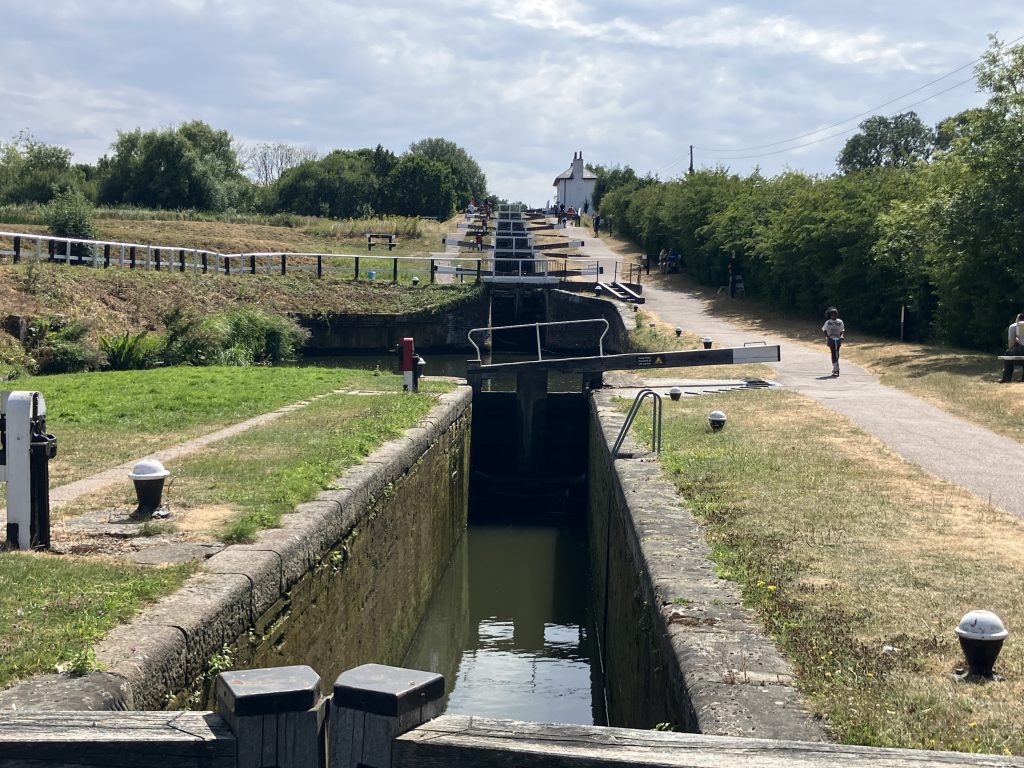
So I chugged on to the Foxton locks. The Foxton staircase lock flight is one of the most impressive structures of the English canal network and a major attraction for the locals in Leicestershire.
Staircase locks are special as one lock directly connects to the next without a pound in between. Going through them is therefore quick. The Foxton locks are arranged in two sets of five locks each with a short pound in between for boats to cross over.
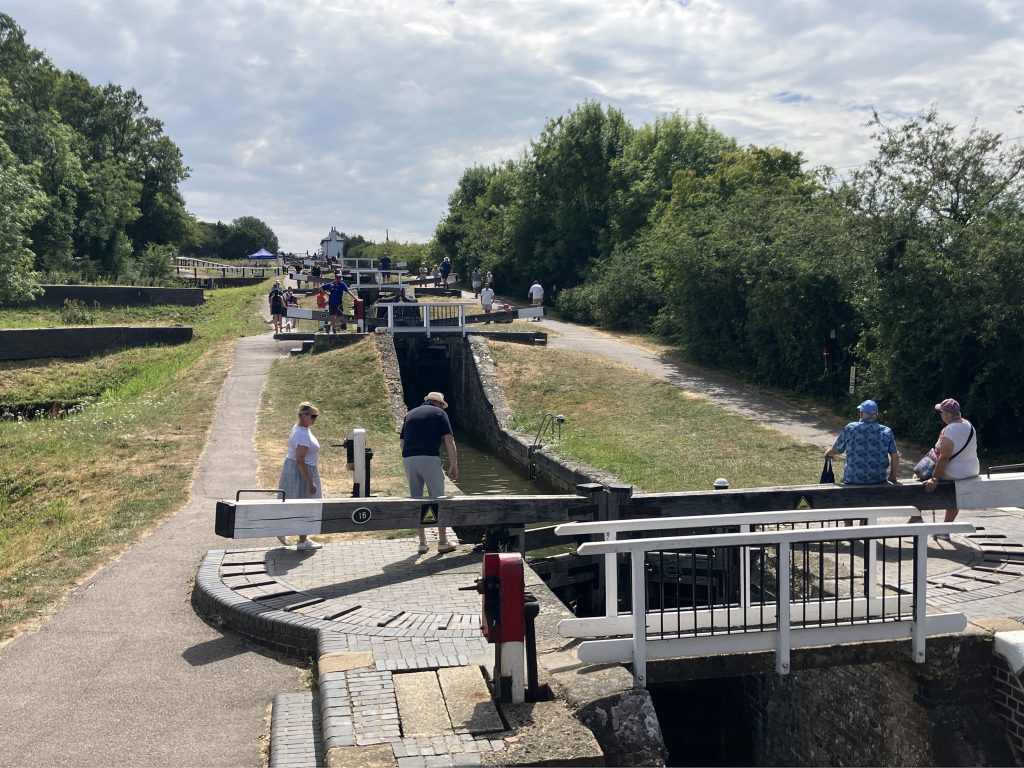
I went through on a Sunday with the maximum number of gongoozlers watching. As a single-hander I staid on the boat and two volunteers worked the locks all the way up for me. I just had to move from one lock to the next and had plenty of opportunity to chat with the spectators. The ten locks took only about an hour and it was a lot of fun.
The side ponds at Foxton
Forgive me for getting a bit technical for a moment (non-boaters may well want to skip this section).
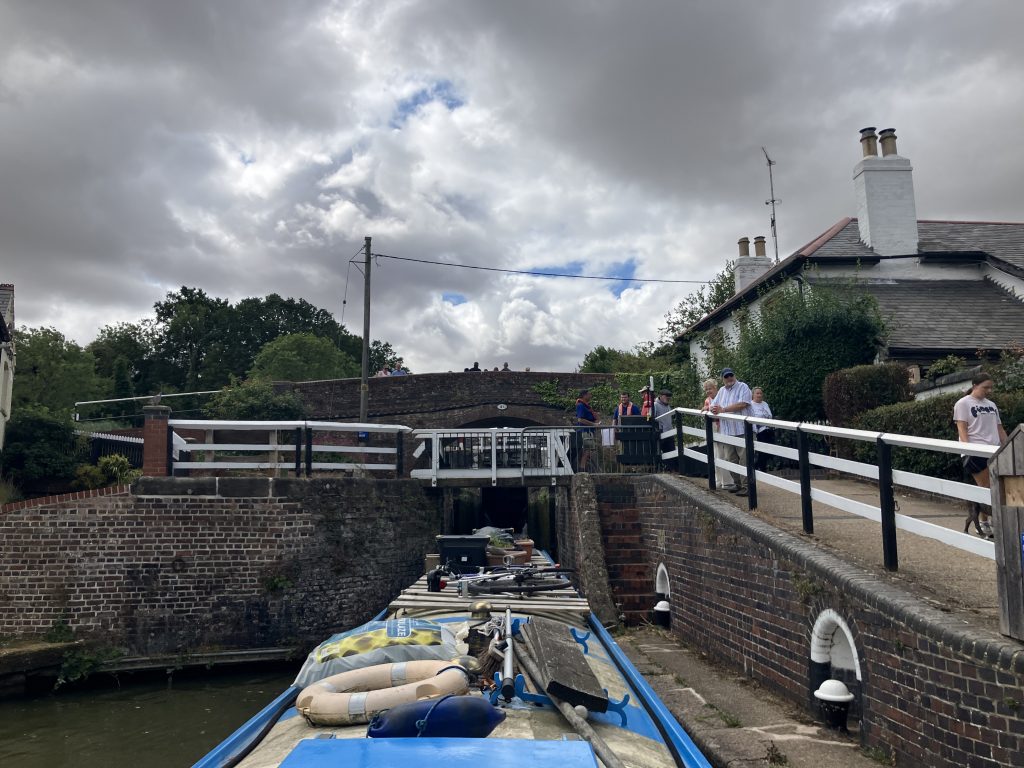
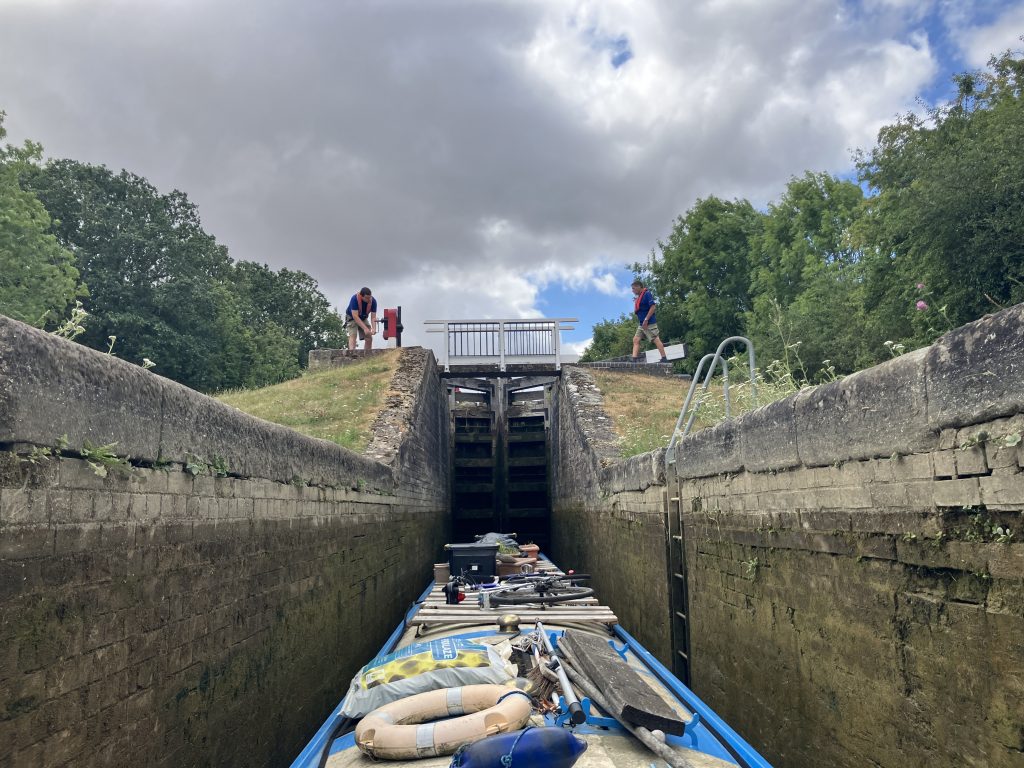
The Foxton flight has side ponds. Usually a side pond is used to conserve water. The water from a lock is let out into a side pond and used later to refill the same lock partially. The ponds are usually filled and emptied by paddles at the side of the lock. However, at Foxton the volunteers operated the paddles on the side of the lock above the one I was in. I was puzzled and asked them afterwards how it all works.
The reason for the different operation is the fact that they are staircase locks. When going up, the water from the lock above is directed into the side pond below and back into the lock that you are trying to fill at the same time. Essentially the side pond acts more like a normal pound between locks. There is no direct connection to let water from one lock into the next.
The side ponds also have overflows in between them which keeps them topped up.
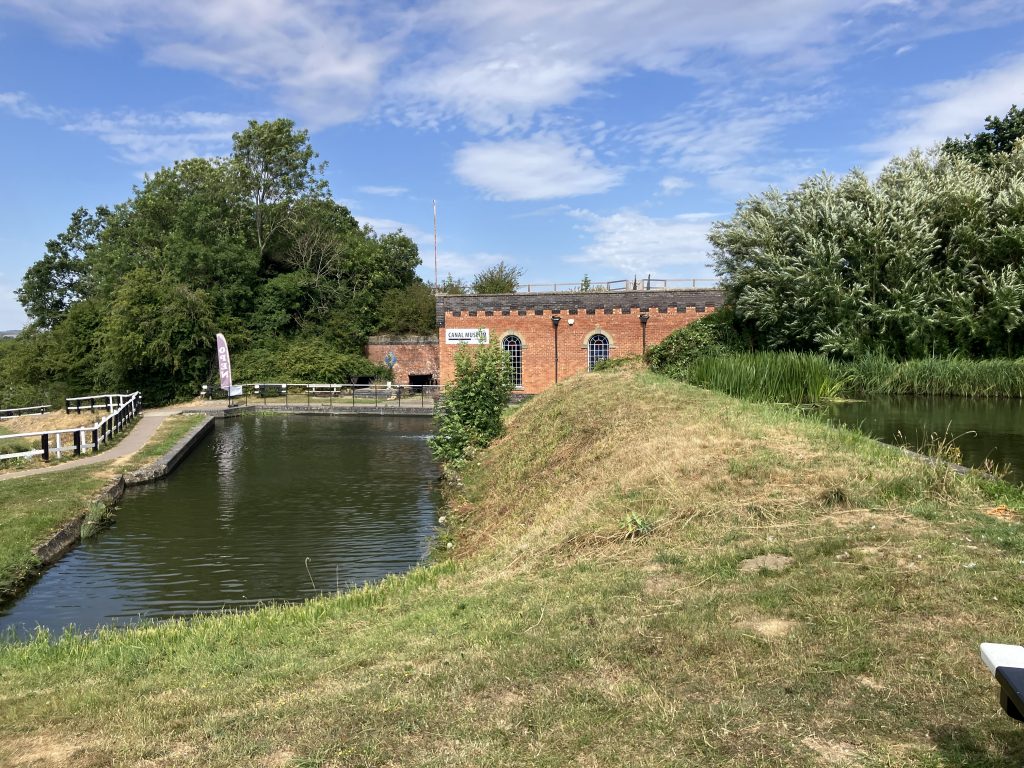
I think this means that the ponds don’t really conserve water, but they speed up the operation of the flight as they are reservoirs of water that can be used alongside each lock rather than always having to get the water all the way from the top.
You probably never wanted to know this level of detail, but now you do!
The summit
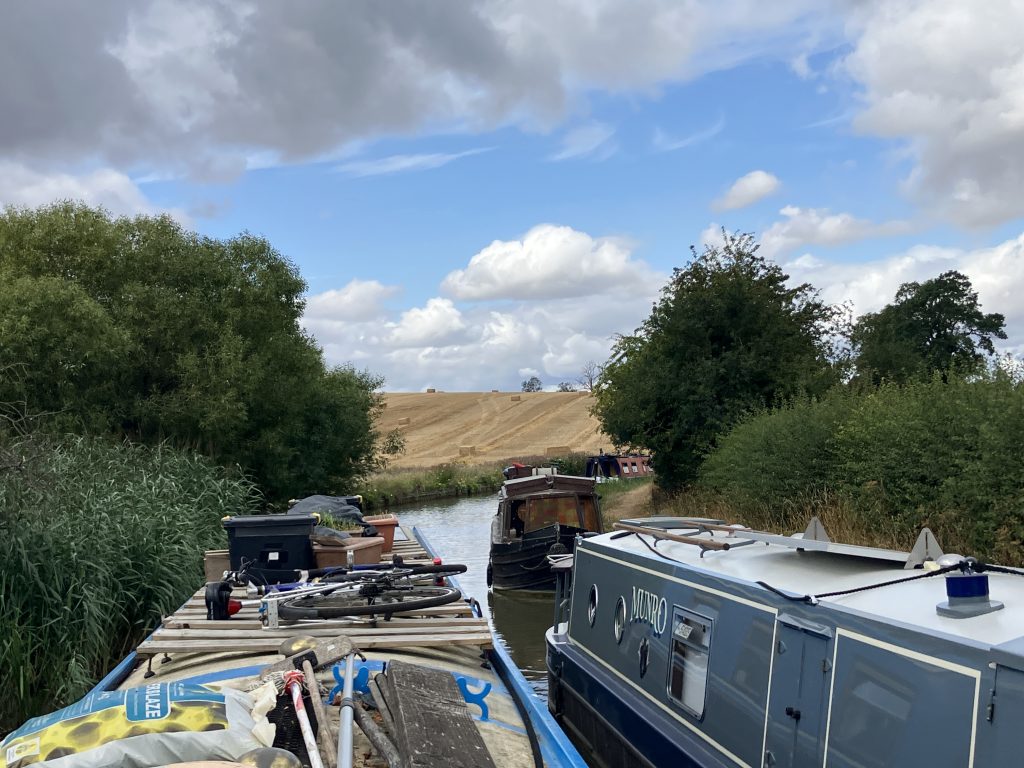
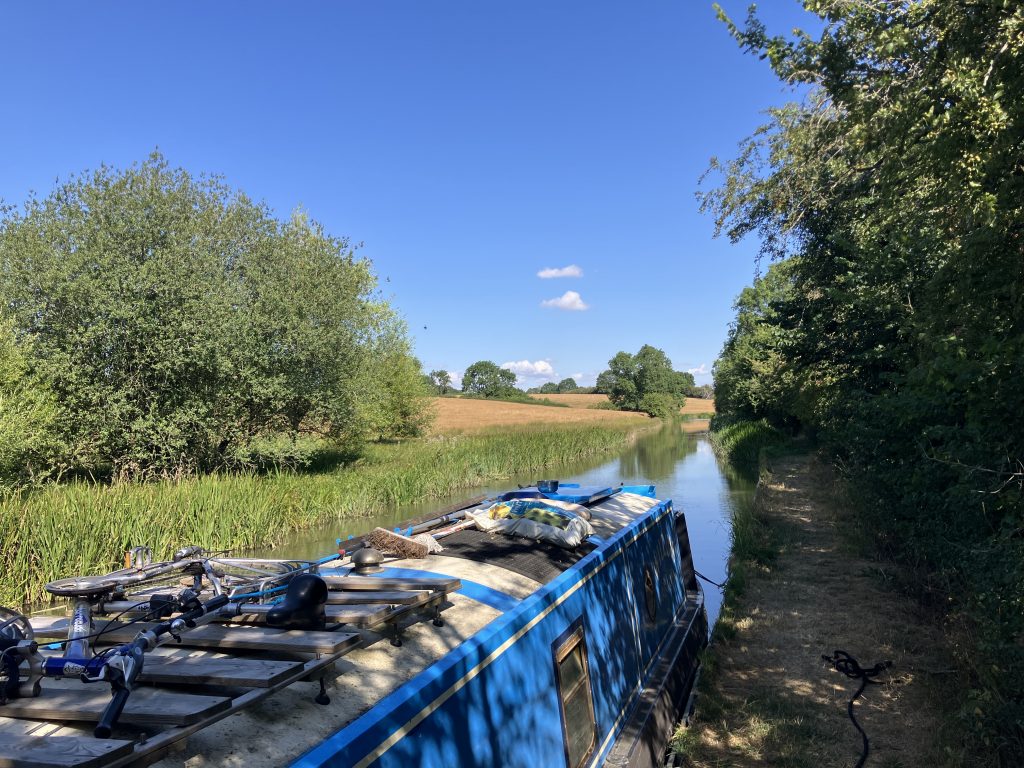
So now I was on the 20 mile lock free summit level. The landscape changes significantly from below the locks. It is the most gorgeous section of the Leicester line, completely rural, flanked by hills with fields, sheep and cows. The only thing that was sad to see was how dry everything was. The hills are almost completely brown. The only green corridor is the banks of the canal.
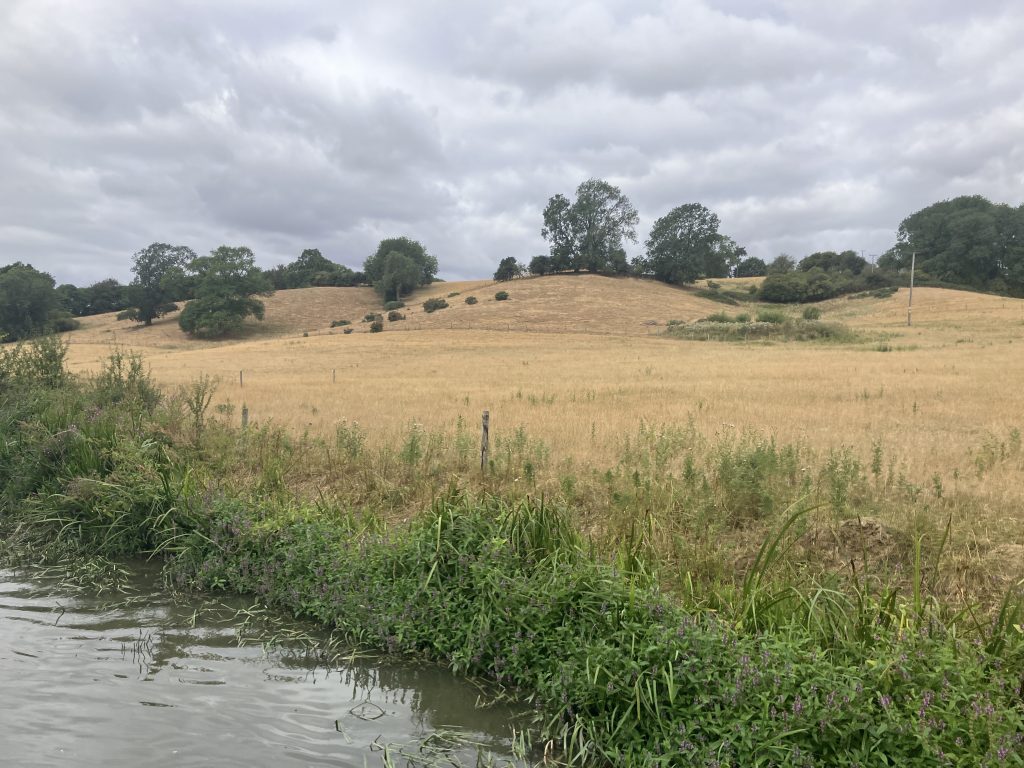
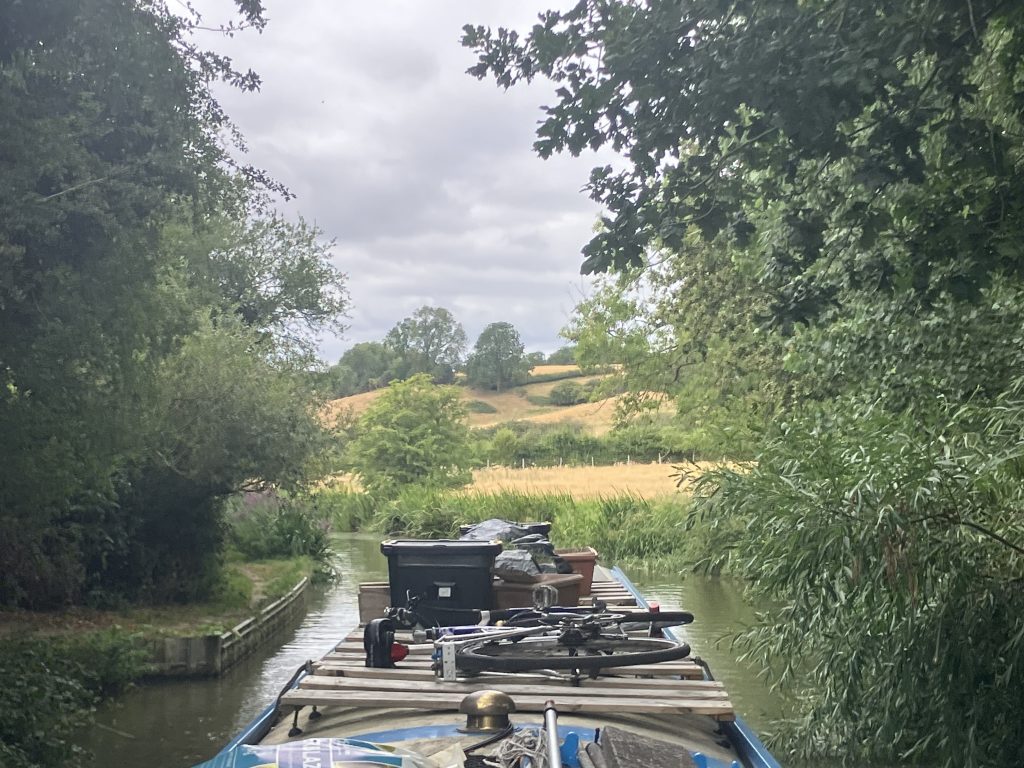
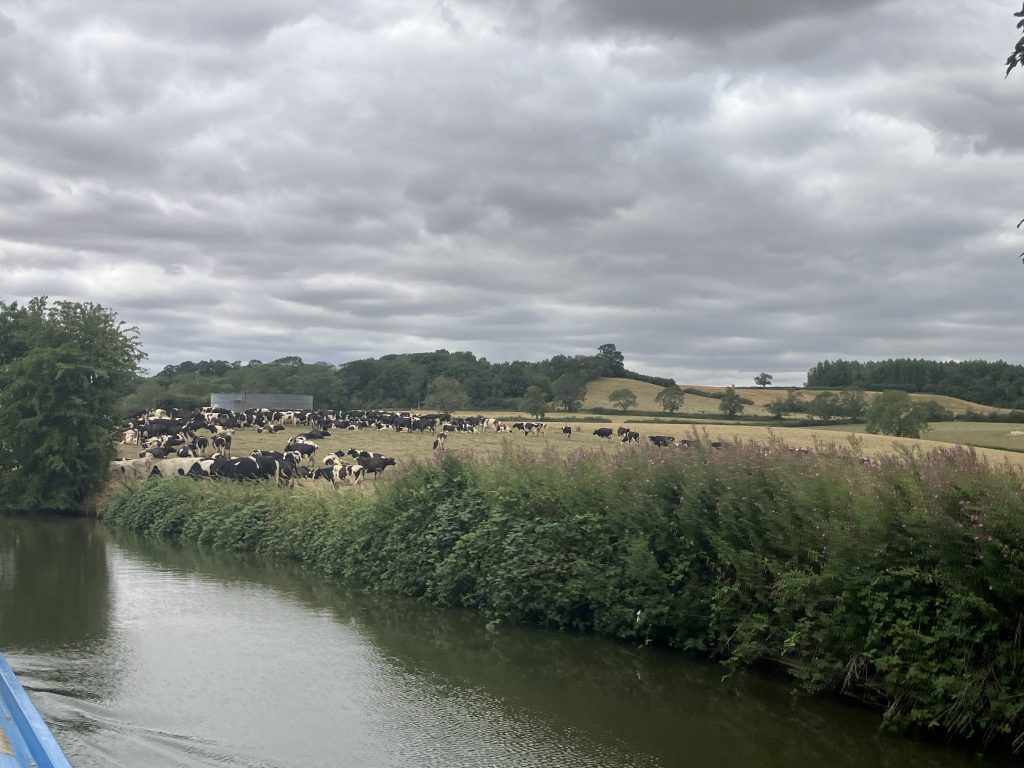
I would have loved to take it slow and spend at least a week there. But there were rumours that the Foxton and Watford locks would be the next to close due to low water, so I rushed across in two days to make it down the other side. I was beginning to get seriously worried to get stuck somewhere, before I can actually make it to London.
Watford locks to Grand Union junction
The next day I arrived at the Watford staircase locks not long after they opened at 10am, but there were already two boats waiting ahead of me. I waited right under the M1 bridge. If you travel north on the M1, just after the Watford Gap services have a look down your left and you can see the top of the locks. (the North starts at the Watford Gap according to Londoners, so I am now officially back in the South).
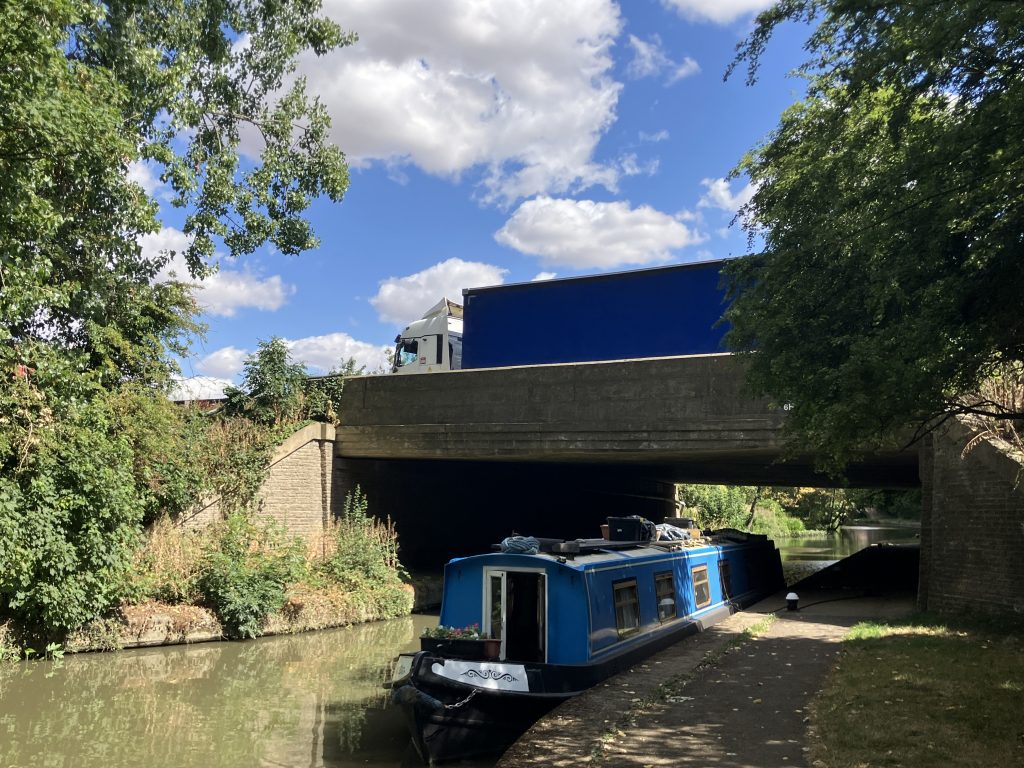
In staircase locks multiple boats can only go in one direction at a time. The locks are operated by volunteers who had let three boats into the locks at the bottom, so we had to wait until they had all come out. Then the three of us started to descend one after the other. Once again two volunteers helped me through all 7 locks, which was fantastic.
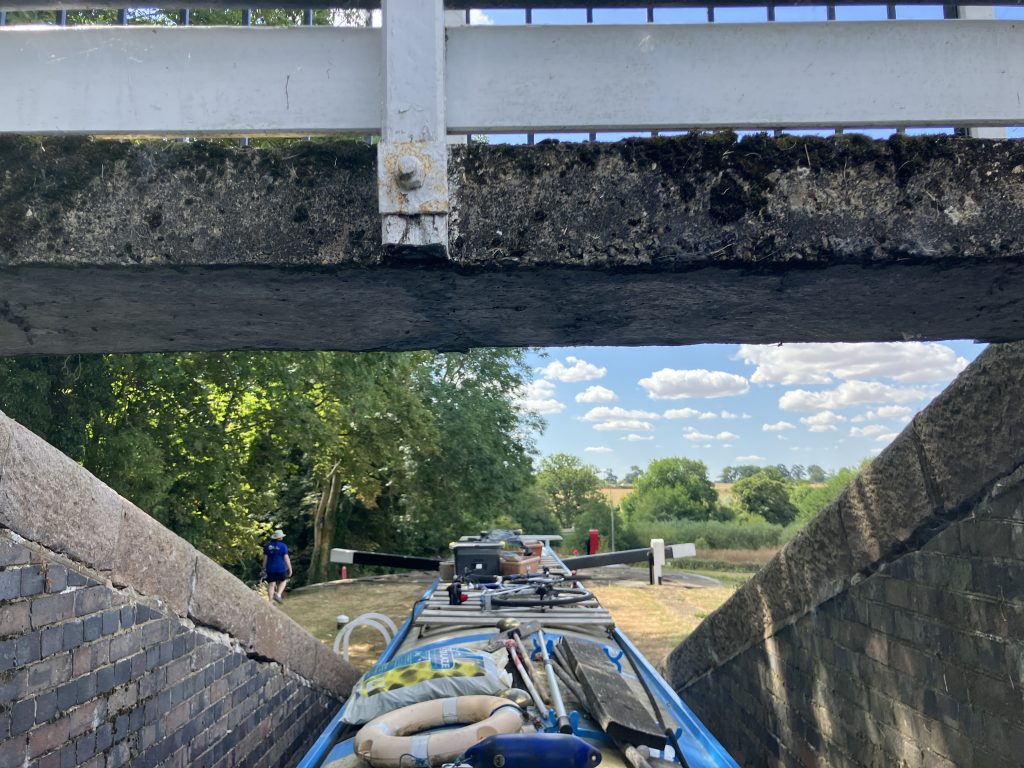
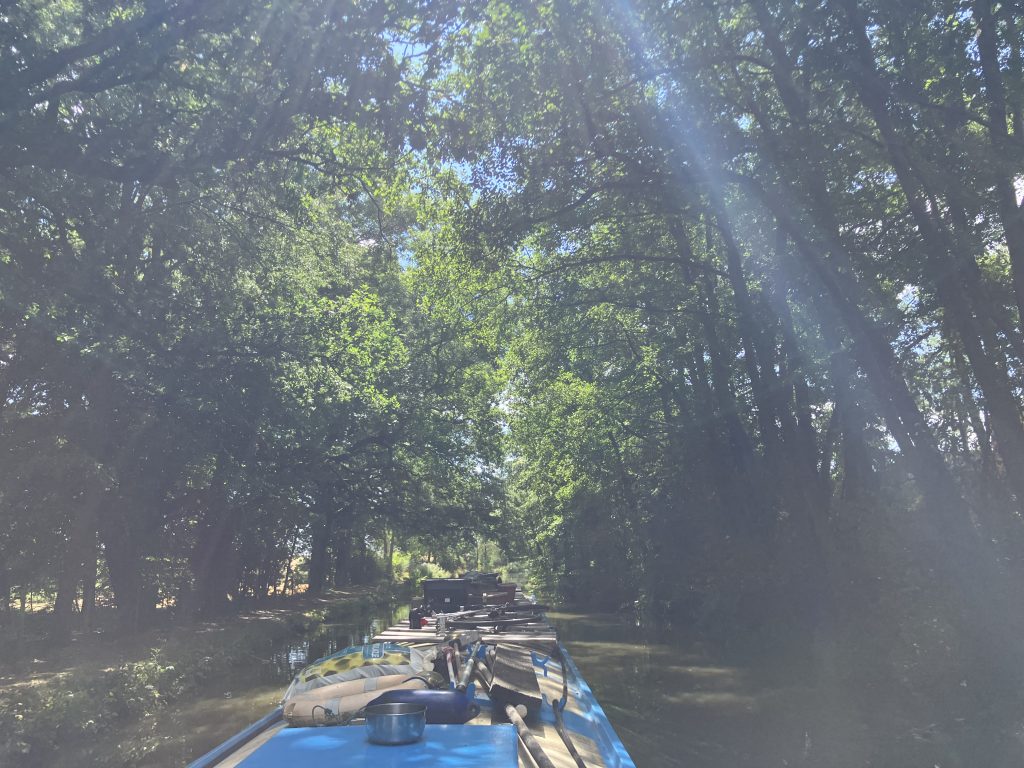
I then chugged on a couple of miles to Norton junction, which is where the Leicester line meets the Grand Union main line. Only two time restricted lock flights to go now, so I am now very hopeful that I will make it back to London without any further closures.
Getting in the river to untangle a fouled prop is NOT on my boating bucket list. My kid got in to push the cat up a fender the first time she fell in.
I have never fallen in in 10 years. So this was my initiation to being in the canal 🙂