The big river Trent – from Shardlow to Torksey
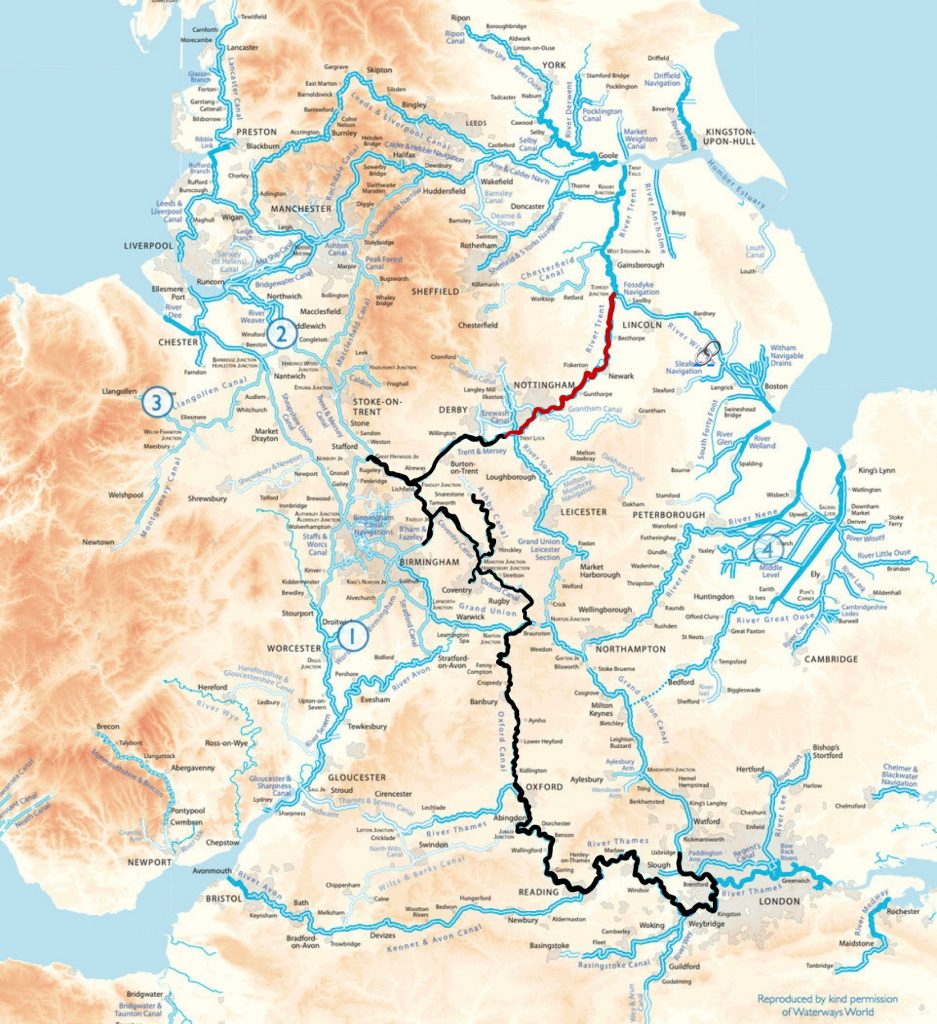
Finally it was time for the big river! My only experience of a river this size is the Thames and I was curious how the Trent is different. Turns out – very!
It’s a long post, as it is covering 58 miles in just over two weeks and was very eventful. Strap in for the ride.
The first glimpse of the Trent
Back to Shardlow, where my last post ended. About half a mile beyond Shardlow is Derwent Mouth lock, the exit to the river. There is a flood gate before the lock with a light that was stubbornly red. I was told to ignore it as apparently it has to be switched off manually and nobody bothers. It still felt wrong to go trough it!
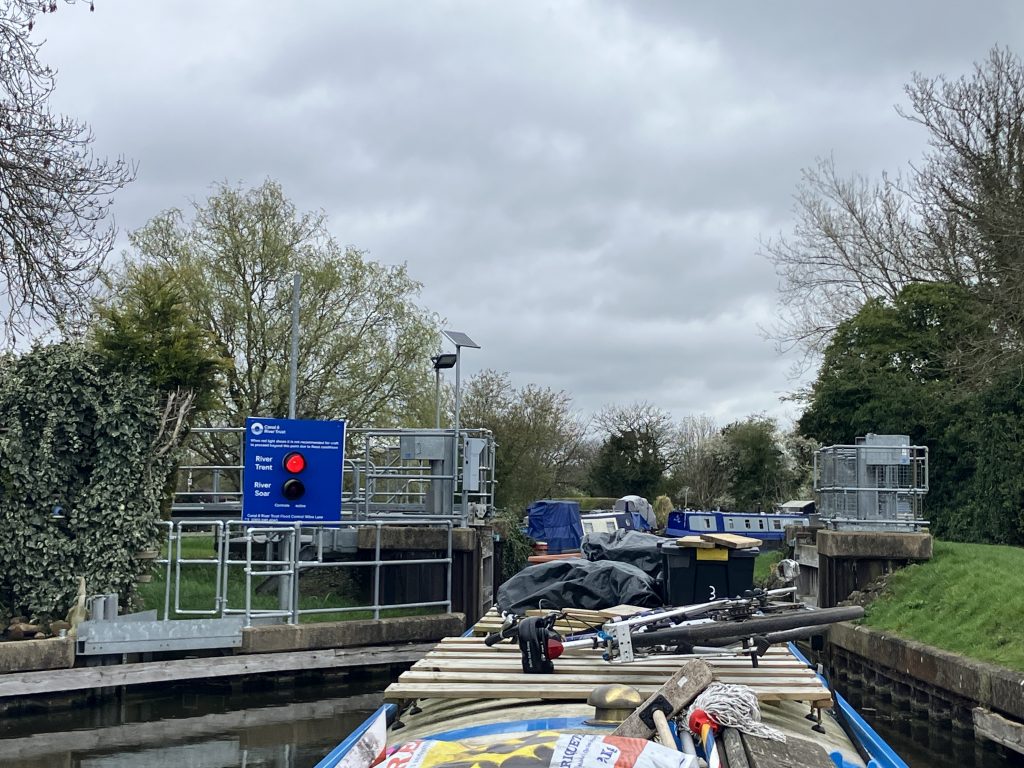
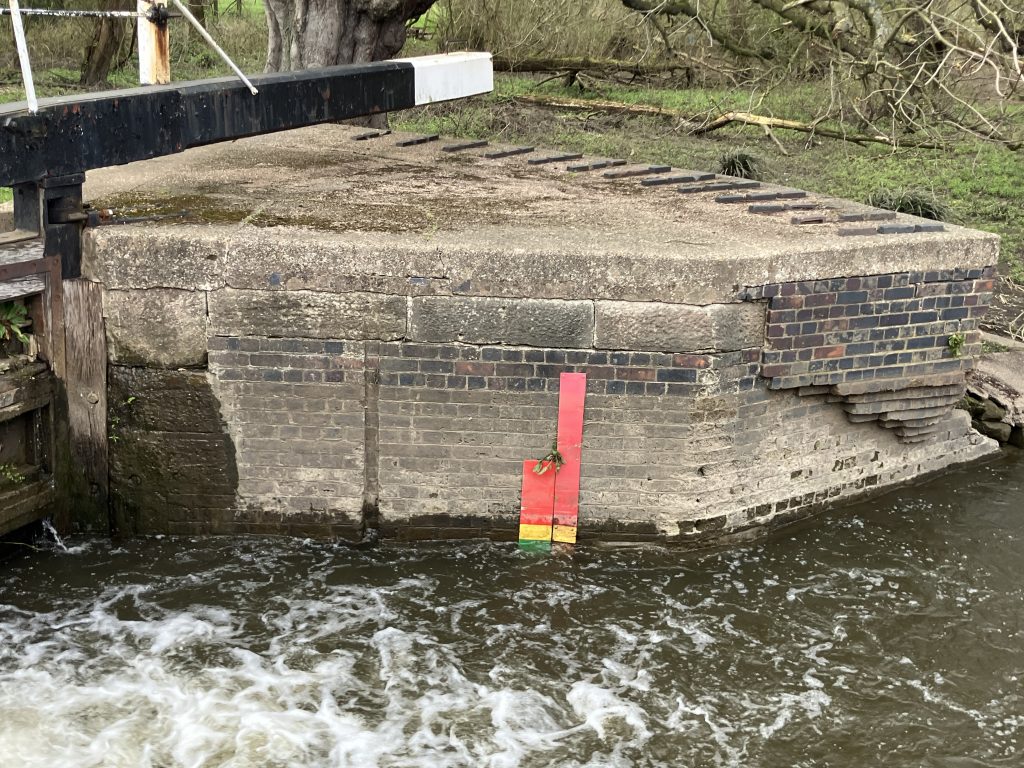
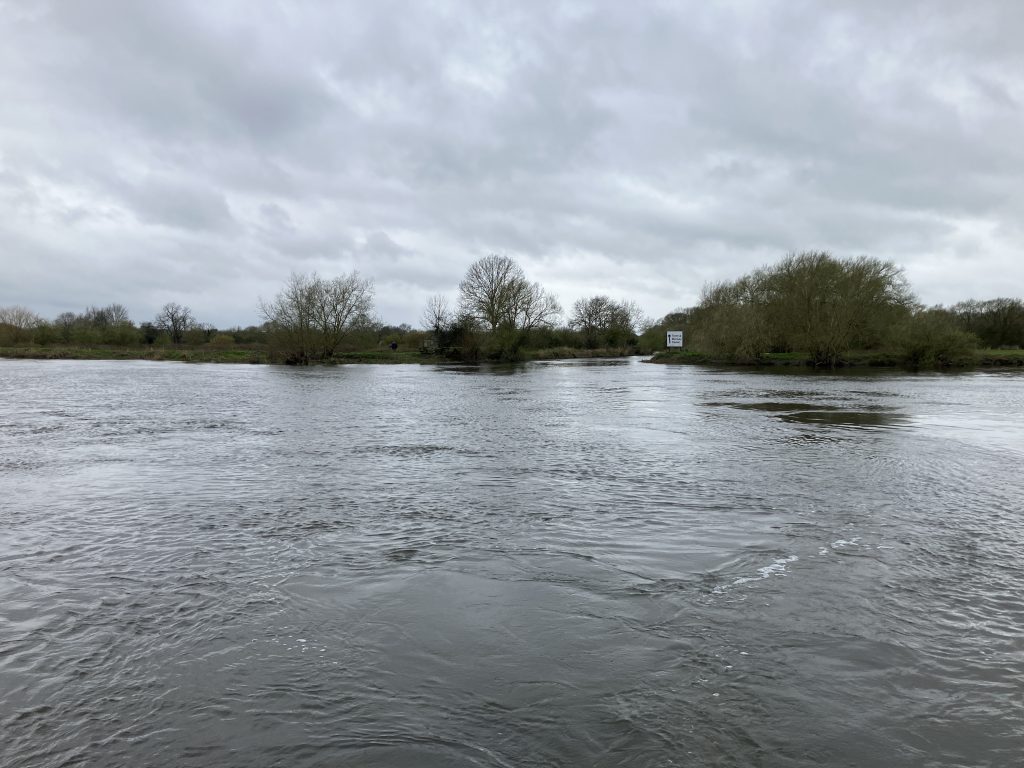
Derwent Mouth lock is at the confluence of the Trent and the Derwent. This junction is not for the faint hearted. In 2020 when I came the other way and the river was much higher, I had the scariest 10 seconds of my boating career there as the boat was spun around by the current trying to enter the channel to the Trent & Mersey canal.
So I approached this junction with some trepidation. As I set the lock I was joined by an older gentleman delivering a boat somewhere who looked very much in a hurry. We shared the lock and I let him exit first. The river junction was fairly harmless this time. A gentle push by the river from the right and I was off zooming down at 7mph, which is fast for a narrowboat.
This picture shows the confluence of the rivers from the left and the right and the resulting turbulence.
Rivers sometimes have canal sections either to circumvent an unnavigable part of the river, to shortcut an extravagant loop, or as a flood protection. The Trent has several of these up to and including Nottingham.
There is only about a mile to the first of the canal sections, the Sawley Cut. As expected I met the man in a hurry again and he had already set the lock for us. This time he offered me to go out first and to stay behind to close the lock. The Sawley Cut is only a few 100m long and was completely rammed with boats. I was very lucky to get the last spot. After the Cut there aren’t any more moorings for quite a long stretch. I felt a bit guilty as the man in a hurry chugged past me a few minutes later, completely ignoring me.
After all the rain previously, now it was the turn of the strong winds, fortunately this time without the deluges we had gotten used to (I am watching river level gauges like a hawk!). I had to wait in Sawley for a few days until the wind calmed down enough to move on. When I did, it was still a very blustery but sunny day.
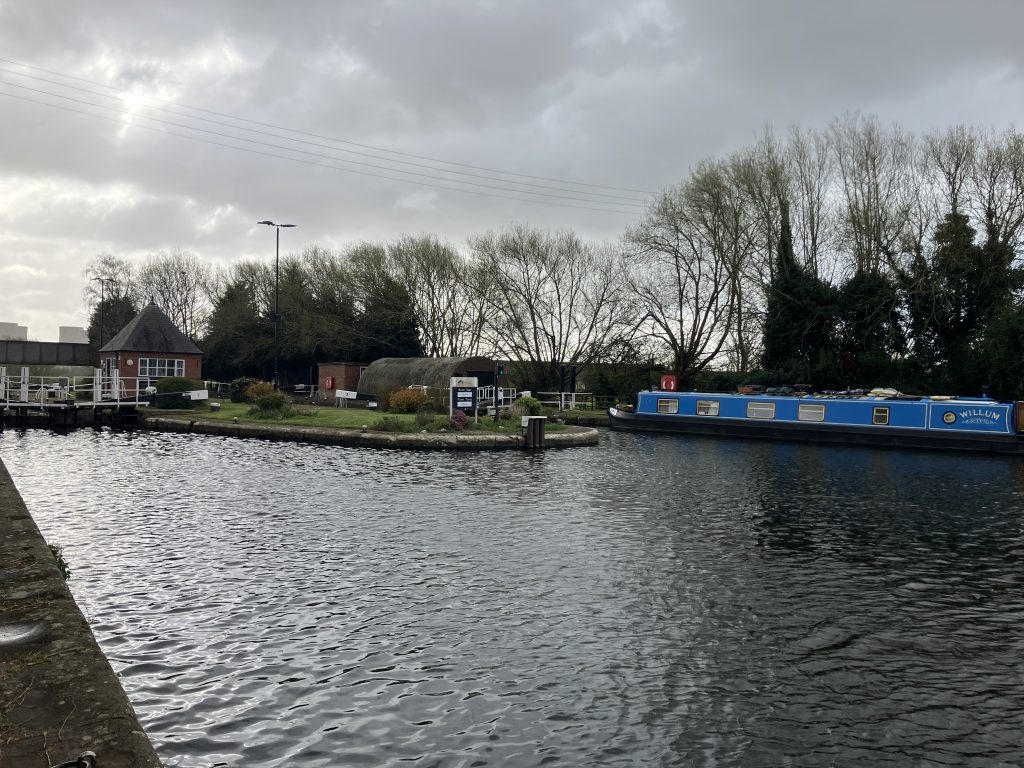
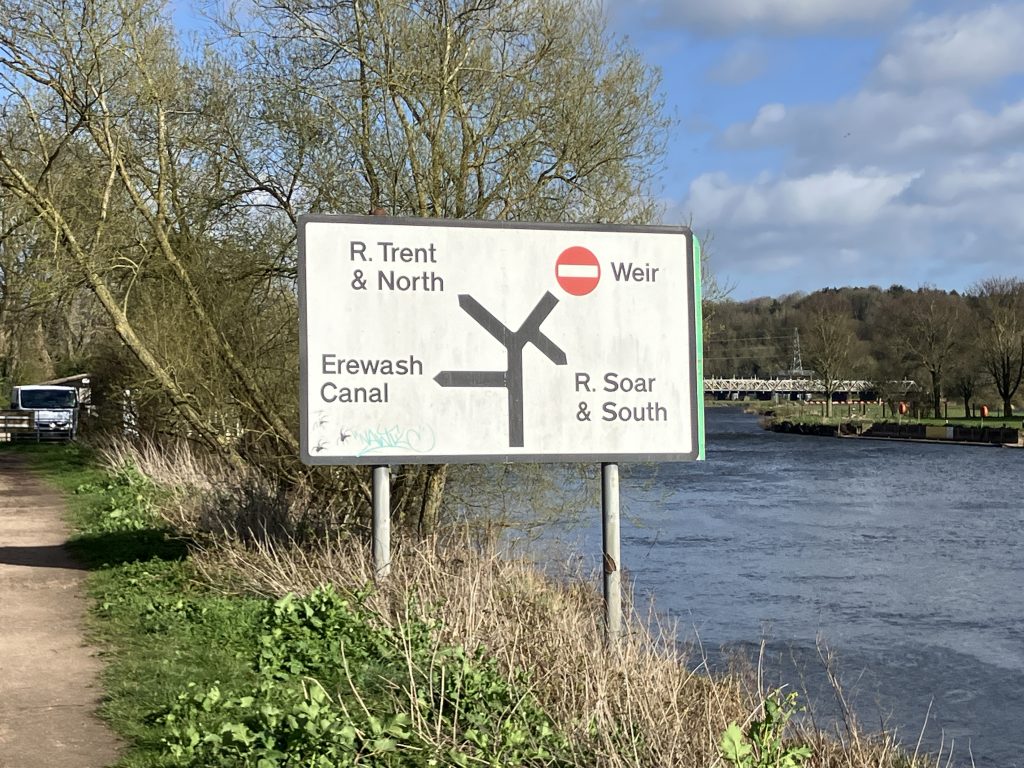
About a mile from the Sawley Cut I passed a five-way junction with the entrance to the Erewash canal (not going up this one for now), the mouth of the river Soar, a massive weir, and the entrance to the Cranfleet Cut, which was where I was going.
Another little canal – the Cranfleet Cut
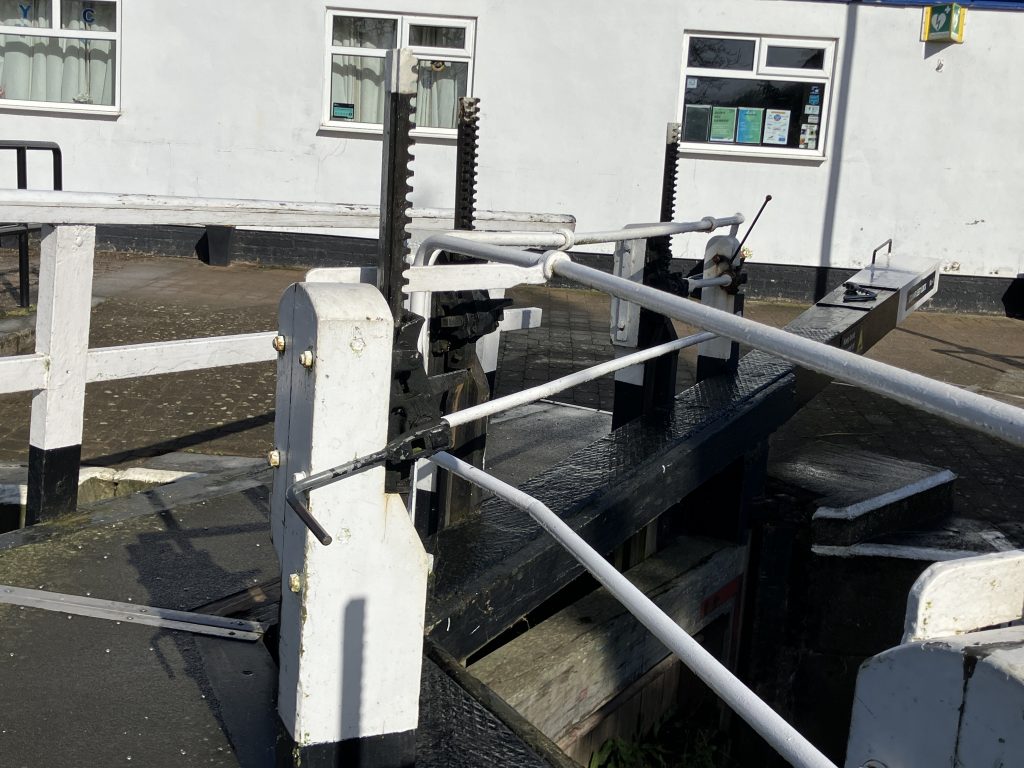
The first lock in the Cranfleet Cut almost defeated me. First I was unable to open the top gates as the bottom gates leaked so much that the lock never equalised properly. This was in the middle of nowhere with nobody around, so I had to persevere and eventually forced it open with all my strength. Slightly frazzled already I then put the boat into the lock on the “wrong” side, which meant that I had to climb down a long slippery ladder to get back onto the boat.
Picture this: strong wind pushing the boat away from the side, rope in my hand to hold the boat to the side at an odd angle due to the depth of the lock, me pulling the boat in, sprinting to the ladder with rope in hand, and descending very … very … carefully. By the time I was at the bottom of the ladder the boat had drifted away about a metre. Maybe in reach for somebody who is confident to jump off the rung of a ladder, but that’s not me. Back up the slippery ladder it was, pull the boat in again and repeat. Third time I was fast enough. I was just so happy to actually be back on the boat that I almost forgot to close the lock behind me (I did close it of course).
Nottingham
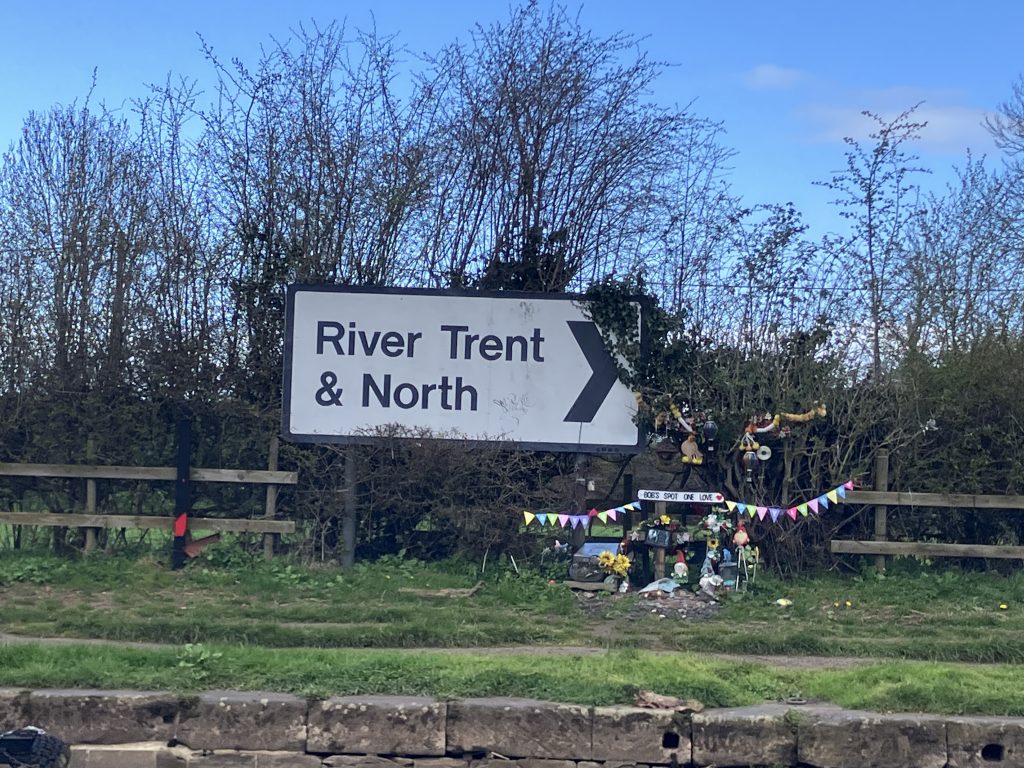
I was rewarded with a beautiful meandering stretch of river and zoomed down at speed to the next bit of canal, the Nottingham & Beeston canal. It was so blustery on the open river that there were white horses in places!
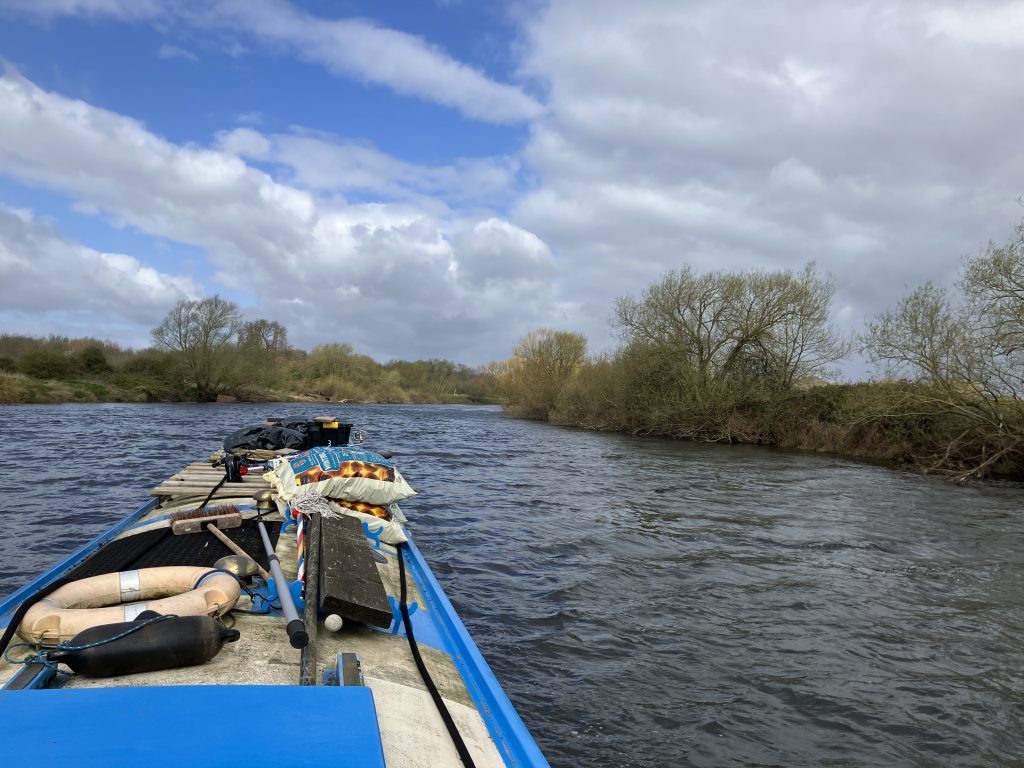
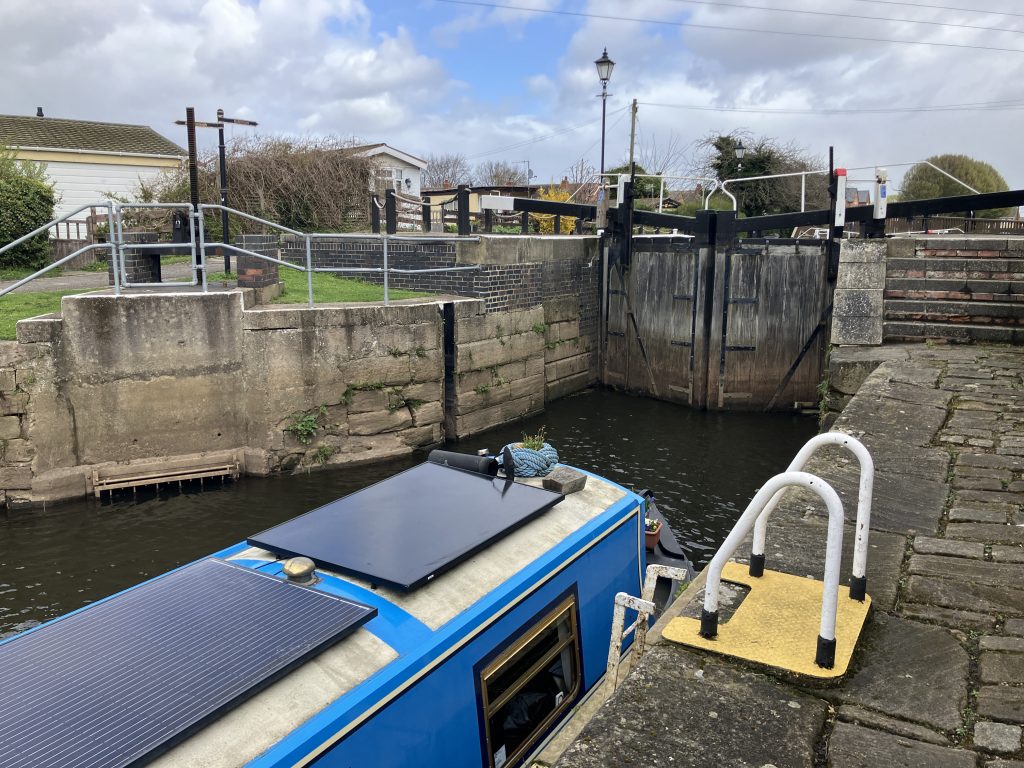
I reached Beeston, a bustling place with a marina and a nicely done up riverside with a cafe and a bar. The entrance lock to the canal was very strange. In order to keep up the water level in the canal, the paddles are supposed to be left open on both sides. In my book this means that both sides of the lock have the same level (and they looked like they had) and the gates should just open on both sides to cruise through. But it didn’t work like that. I still had to operate it like a normal lock. I still don’t understand it.
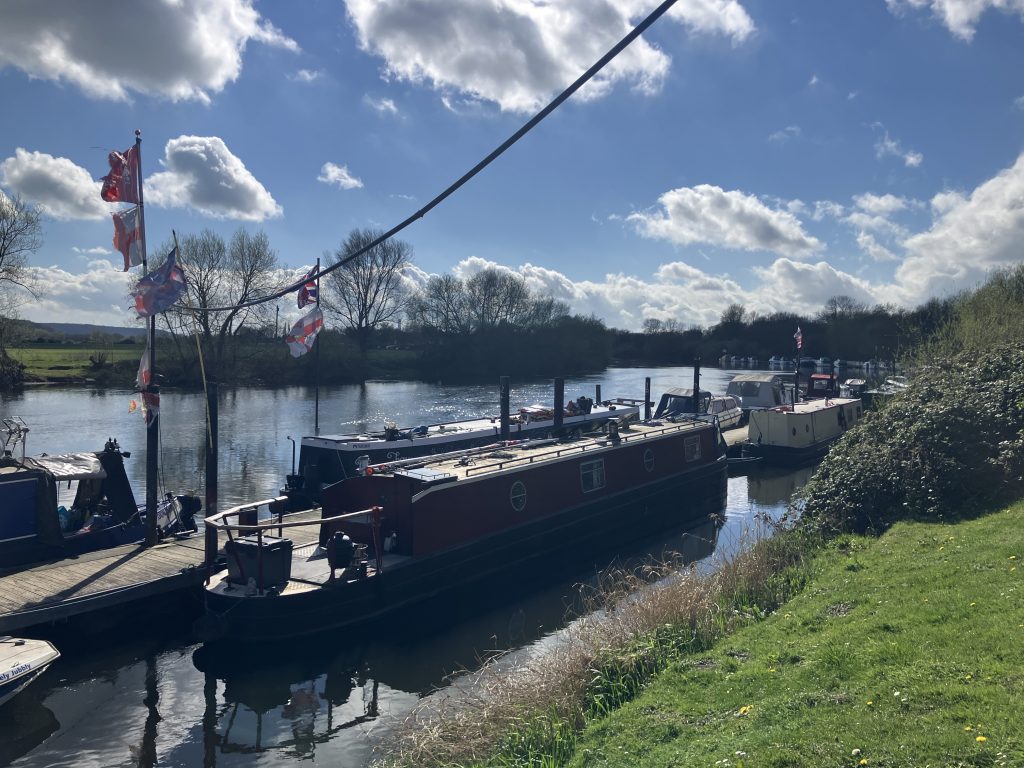
Cruising on toward Nottingham I passed a guy on a boat and waved as usual. He shouted over “we met at the lock” and then something I didn’t quite hear properly as I was going past. I have no memory for faces and had no idea who he was, so just said “oh yes” like in recognition, smiled and nodded. As I cruised on and the cogs kept turning in my head, I realised that he was the guy in a hurry from Sawley. Then I realised that what he had said was “… and you stole the last mooring”. How un-British of me to nod and smile rather than apologise. One day this impairment is going to get me into trouble.
Then I reached Nottingham proper. I was so impressed with the canal side. Often in urban areas the canal and towpath are strewn with rubbish and generally a dirty place, where dubious characters hang out. I am always alert to empty cans and avoid areas with benches in cities. In Nottingham almost the whole length of canal through the city has mooring rings for visitors and is really nicely done up with information boards and a lot of old canal architecture still in place.
Here are some pictures of the Nottingham & Beeston canal:
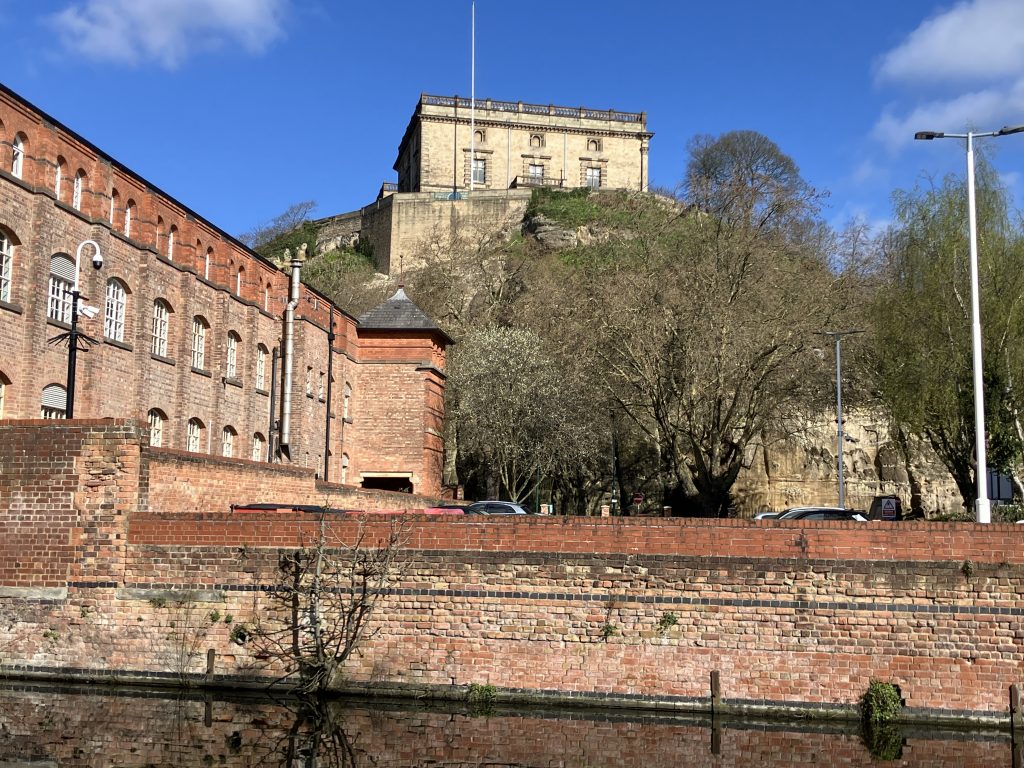
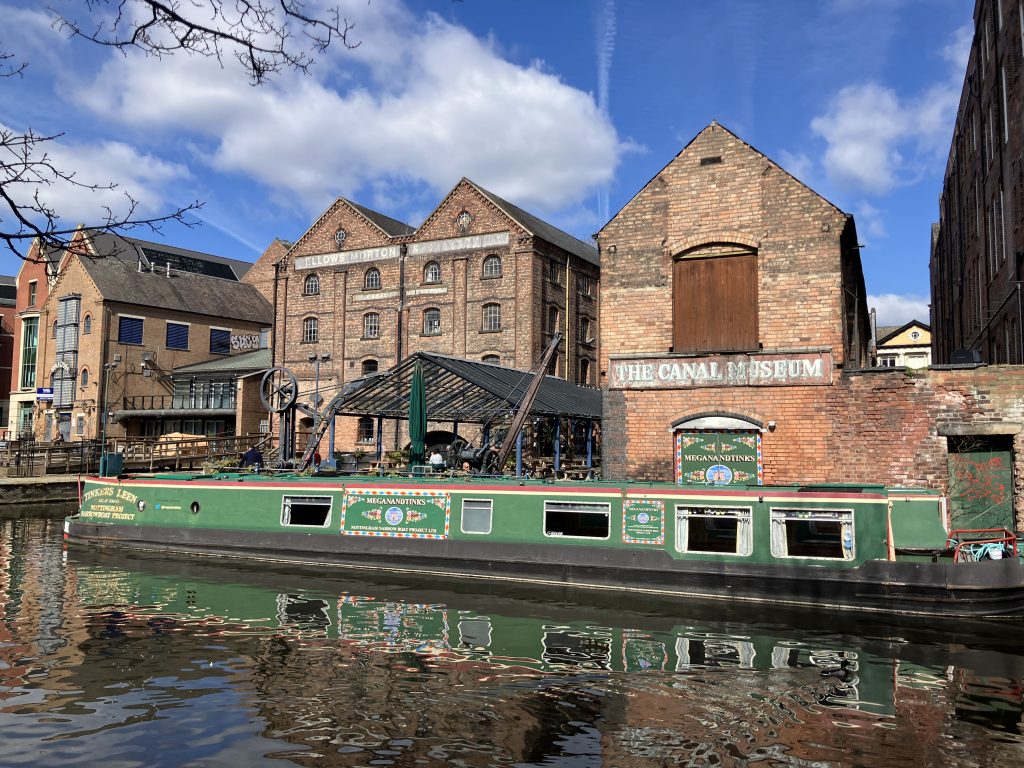
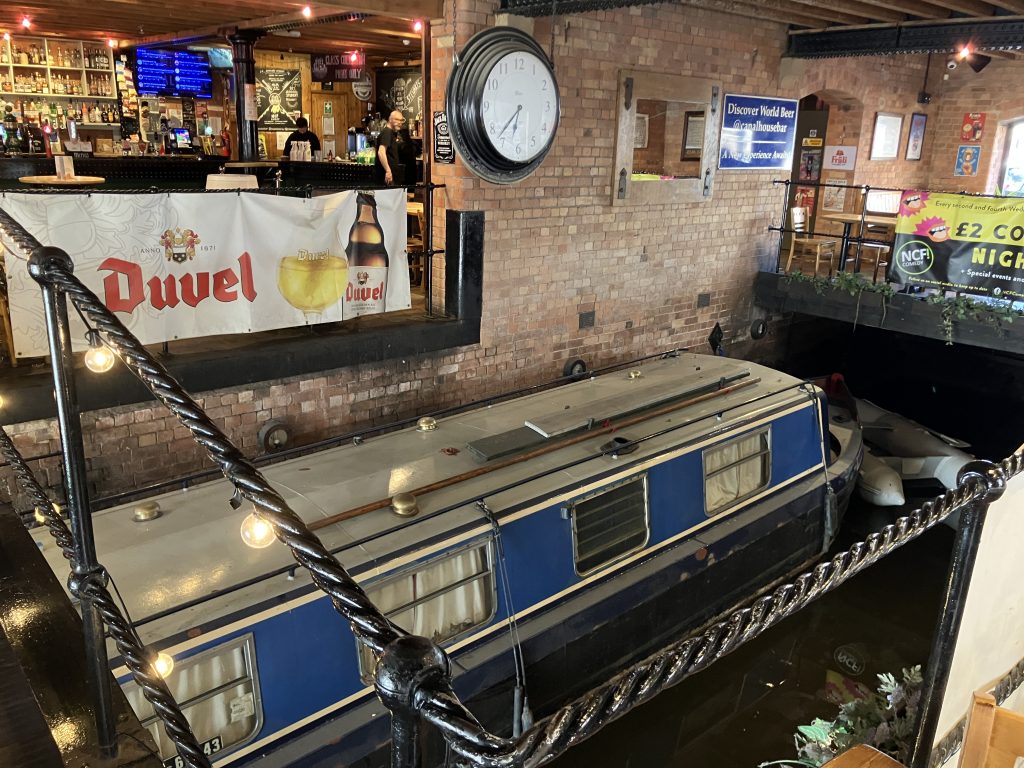
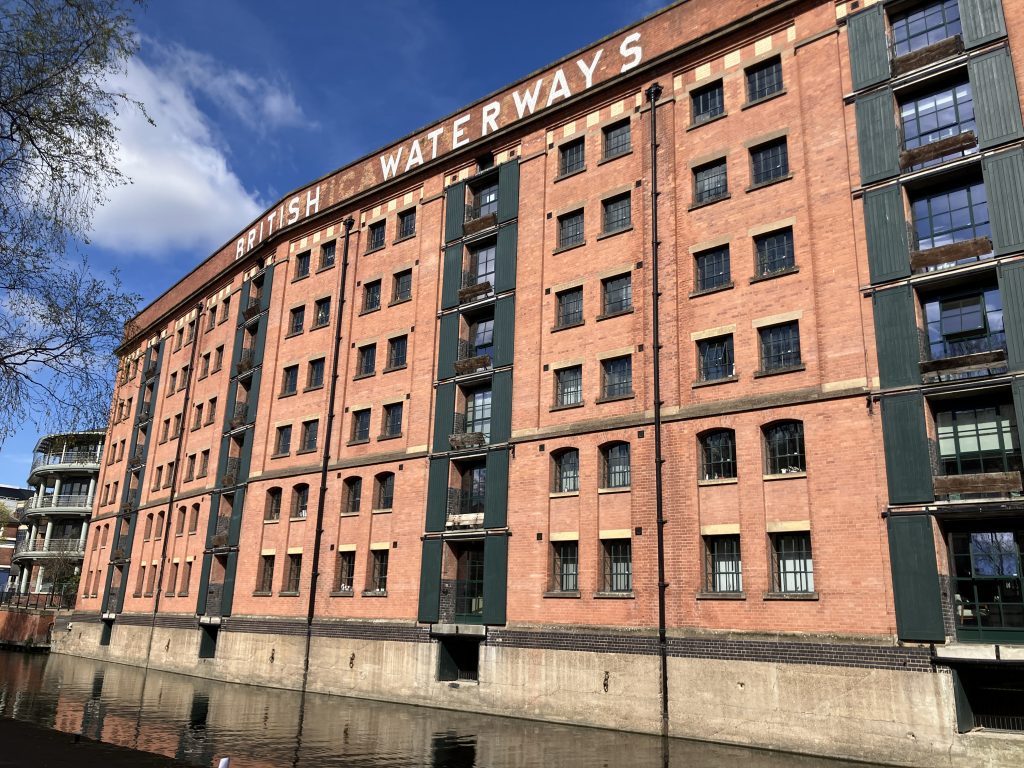
I spent the Easter weekend in Nottingham, did some sight seeing, chores and shopping and last but not least sat out storm Dave. I hadn’t been in a decent sized city since Birmingham months ago and it was a nice change. If you go to Nottingham, visit the caves! The whole city is under-tunnelled with caves!
Down the Trent Nottingham to Newark
Finally on Easter Monday the weather improved and I was able to continue. After a little hold up at Castle lock with four boats waiting to go through on either side and then a duck mama with 13 newborn ducklings in the lock, I chugged on to Meadow Lane, where I went back on the river.
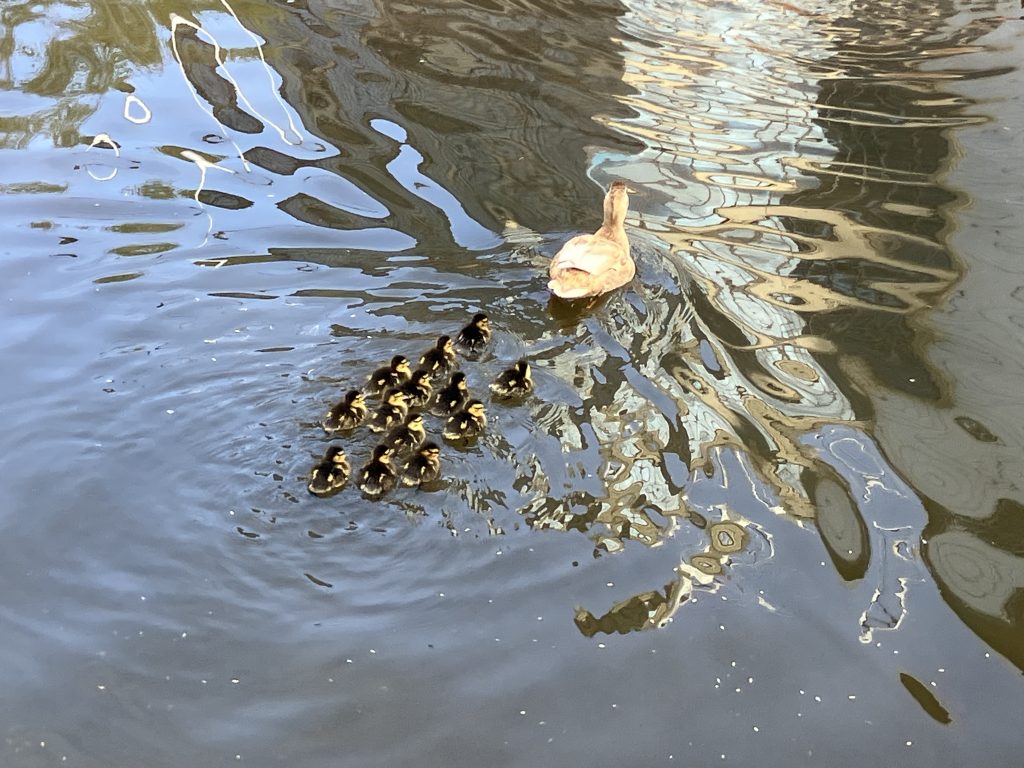
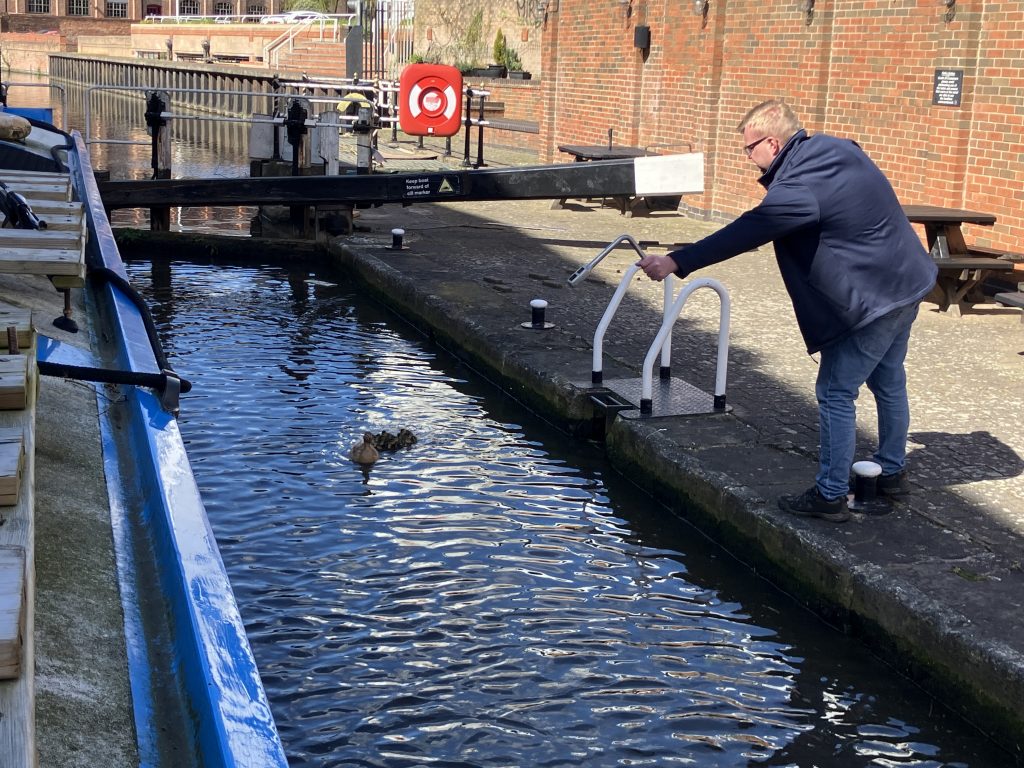
Some more pictures from the rest of the journey through Nottingham:
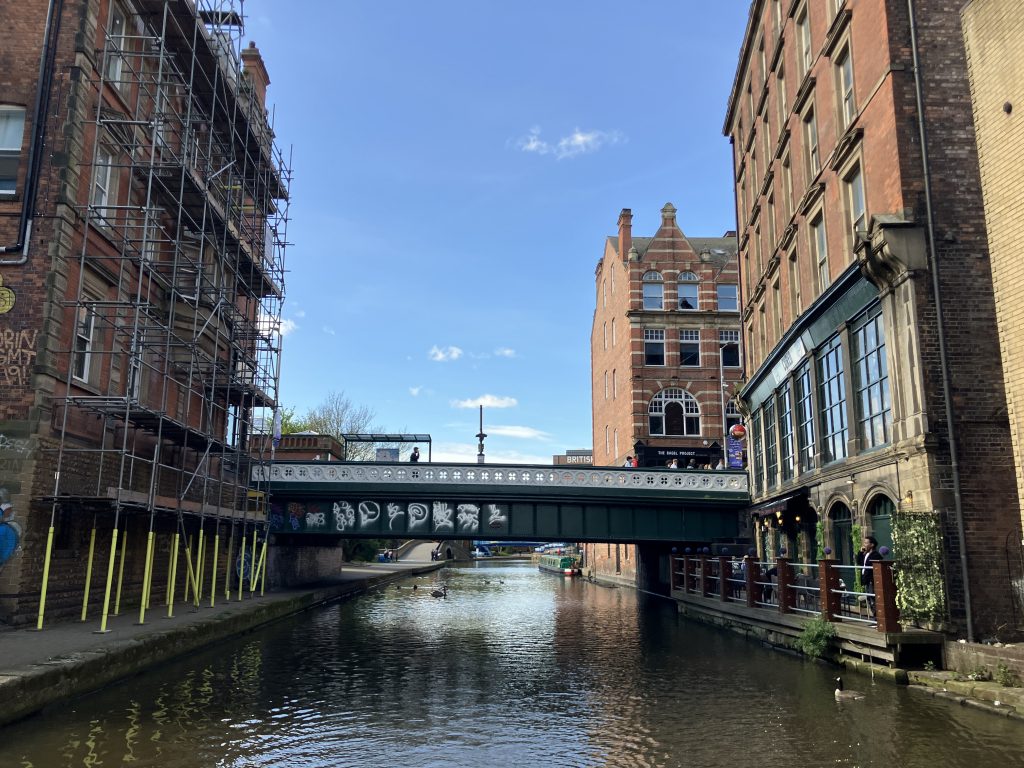
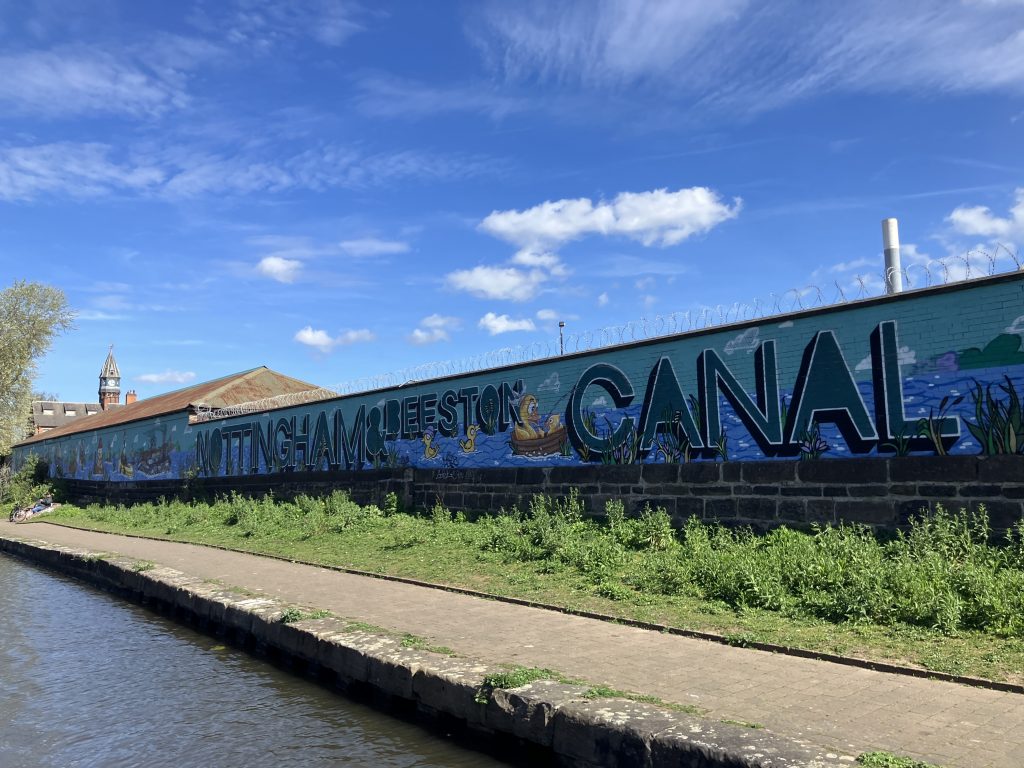
And soon I was back on the river:
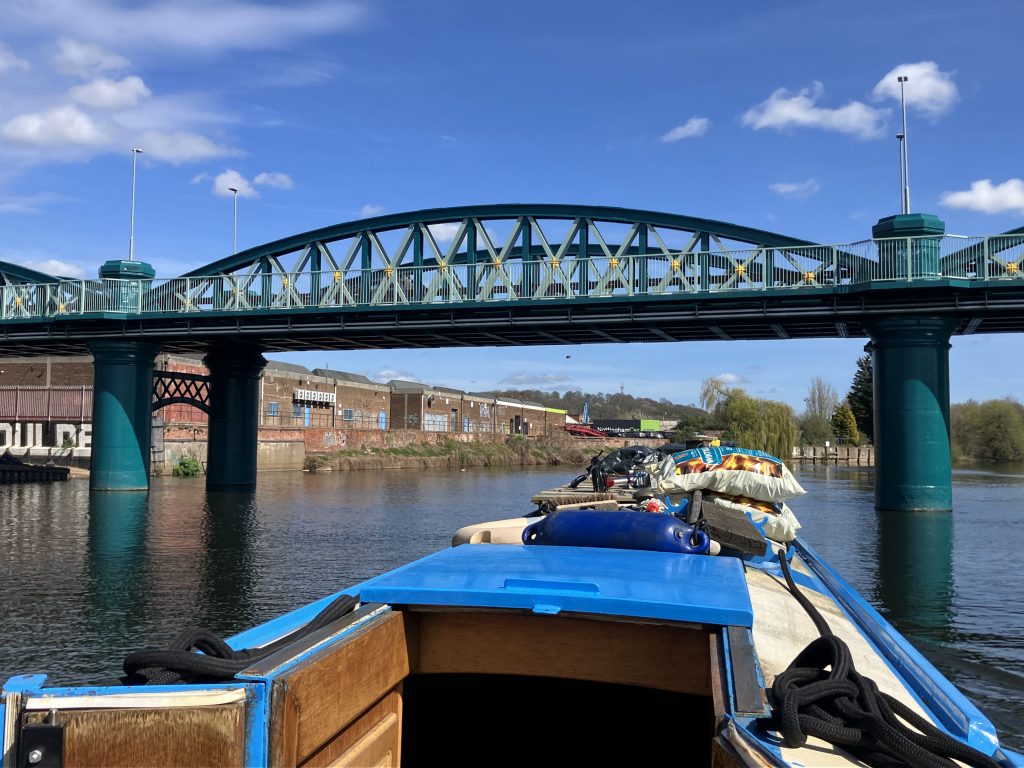
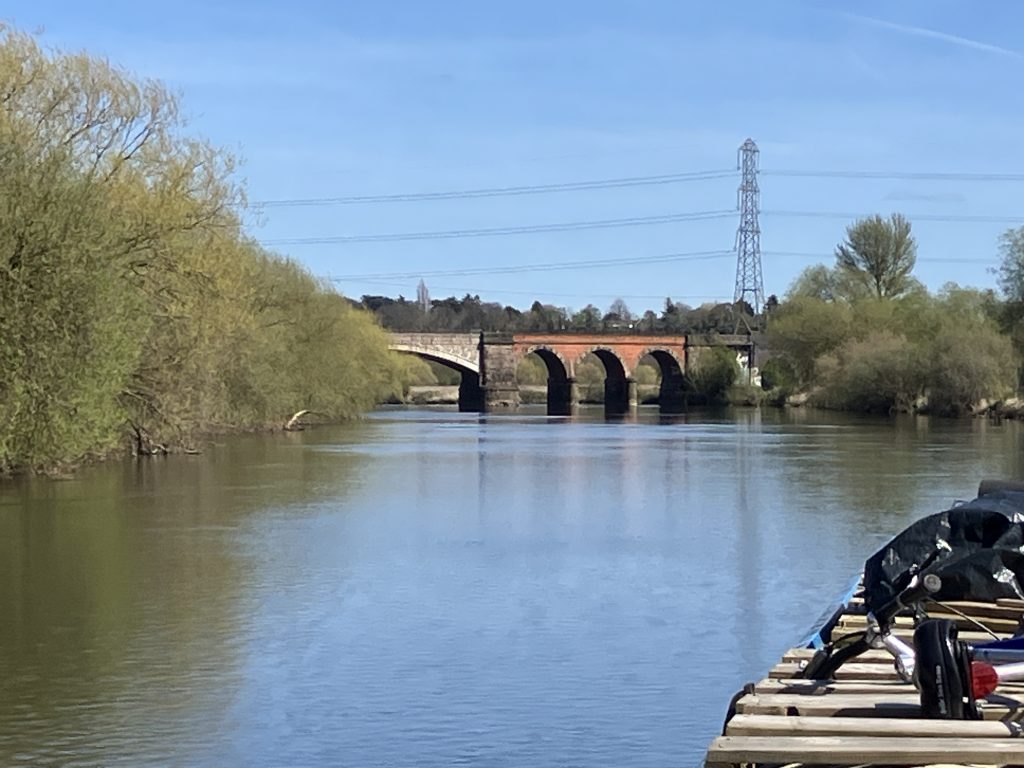
I did my first proper Trent lock (Holme) supported by a lovely lock keeper. My only experience of big electric river locks is the Thames and the locks here are quite different. My learnings for potential Trent boaters:
- You are expected to call or radio the lock keeper ahead of your arrival so that they can set the lock for you. How convenient is that! On the Thames there is an almost constant up and down and often you just have to wait. I bought a VHF handheld unit and did the required VHF certification before this trip and it has come in handy multiple times.
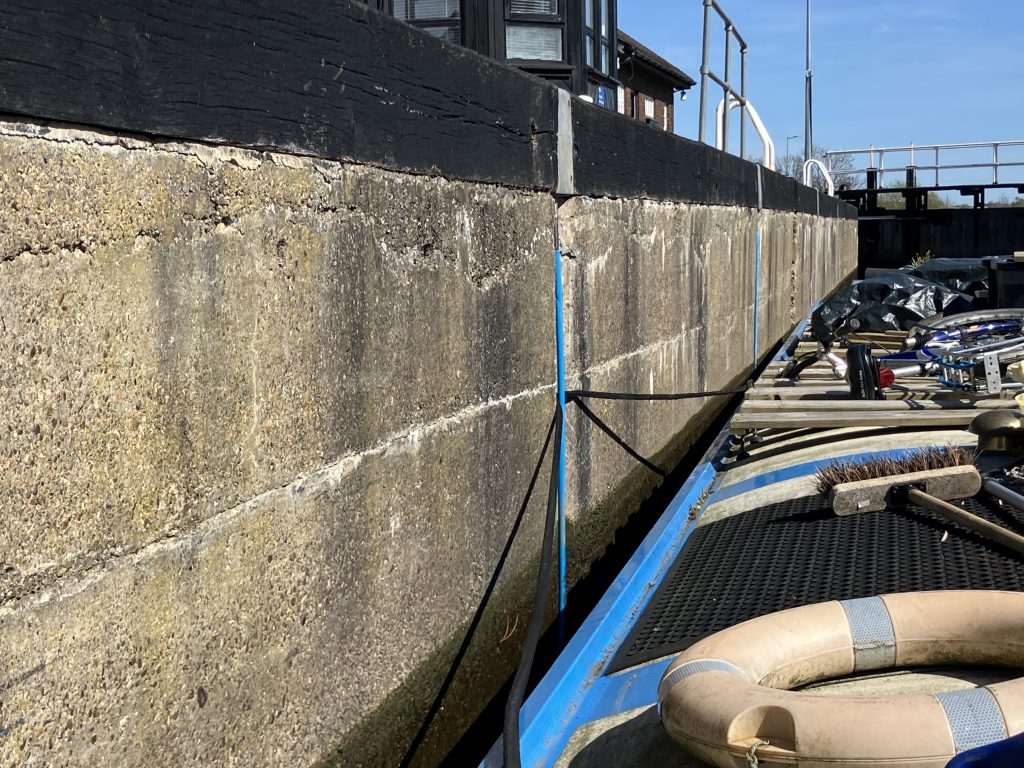
- The locks have risers, a cable or metal bar running vertically in the lock that you loop your rope(s) around. The rope slides up and down with the boat as the lock fills or empties. This means that I can stay on the boat in the locks. Brilliant!
- The locks have traffic lights. It will turn green, when it’s ready to enter. On the Thames the lock keepers wave their arms about instead.
- The locks have very high walls. The level of the Trent must fluctuate a lot more than the Thames.
- Every lock has moorings that are free for 2 days. This is great as I haven’t seen any other places where it would be possible to moor. However, some are on floating pontoons (great!), some are on high walls (not so great for people who hate ladders like me).
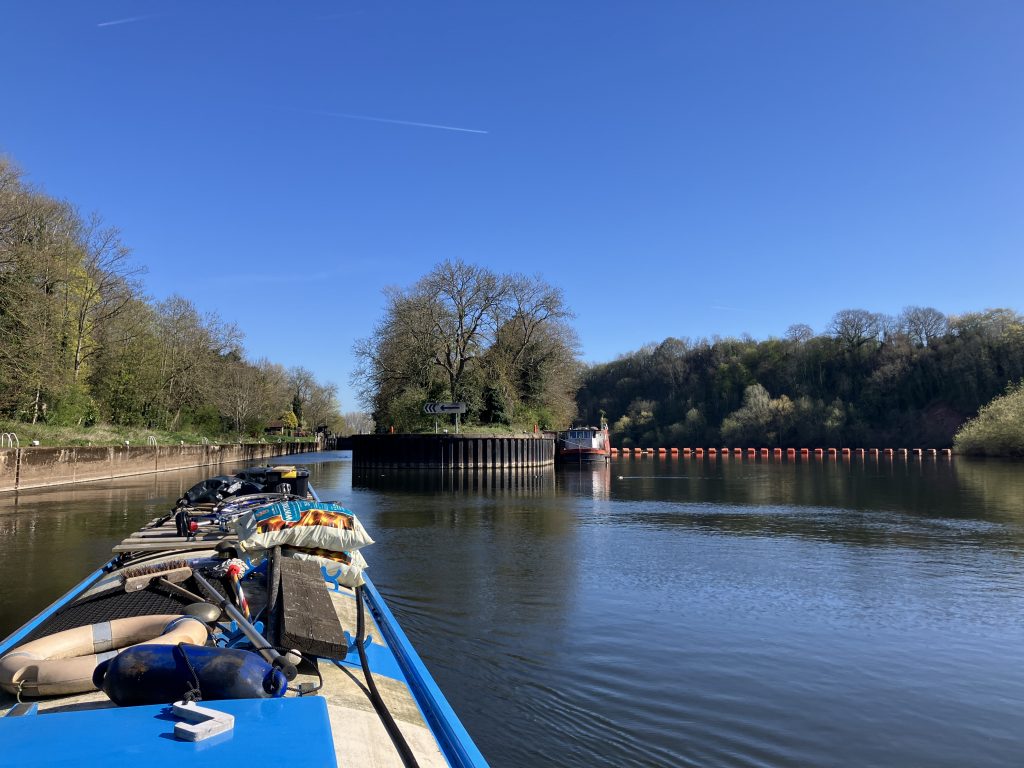
I planned to moor above the second lock (Stoke lock). There were already some cruisers on the visitor moorings, but there was a big gap for me. I contemplated for a moment if I could moor facing downstream as the river seemed to flow quite slowly. But I thought I should practice what I preach in my courses and moor facing upstream, which is the proper way on a river.
So I started turning around in the middle of the river. As I started facing sideways the flow of the river started pushing me downstream really fast. I had totally underestimated the flow. I got swept perilously close to a large cruiser (plastic boat!!). Hitting a plastic boat with 20 tons of steel can do some serious damage. The owner of the cruiser darted out of his cabin and started to prepare to fend me off. Fortunately by pushing my engine really hard I was able to reverse fast enough to miss him. The rest of the turn and the mooring up was a doddle once I had clear water.
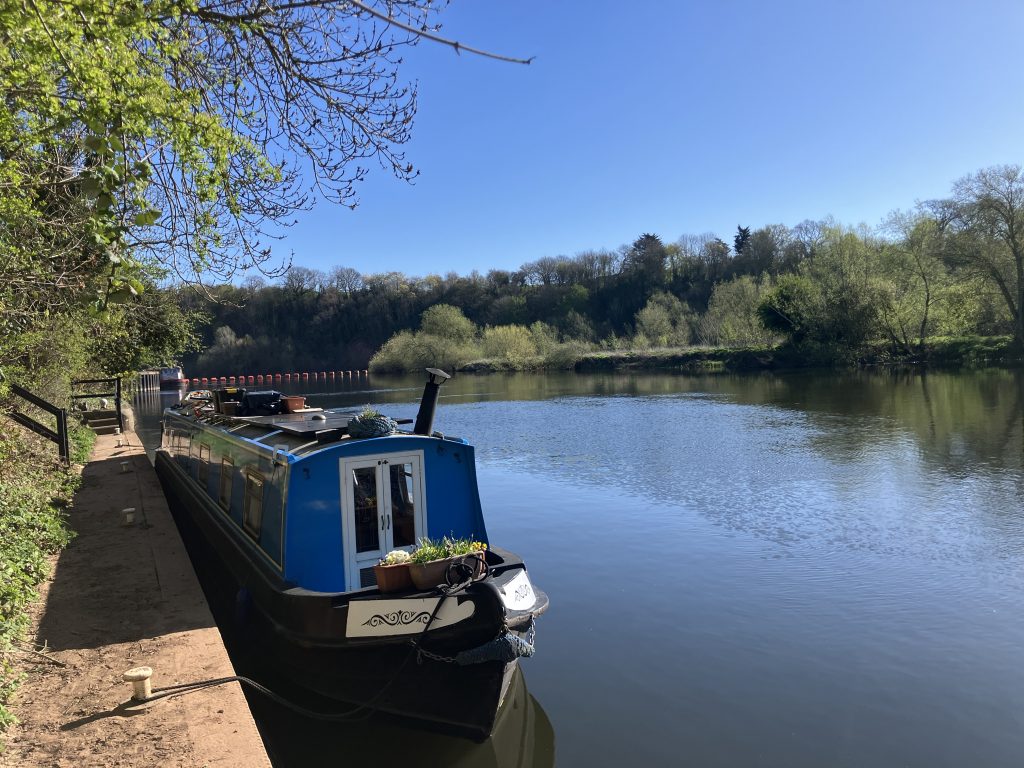
Once I had moored up the people on the other cruisers commented how well I had done the turning. Hum really? Did you see the same thing that I did? Well I did get away without hitting anybody. But I learnt not to underestimate the Trent!
I had been warned that there is a sandbank below that same lock, which you need to avoid by doing a sharp turn when coming out of the lock. I wandered down to have a look and, lo and behold, there was a narrowboat stuck on the very sandbank. They tried to manoeuvre back and forth to get off, but there was no chance. Eventually they had to call out RCR, a rescue company that pulled them off for a few hundred £££ I’m sure. No photos out of respect!
You can imagine that my exit out of the lock the next day was a bit tense. I did as much of a hand brake turn as is possible in a narrowboat and powered off as fast as I could before getting swept on to the darn sandbank. I hope that they will dredge this a bit before I come back later in the summer!
Some impressions of this stretch of the river. I was very lucky that for almost all of my journey on the Trent I had gorgeous weather (even if a bit windy):
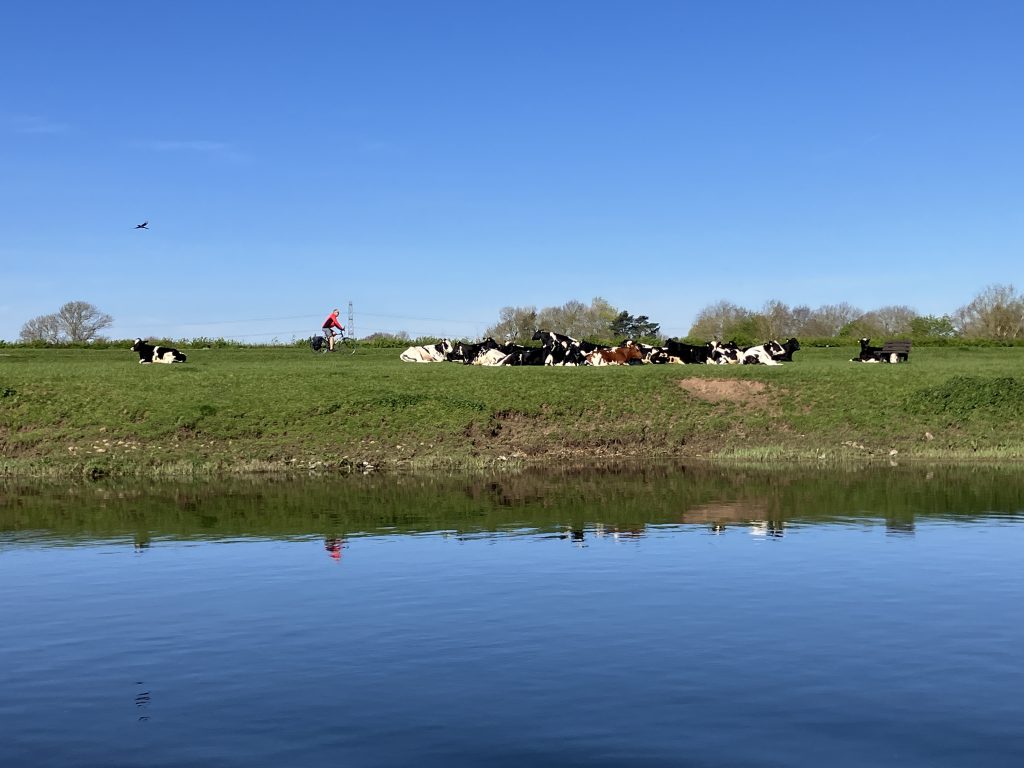
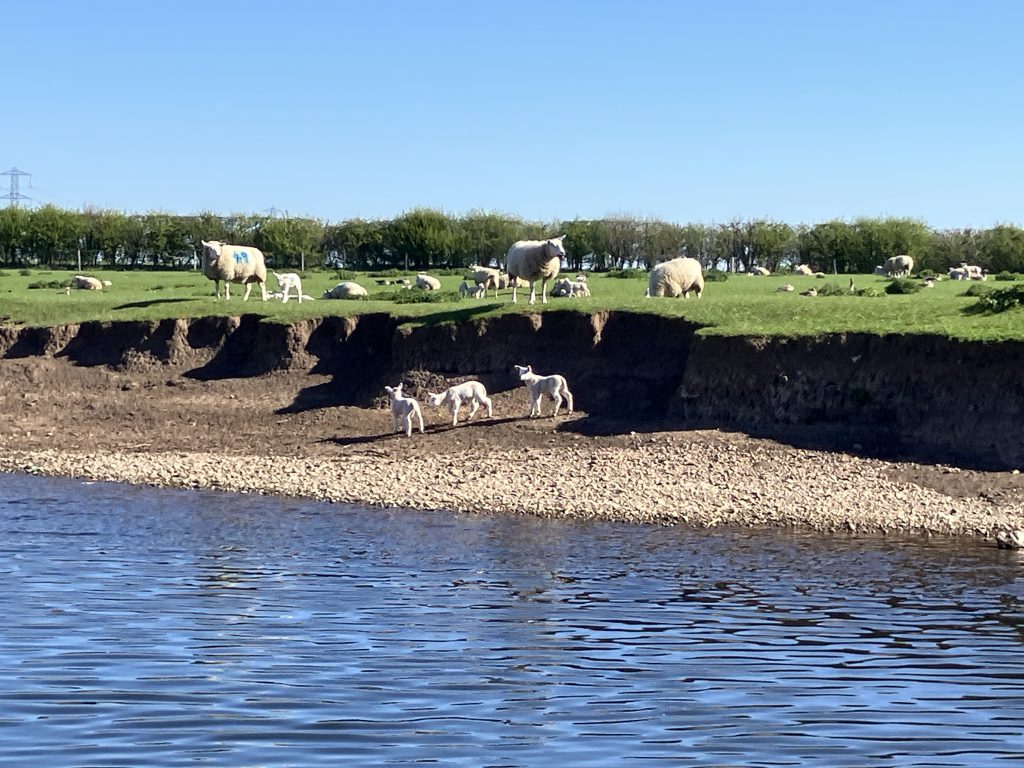
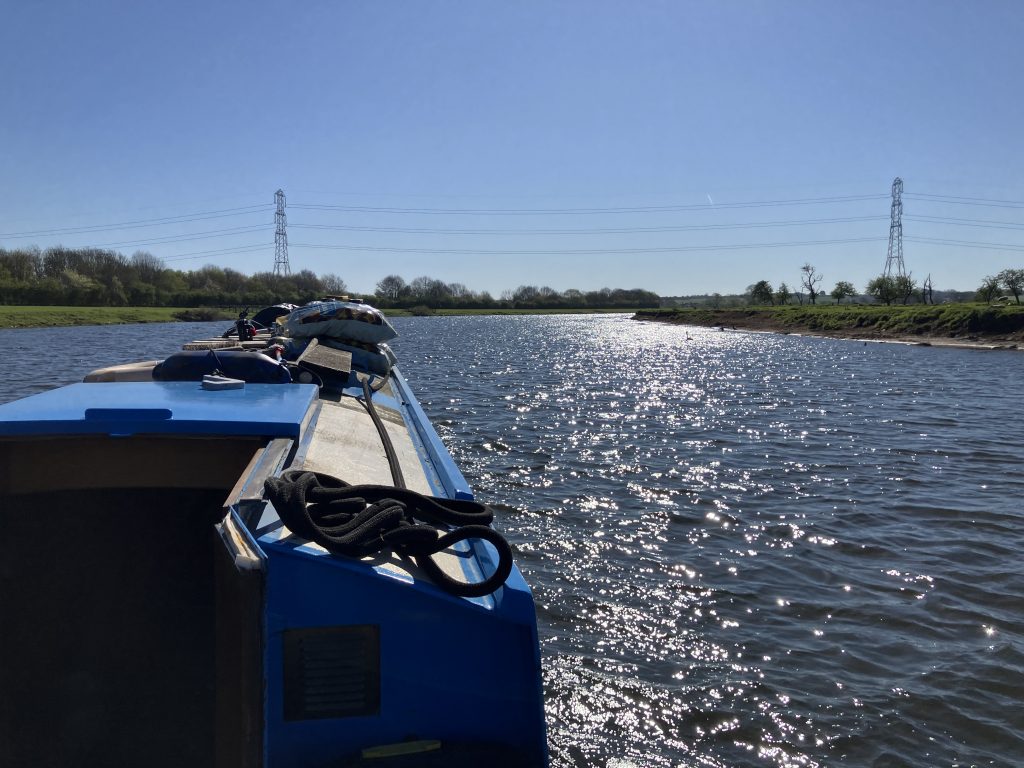
The moorings at the next lock (Gunthorpe) were delightful. There was a floating pontoon, where two cruisers just left as I arrived, so there was a perfect spot for me. And in front of a pub too.
As it had been so calm on the pontoon, at the next lock (Hazelford) I tried to moor facing downstream. I learnt very quickly that that is really not on, as I came in like a rocket and was not able to stop safely at all. In addition these moorings had a high wall and it was really hard to scramble up and down he ladders even just to moor up.
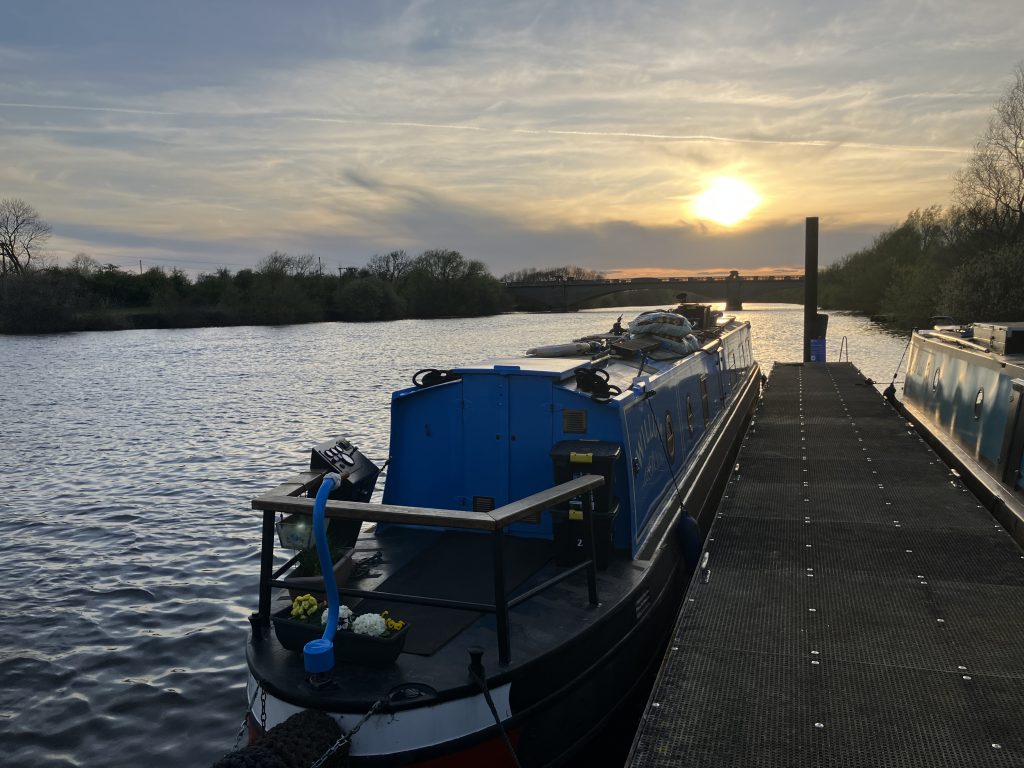
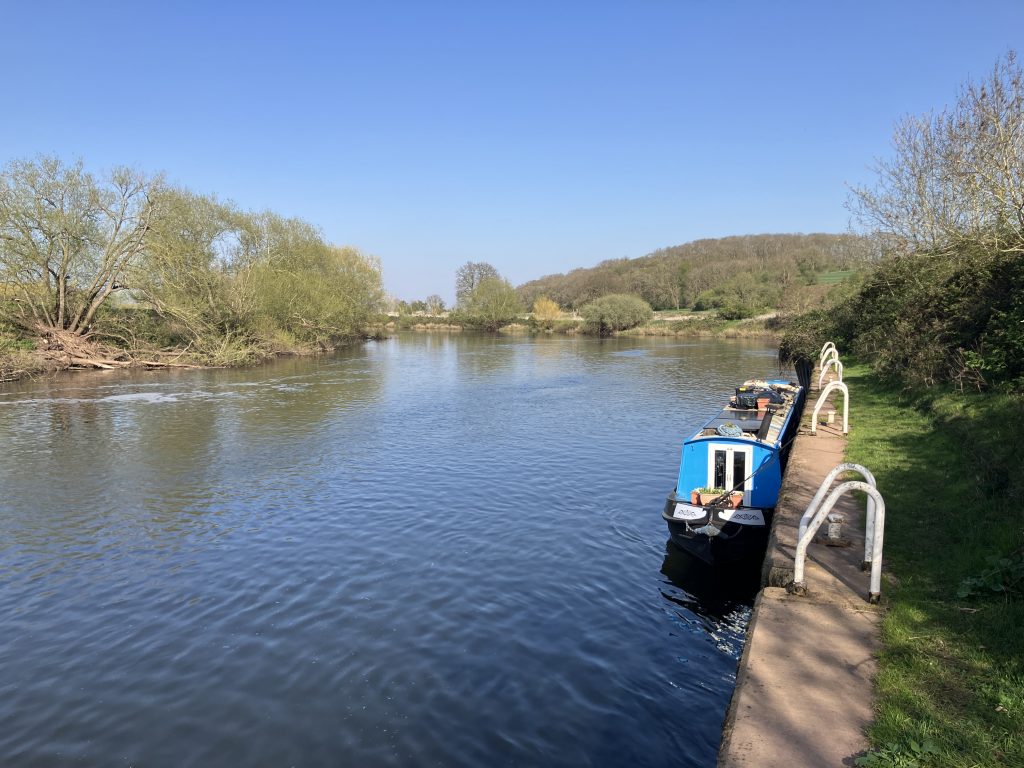
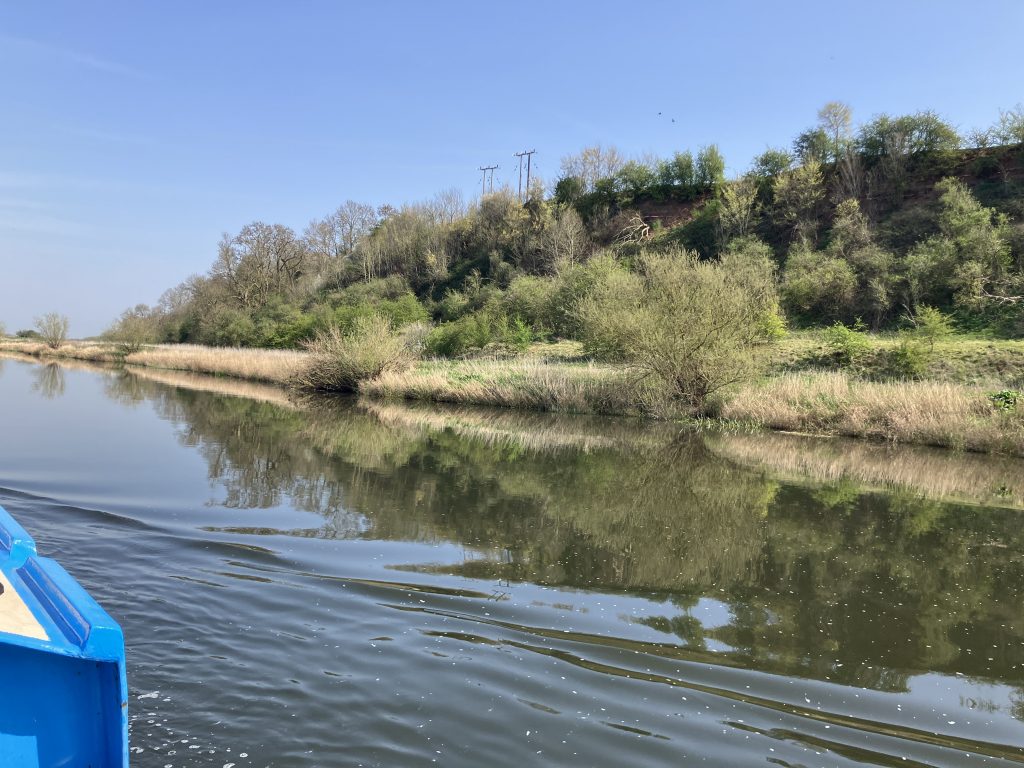
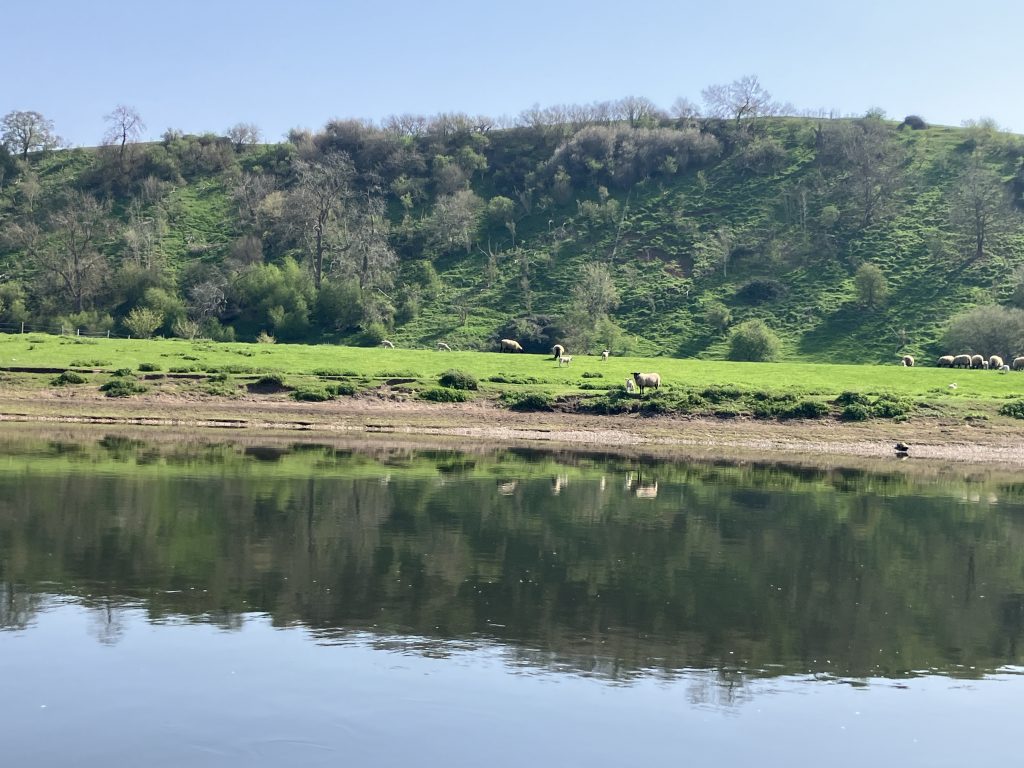
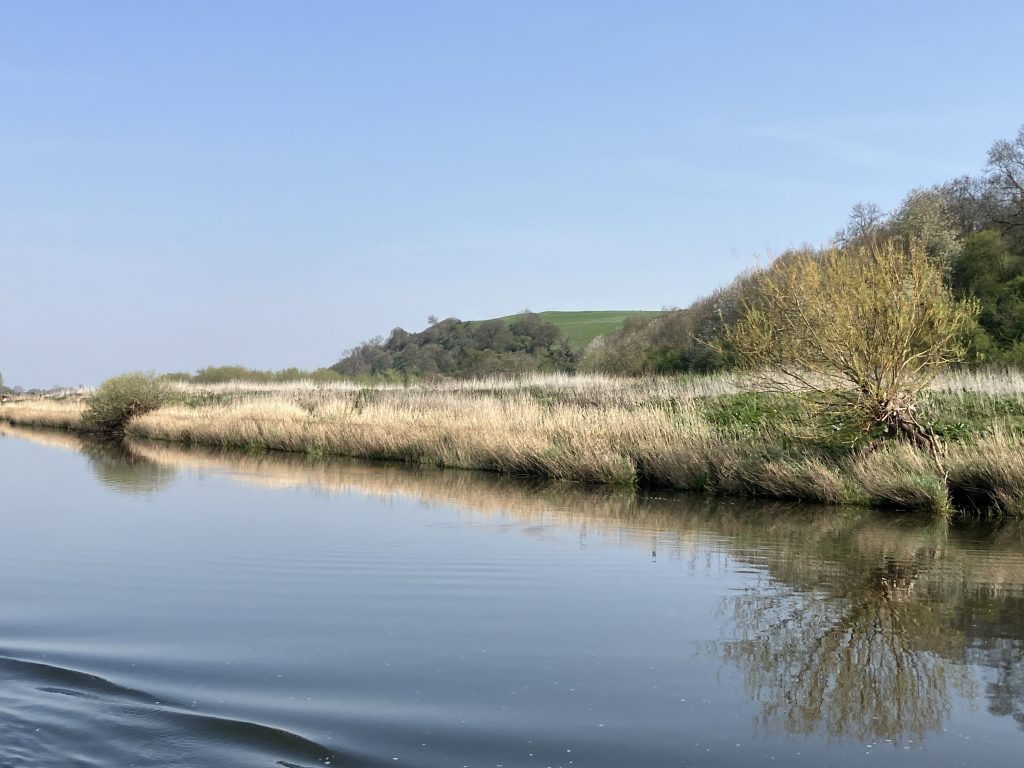
Below Gunthorpe is one of the most scenic stretches of the river as one side is flanked by red coloured cliffs. The whole stretch between Nottingham and Newark is almost entirely rural with only one bridge over 24 miles.
Newark
Finally I reached Newark, where the river splits into three arms and only one of them goes through the town. Considering they also have a flood gate, I was hoping that it was a respite from the high walls, but sadly that was not the case.
The outskirts of Newark with some beautiful old buildings and new buildings very tastefully integrated:
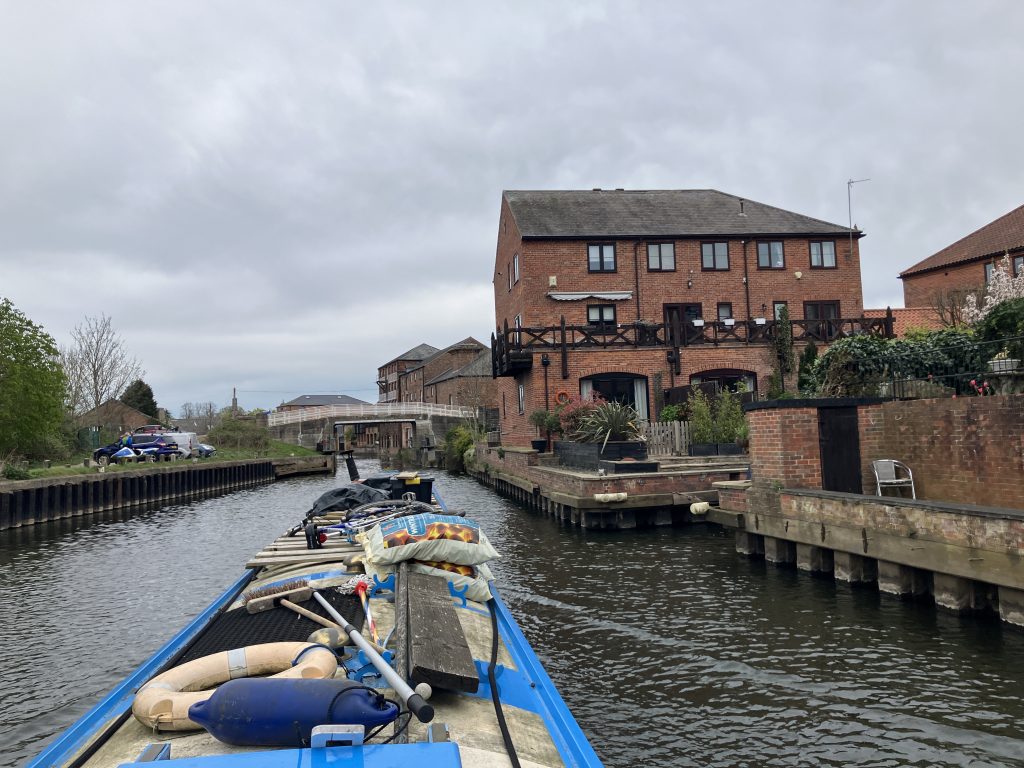
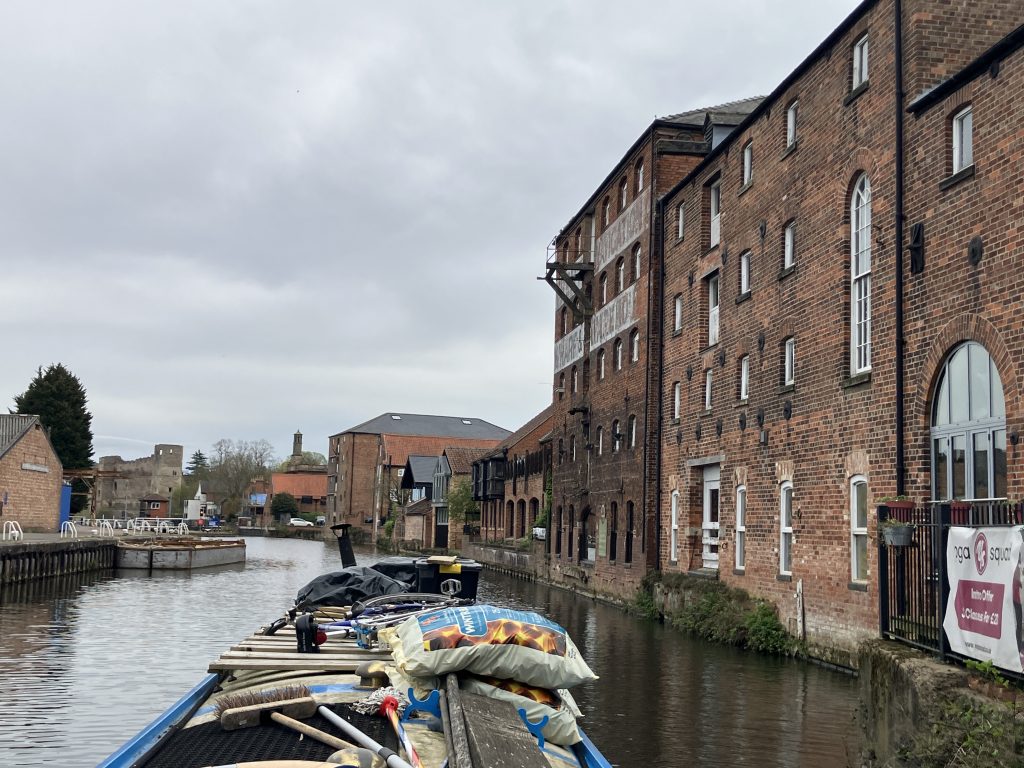
Newark Town lock was the only lock that didn’t have a lock keeper. No problem, self-service it is. Turns out that the controls on this lock are completely different to the other locks and I didn’t understand how to use it properly. Embarassingly I got stuck in it and had to actually call somebody out to help me. The help consisted in telling me which button to press! Ah well, it’s all a learning curve.
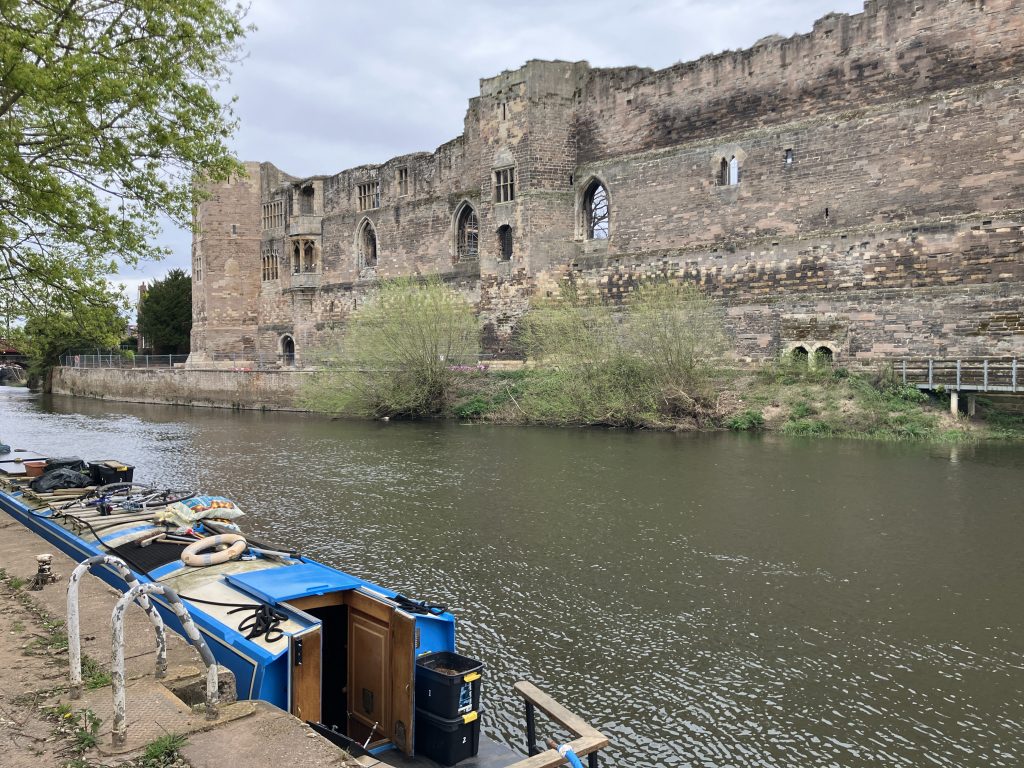
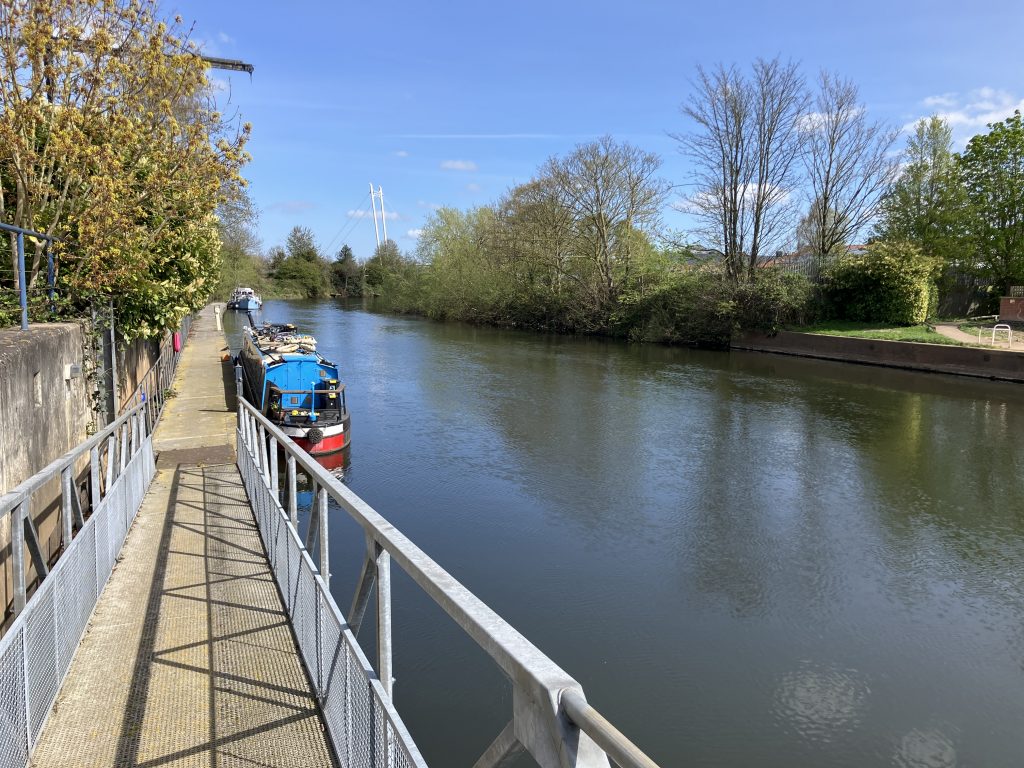
Amazingly I moored up right opposite Newark Castle, which is a ruin with really only one wall left along the river. As amazing as this mooring was for the view, the wall was a real headache again. Fortunately I learnt that there was a pontoon a bit further down and I relocated the next day.
On to the tidal!
Then it was time to prepare for the tidal river! I had read everything there was to read and was well prepared with anchor, VHF, life jackets and, most importantly, charts with a red line to follow along as there are shallow sandbanks in various places. I have great respect for tidal waters as it is easy to get stuck or get swept away if there are any problems with the engine. I was joined for this part by a boaty friend, who was more relaxed than me and pointed out that others will have done this trip with a lot less preparation than me.
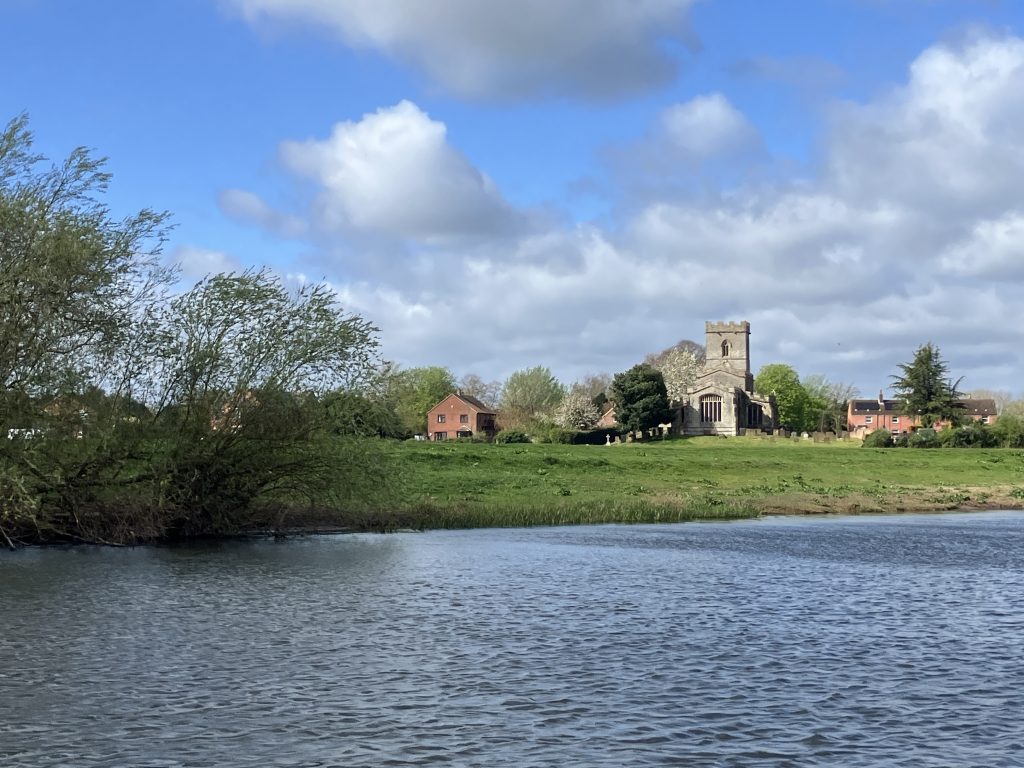
So next day we set off to Cromwell lock, which is the beginning of the tidal section. This is the gentlest part of the tidal Trent as it is at the top end and sometimes the tides don’t even reach Cromwell. The lock keeper assured us that with our shallow draught of only 2ft we should be absolutely fine. But he did reinforce “follow the red line“.
We set off with chart in hand, my friend constantly reading the charts and finding all the various markers on the banks and me focusing on keeping the boat on the red line with wind buffeting us from all sides as the river bends took us in all directions. The red line is quite tricky in places especially as we didn’t find some of the markers that we were supposed to follow.
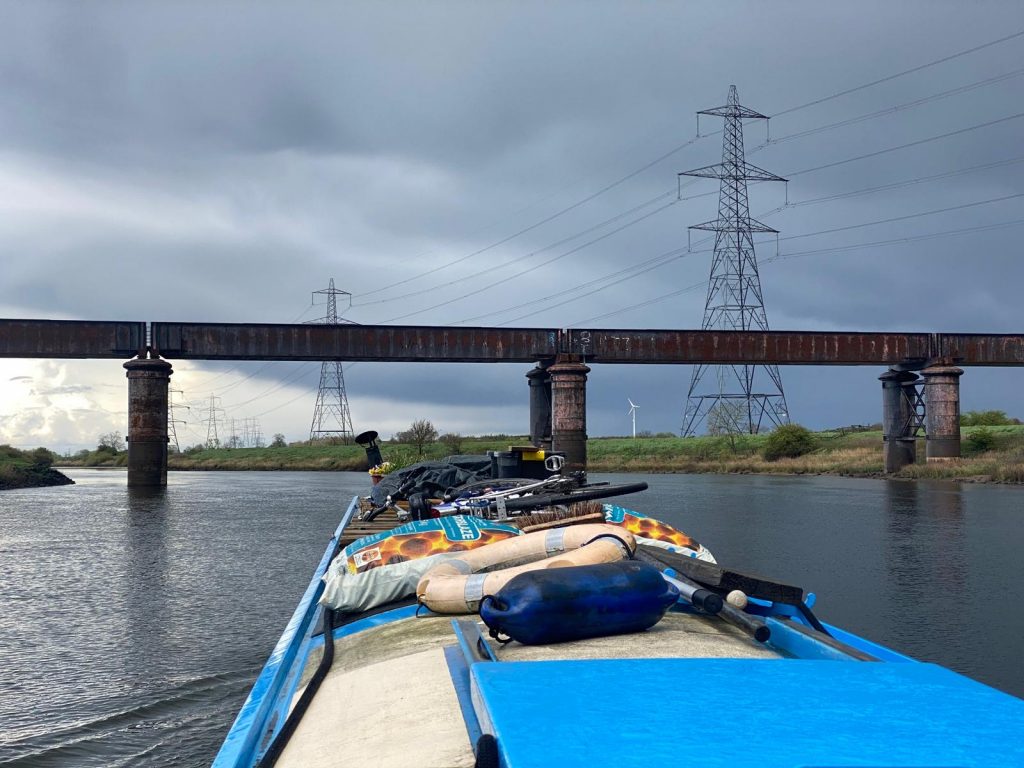
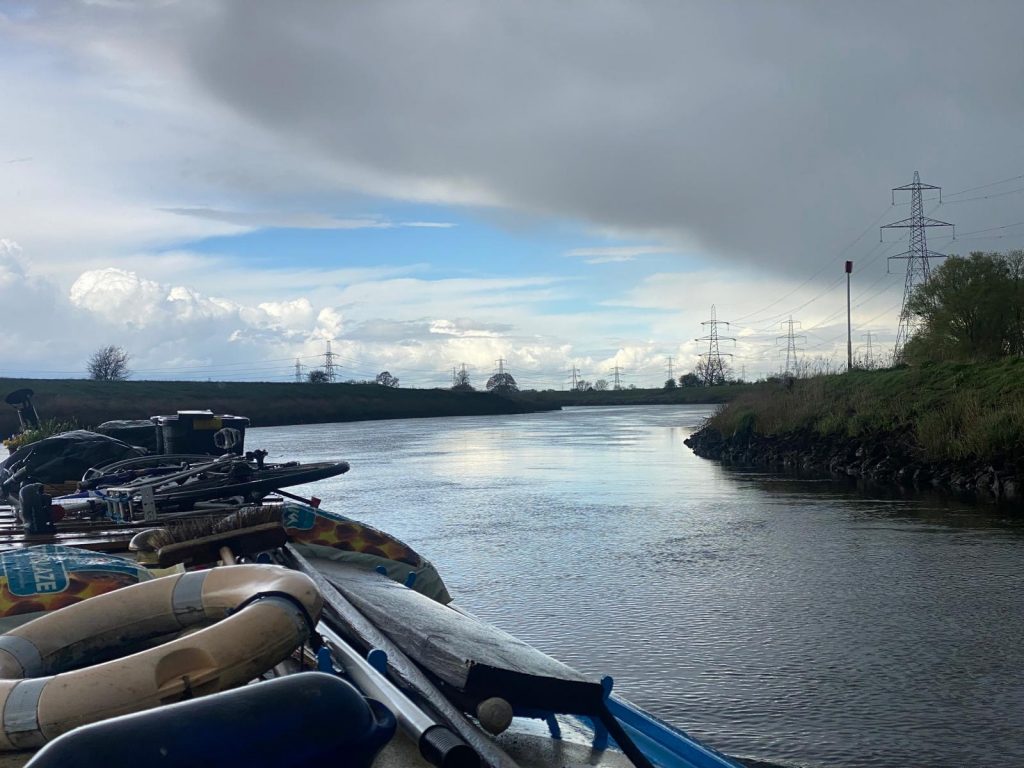
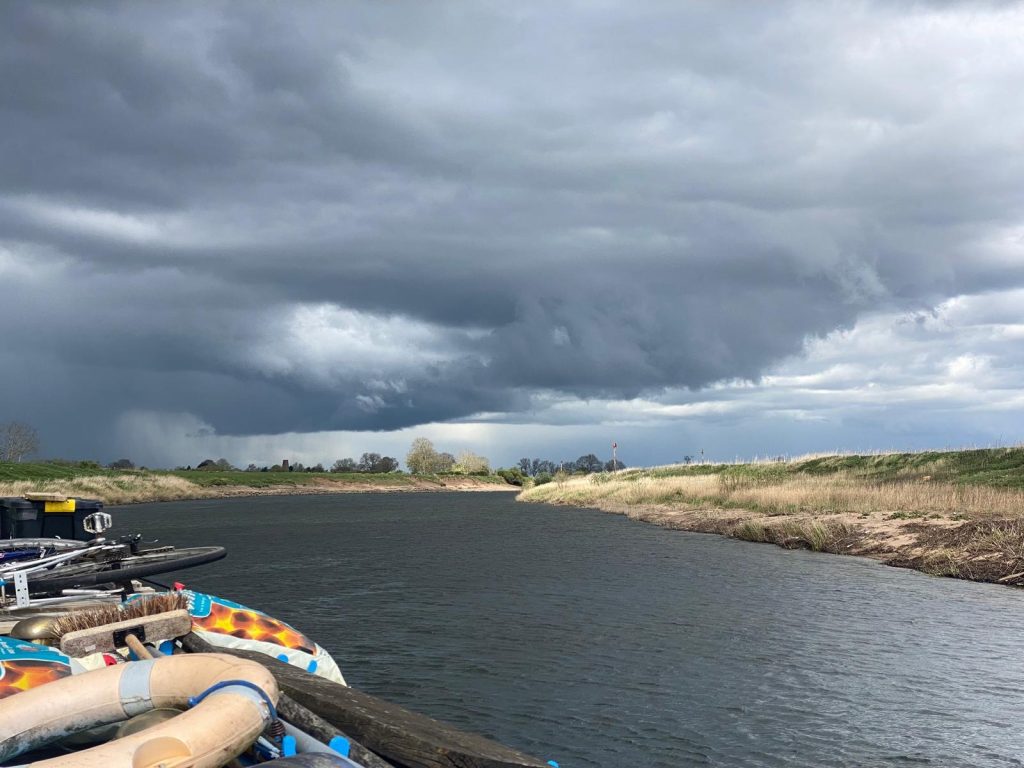
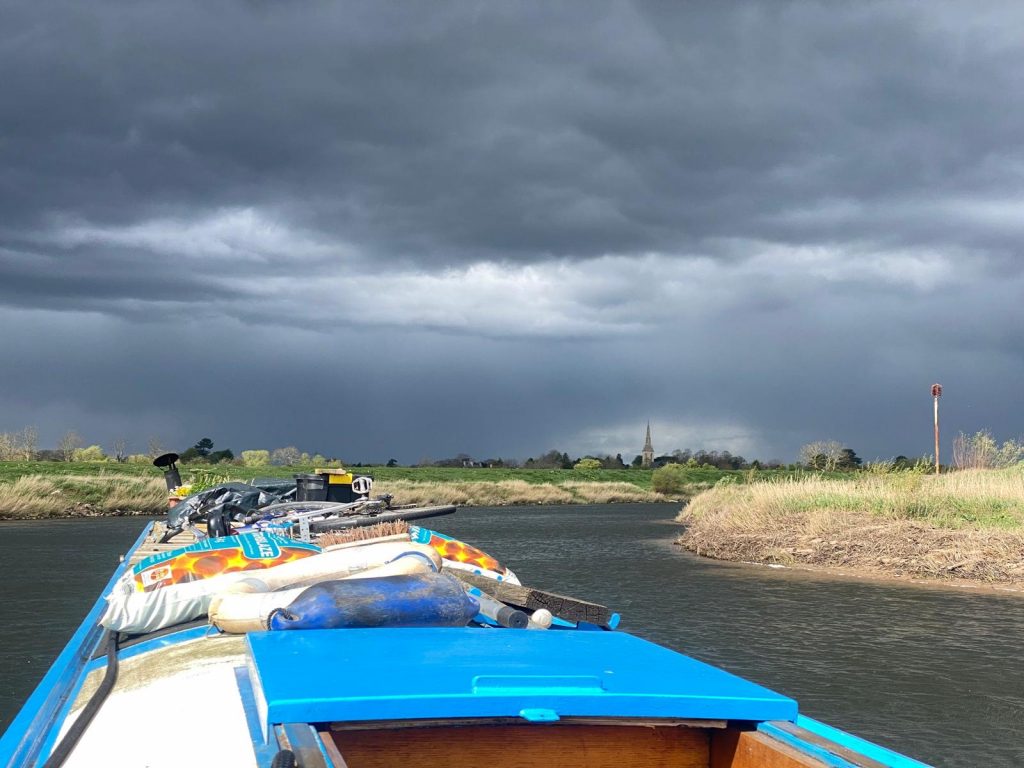
Foreboding black clouds ahead made good on their promise and dumped a lot of hail and rain on us (not very many pictures from this point onward!). Not ideal with the paper charts! My friend ducked into the hatch with the charts and I tried to see through my rained on glasses. It was quite the experience!
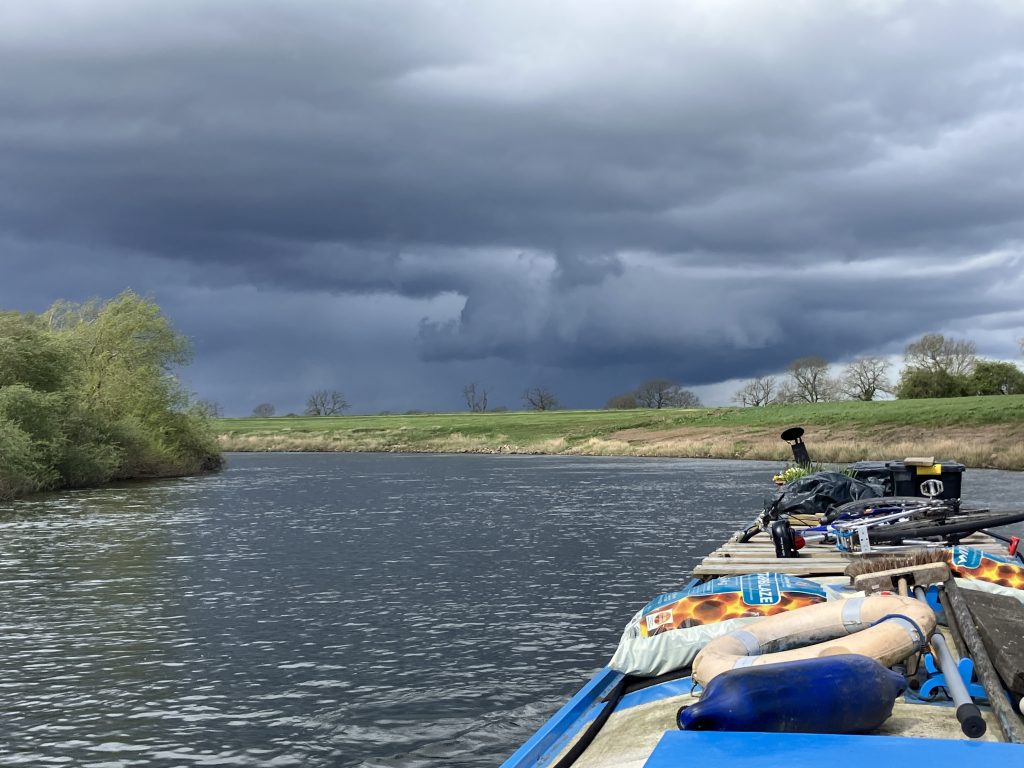
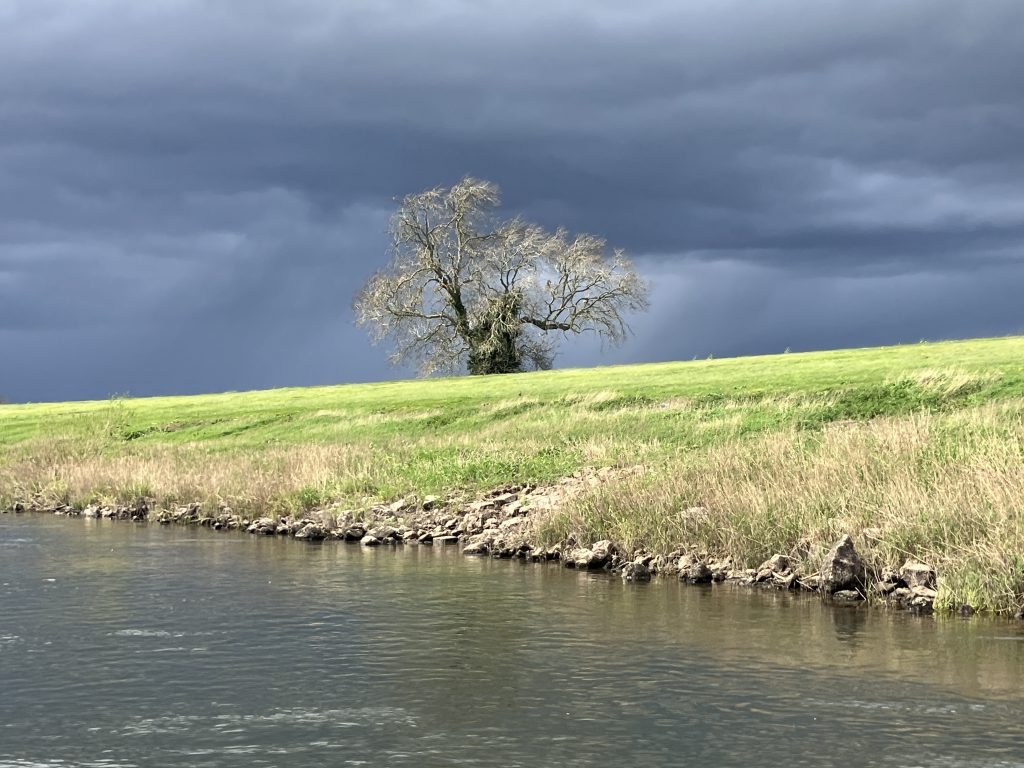
Finally after three hours we had outmanoeuvred all the shallows and reached the safe haven of Torksey lock, where we were getting off the tidal river.
When we arrived there was not enough water yet to get us into the lock so we had to wait about half an hour. About five cruisers were already waiting on the pontoons below the lock. The radio came in handy once more as they were calling in the boats one by one. We got in ahead of most of the other boats waiting as they were cruisers, which were deeper draughted than us. The lock is truly enormous and took a long time to fill.
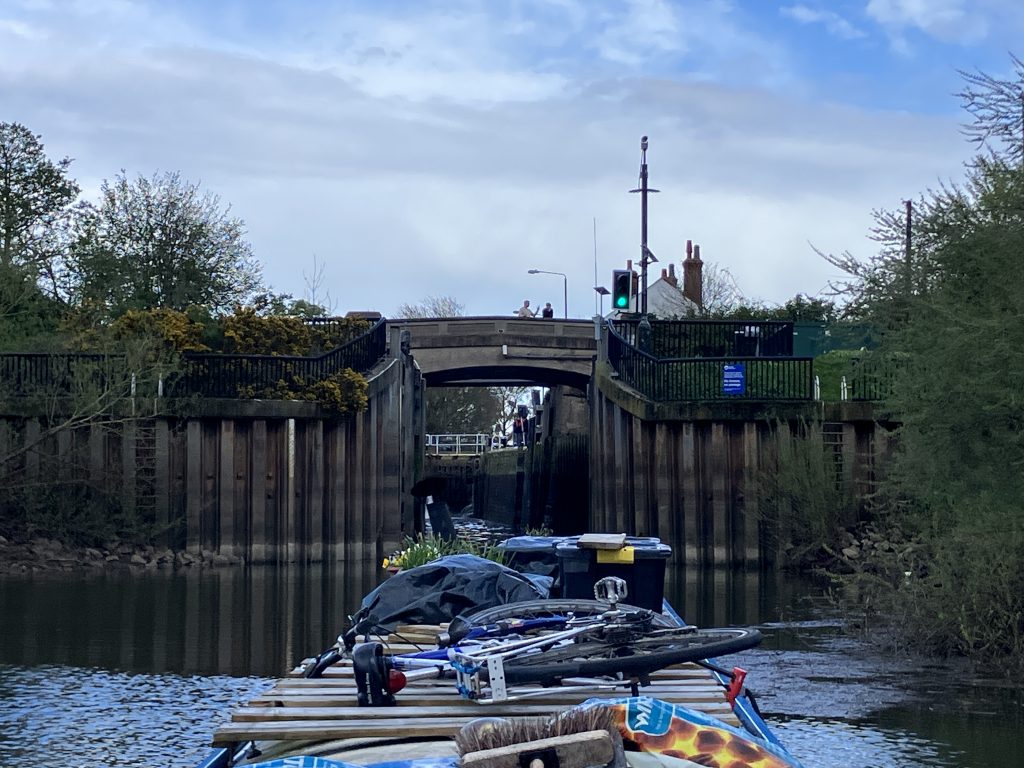
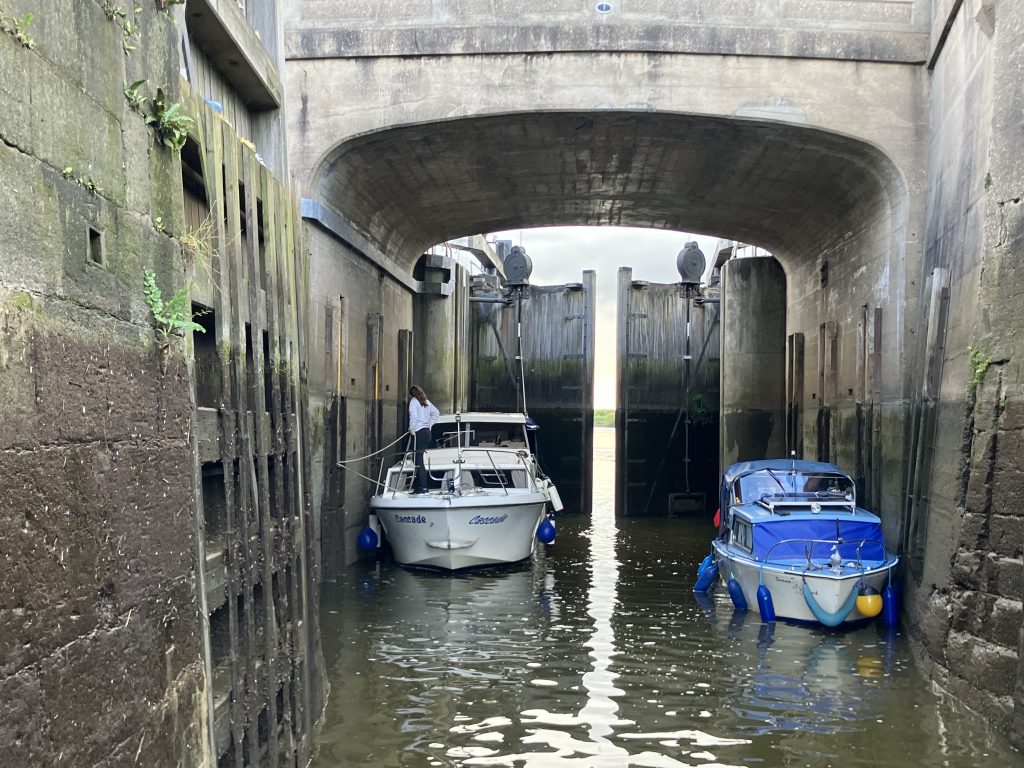
Then we emerged onto the Fossdyke & Witham Navigations into a beautiful sunny evening with a rainbow to greet us.
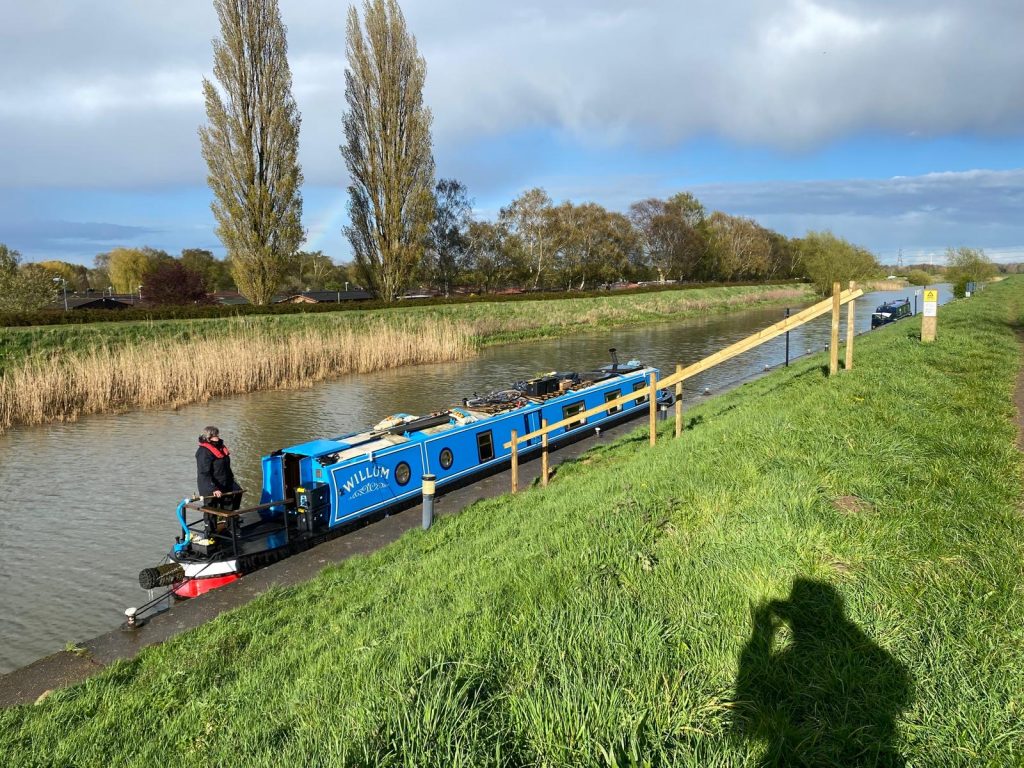
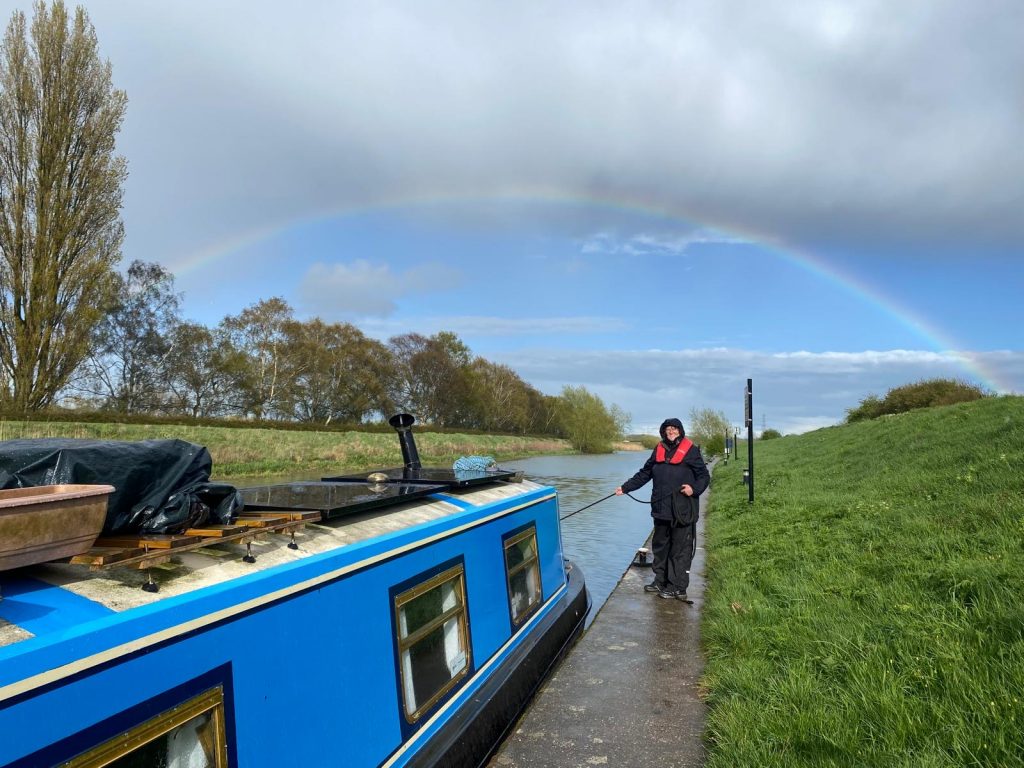
I will now explore the Fossdyke & Witham Navigations, which will take me to Lincoln and Boston. This is a totally different world to the canals before. More about this in the next post.
Some final thoughts for those with Thames experience thinking about going on the Trent:
- The Trent flows a lot faster than the Thames (though this may be because I am here in April rather than high summer). It is really important to moor facing upstream or you won’t be able to stop safely at a mooring.
- There is no (easy) way to moor in the wild and there are very few moorings apart from the locks. The river looks too shallow on the sides and I obsessively staid in the middle, careful not to cut any corners. There are sandbanks apparently and I have never heard of this problem on the Thames. There are also no marker buoys to mark any shallows.
- As there are so few moorings it is advisable to arrive early in the day when other boats leave (just like on the Thames).
- Ask the lock keepers about the moorings ahead, especially where the pontoons are. Don’t go on the Trent if you are not comfortable climbing ladders.
- Bring a radio. It’s worth it.
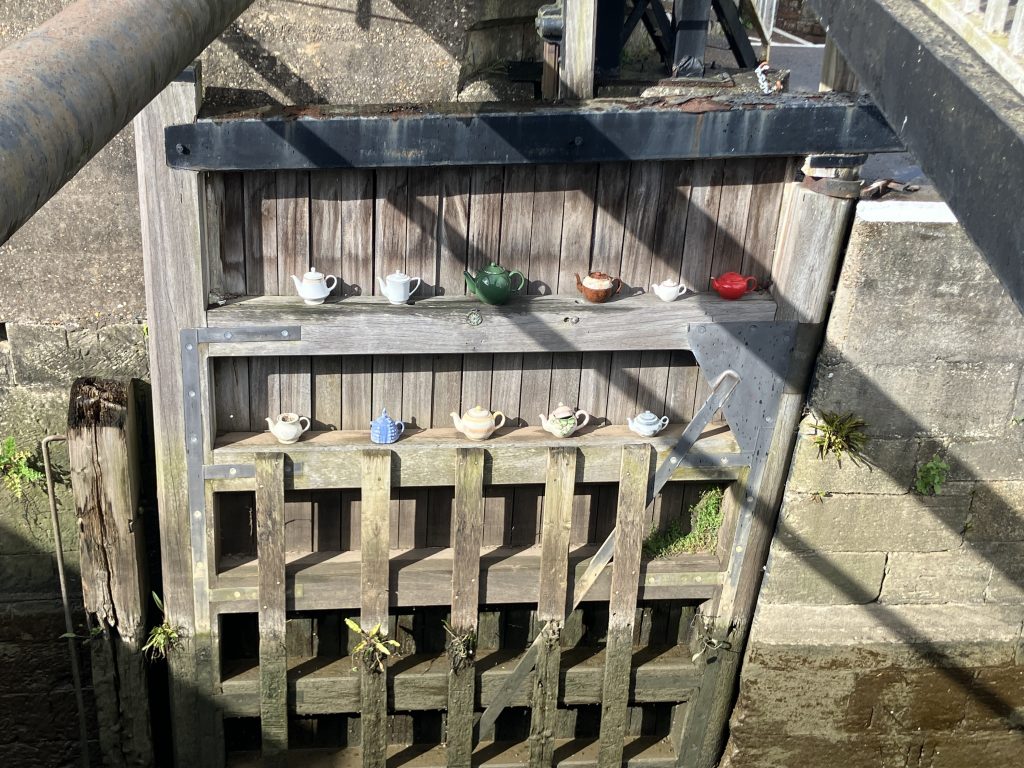
Blimey, that was an exciting episode! Glad you managed it all in one piece, without smashing into other boats or being washed away by river torrents or washed onto sandbanks!