Cycling the derelict Derby canal
The Derby canal originally ran from the junction with the Trent & Mersey at Swarkestone lock to the Erewash canal at Long Eaton. This is an interesting route as there was a connection from the Trent & Mersey to Long Eaton already via the Trent. But that route did not incorporate Derby and it also would have been impassable when the Trent was in flood.
The canal was abandoned in the 1960s and a lot of it was filled in, but the land was not allowed to be built over in order to keep the option of restoration open. Apart from some roads apparently nothing stands in the way of restoration other than the lack of a huge amount of money. The Derby and Sandiacre canal trust has grand plans for sure.
My cycle ride on the National Cycle Route no. 6 covered only the section from Swarkestone to Derby city centre.
The bottom end of the canal by Swarkestone lock is in water about 50 metres to the first bridge and is used as boat moorings. On the other side of the bridge it looks like some clearing of vegetation has already taken place as the canal route is very visible as a ditch for a long stretch.
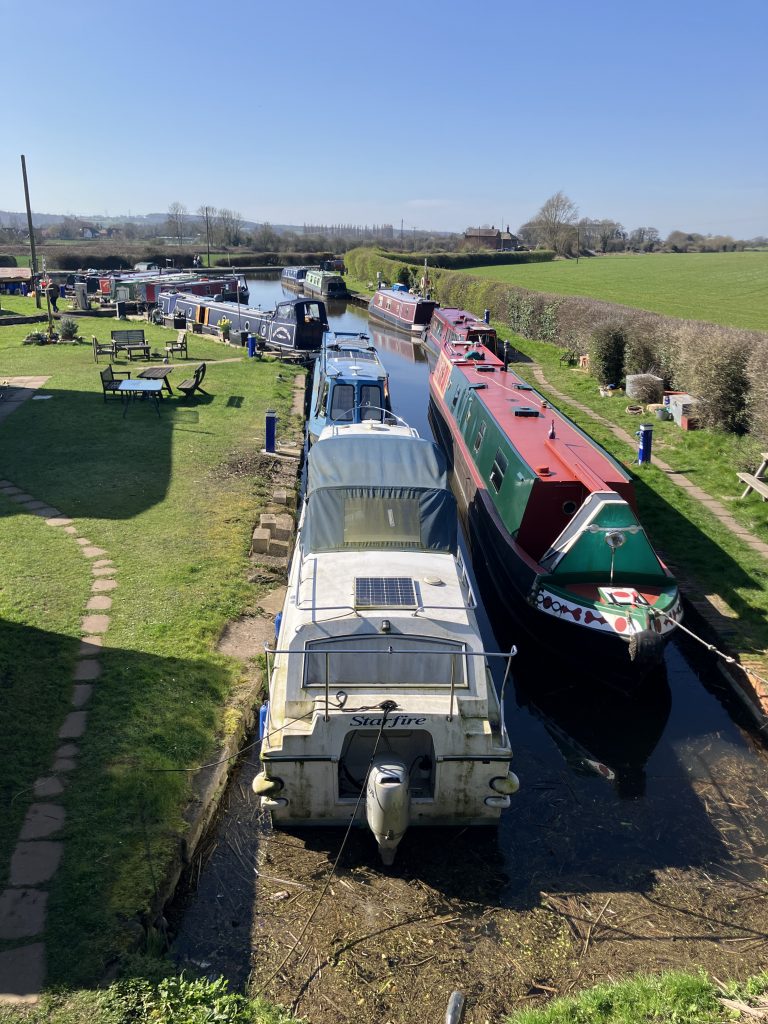
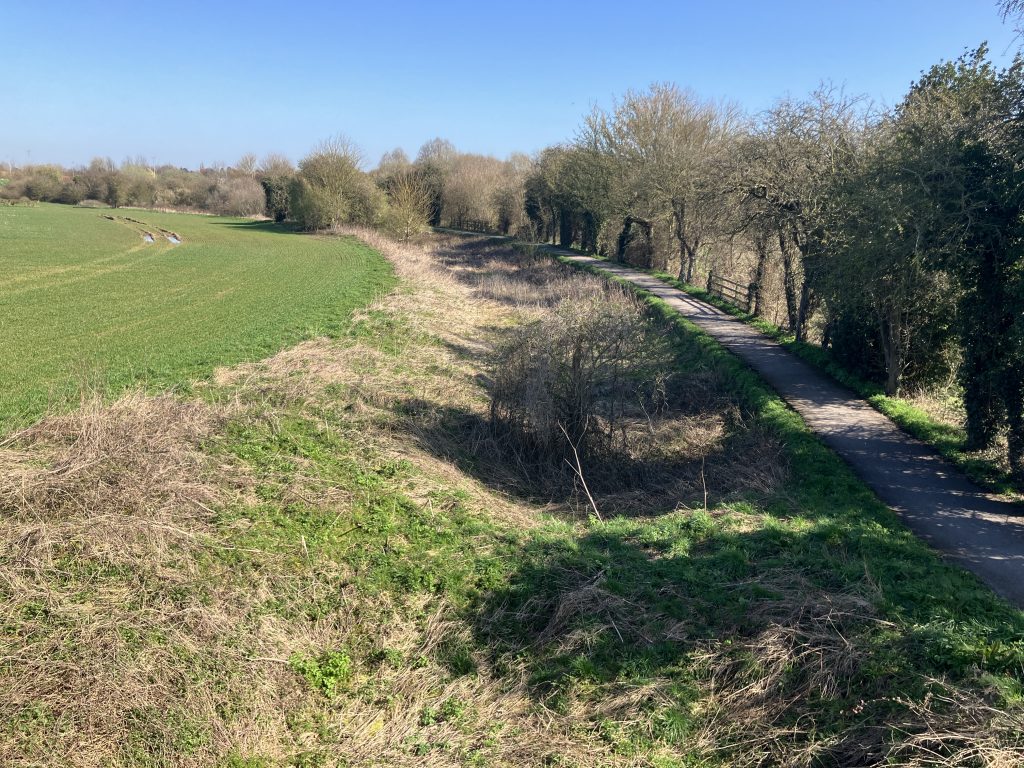
As I cycled along I kept looking out for evidence of the canal. I believe that the cycle path changed sides a few times as the canal “ditch” was sometimes on the left, sometimes on the right. In at least one place, the path ran right inside the canal bed as it leads through a road bridge, which is definitely an old canal bridge.
The path is largely level, but along the way there is the occasional little hill to go up where I think the locks would have been. There is even an area called Shelton lock. There used to be three locks between Swarkestone and the river Derwent crossing. Sadly there is no evidence of them anywhere now.
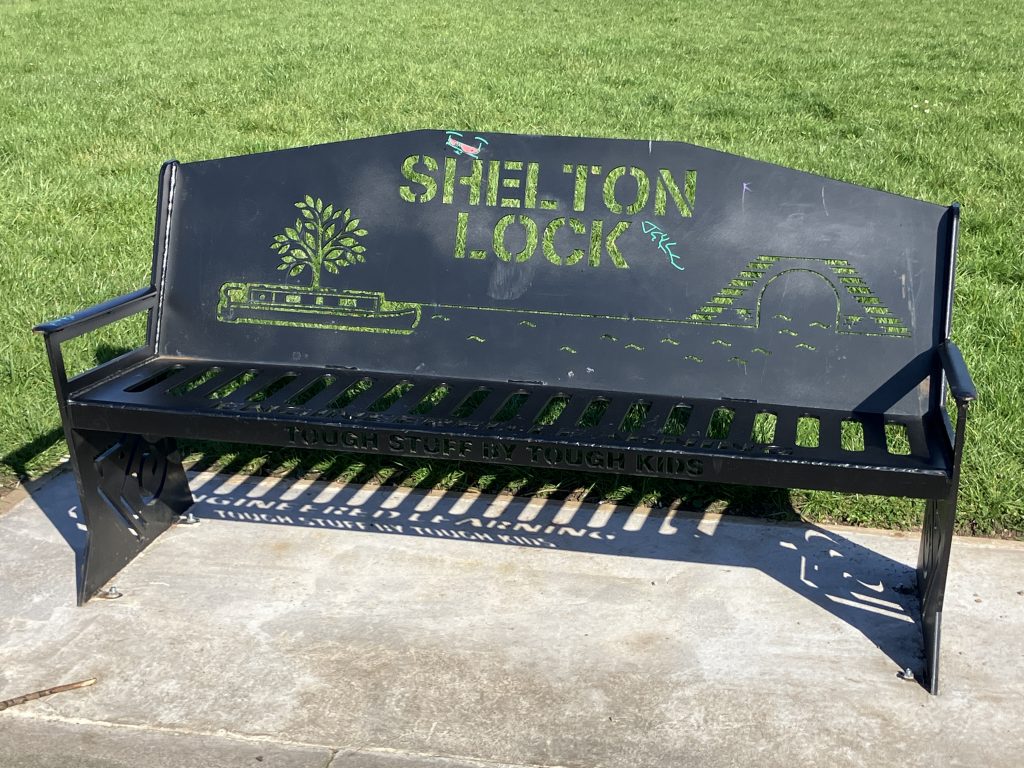
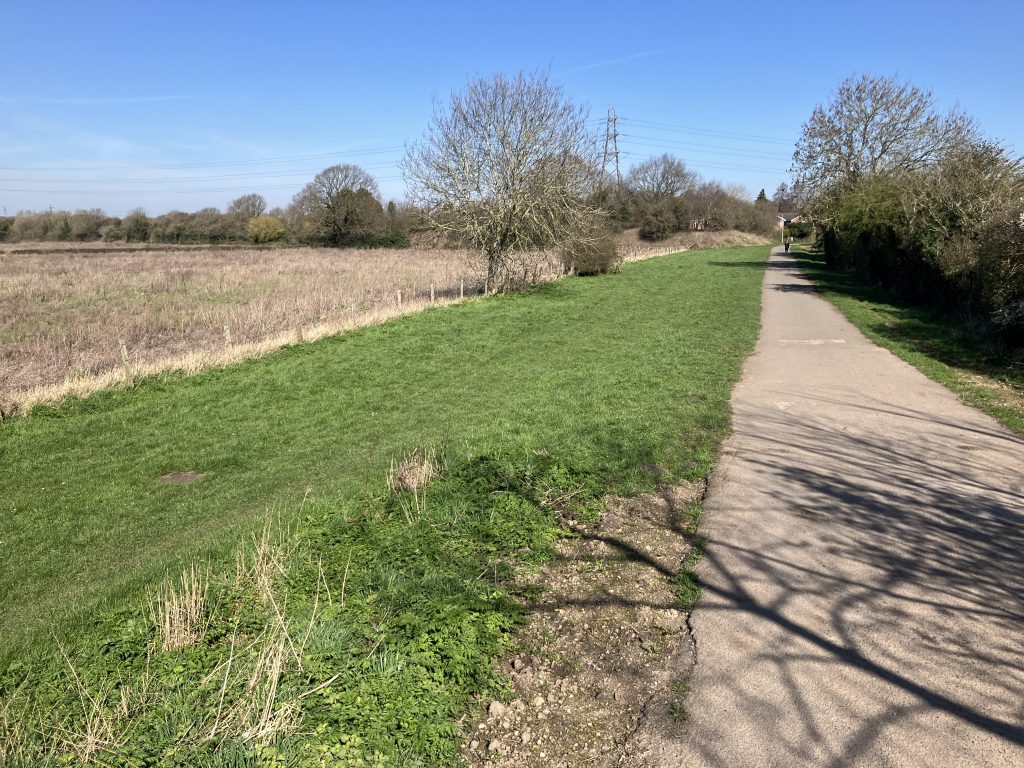
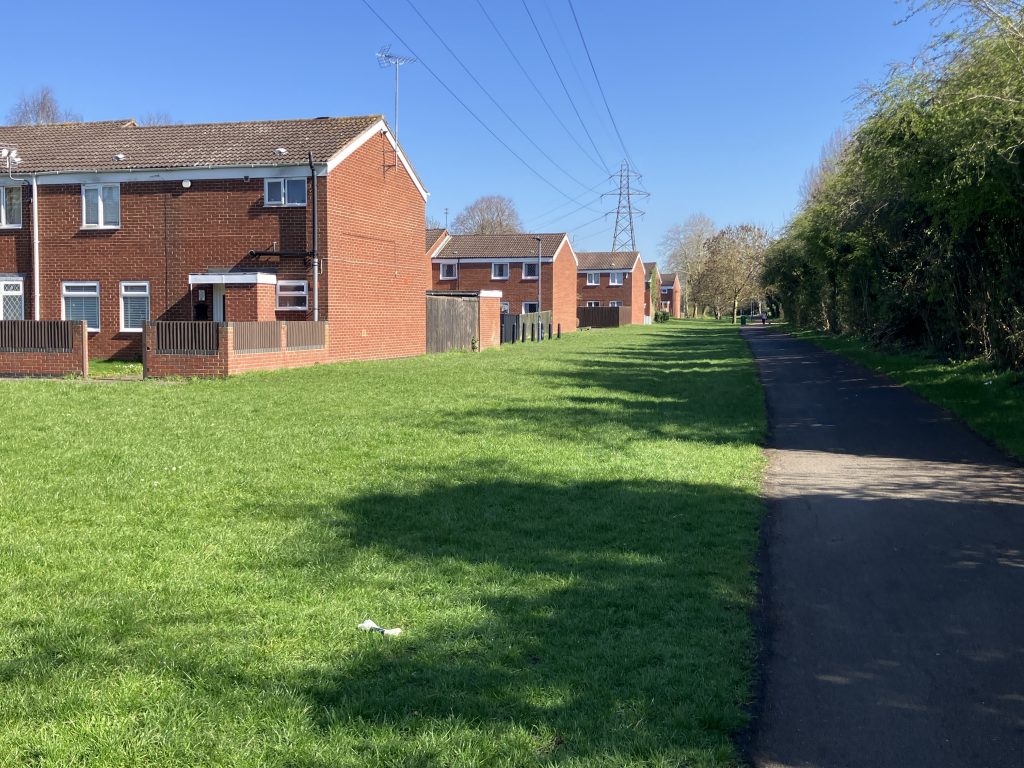
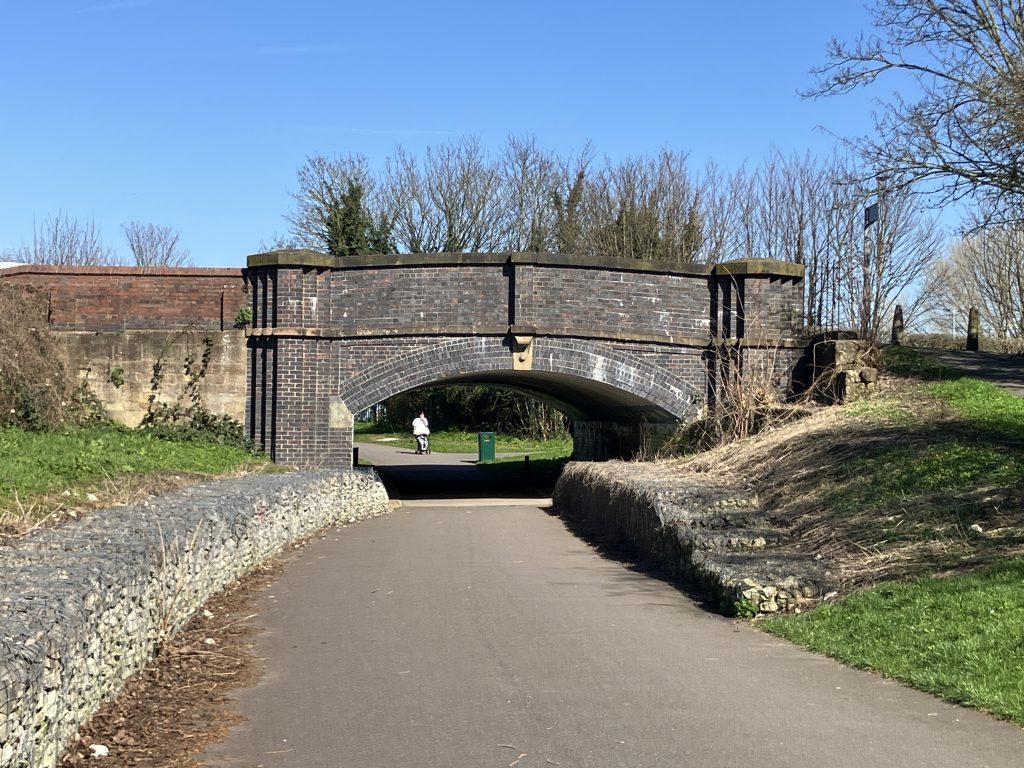
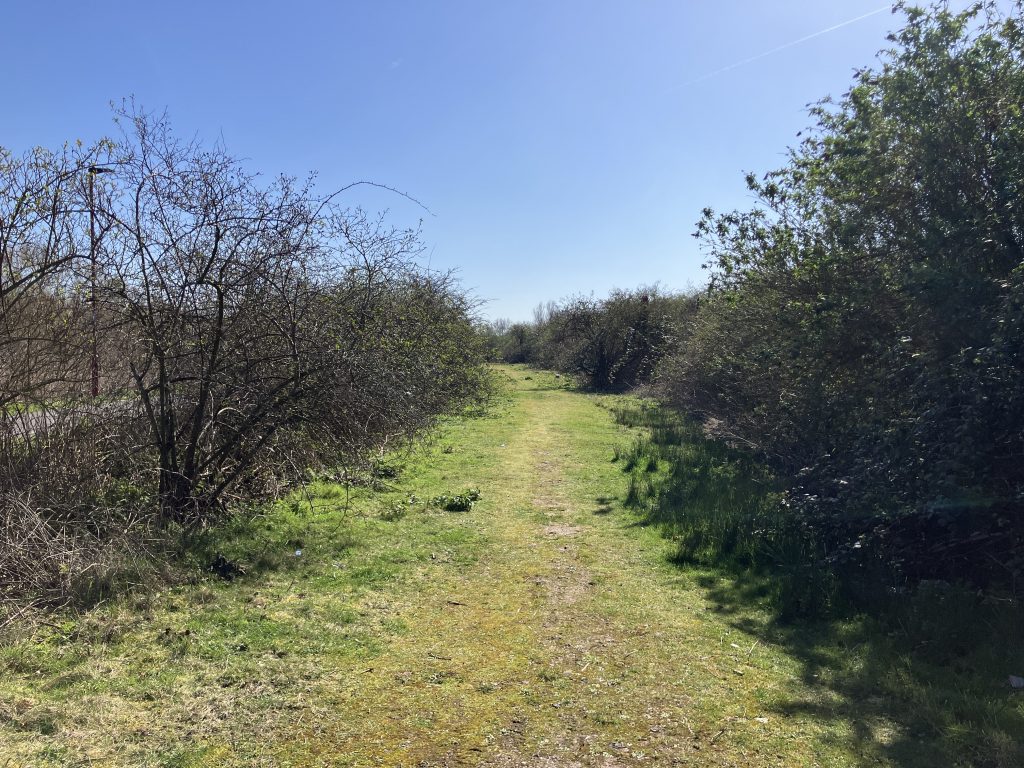
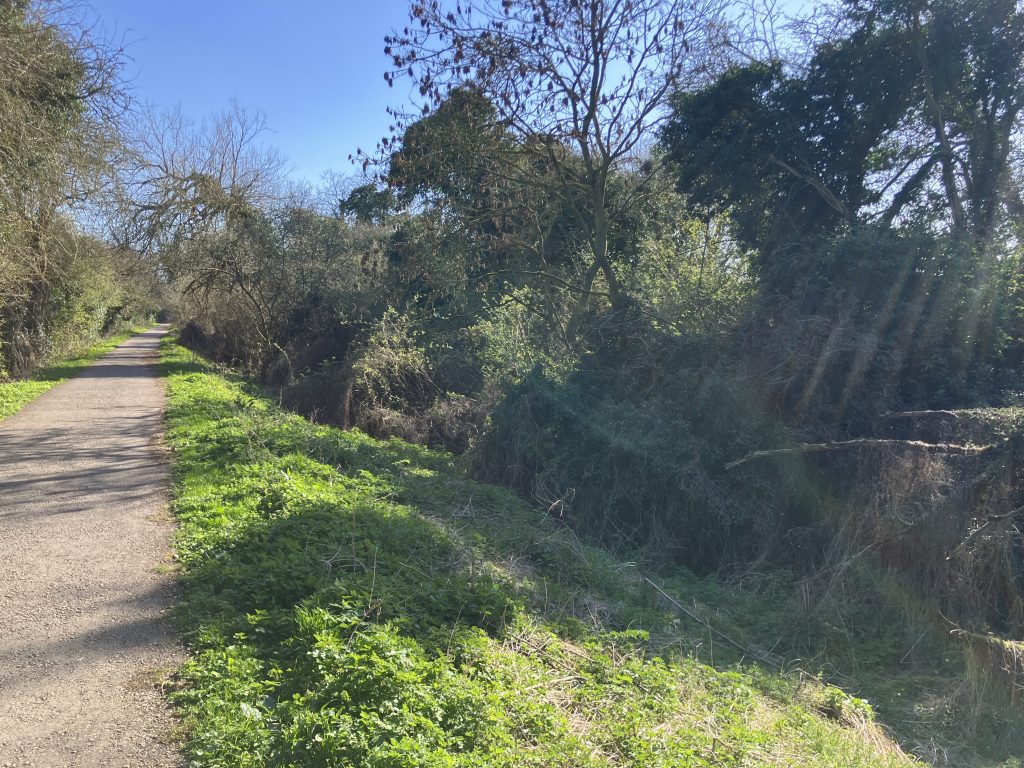
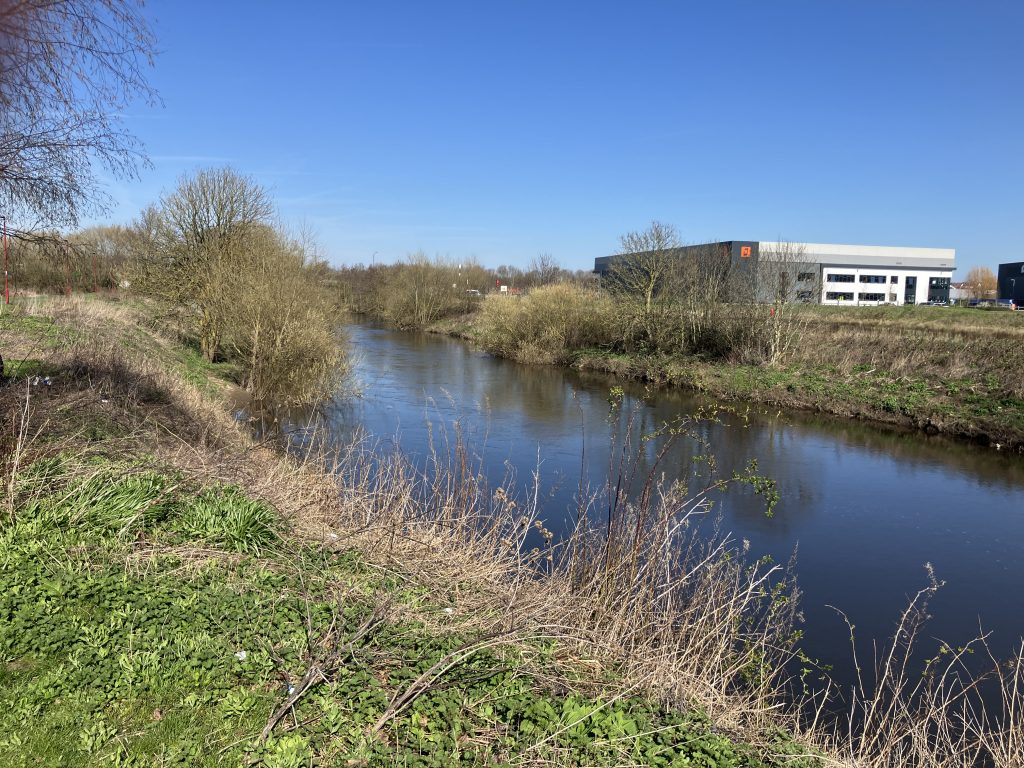
The route eventually starts running alongside the river Derwent for a long stretch through Pride Park right into the city centre. The canal is much higher up than the river. The river has steep high banks and I assume that the level will go up a lot in winter.
The canal used to cross the river “on the level” rather than over an aqueduct. A lock took the boats down to the river, where they crossed and locked up again on the other side. A bridge was built for the horses to cross. I could not find an explanation how this setting coped with the river flooding, but I imagine it must have been impassable sometimes in the winter.
The restoration designs include a boat lift to cross the river rather than locks. If this ever gets built, it will be spectacular! The restoration of this canal all the way to Long Eaton would create a cruising ring of Derby canal, Erewash canal, river Trent and Trent & Mersey canal. It would include boating right into Derby city centre. What a great plan!