Water, water everywhere – Down the Trent & Mersey canal
The Trent & Mersey canal
As I am still on the Trent & Mersey, let me tell you a little bit about its history. This is one of the oldest canals, built (once again) by canal pioneer James Brindley, completed in 1777. As the name suggests, it was built to provide an East-West connection between the ports of Hull via the Humber/Trent and the port of Liverpool, via the Mersey. It has one of the longest (and scariest) tunnels and one of the longest lock flights, but both of these are more toward the Mersey end, so I am spared this time.
One of the major lobbyists for the Trent & Mersey canal was Josiah Wedgwood, who had his pottery in Stoke-on-Trent and saw the appeal of a transport route for his finished goods by boat rather than by horse carts on bumpy roads, which smashed half of his goods to pieces. After some wrangling the canal route was planned to go right past his factory and the building of the canal commenced with a big celebration and Wedgwood making the first cut in Stoke.
On a personal note: as ever a new canal brings new challenges. Most of the locks on the Trent & Mersey have quaint little brick bridges over the bottom. They are pretty, but cause difficulties, when it comes to single-handed locking. It means when going down I cannot pull the boat out of the lock and close the gates behind me as the bridge is in the way. It also means I have to either jump down onto the roof of the boat (I am very very bad at jumping) or climbing down the extremely yucky slimy lock ladder to get back onto the boat. After that I need to moor up again outside the lock and walk back to close the gates. Locking through these locks is very slow for me.
Rugeley to Great Haywood and back
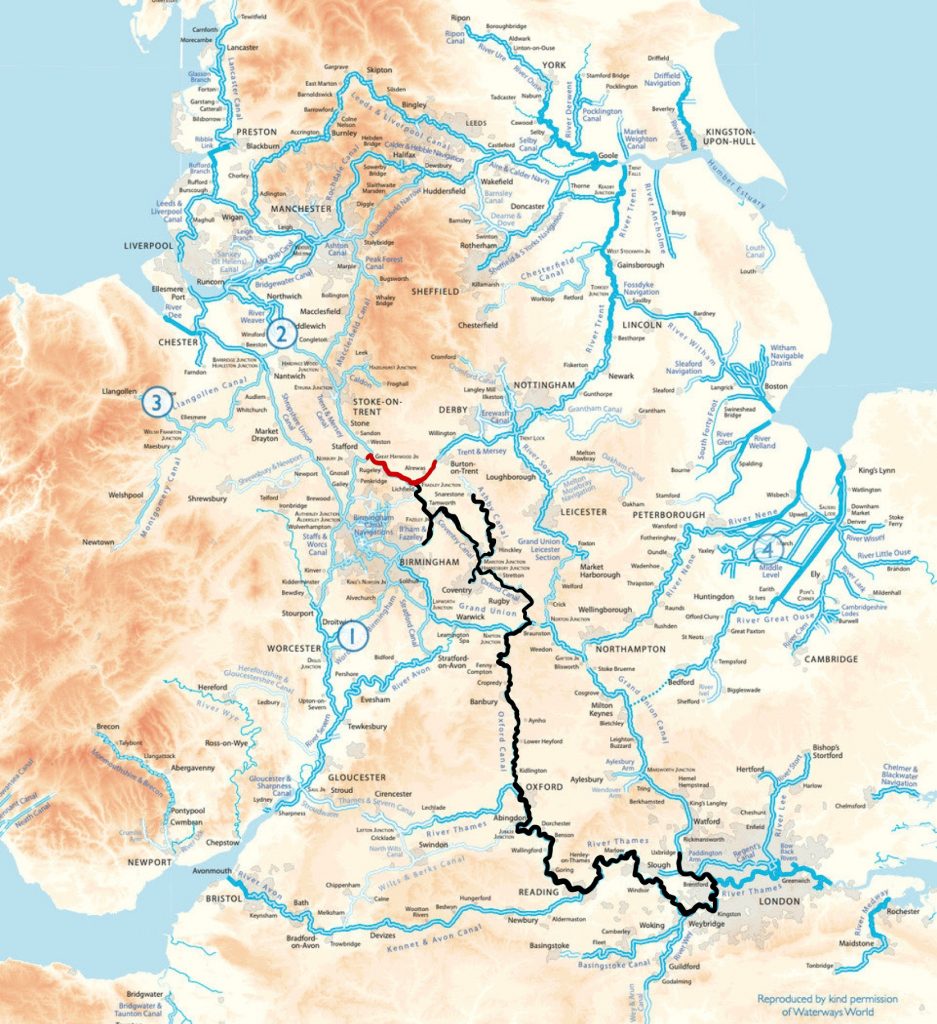
Continuing my excursion north from Rugeley I went a bit further up the Trent & Mersey canal to Great Haywood junction, where the Trent & Mersey meets the Staffordshire & Worcestershire (Staffs & Worcs) canal. My actual destination was Tixall Wide, located 1/2 mile beyond Great Haywood on the Staffs & Worcs.
This is the journey there.
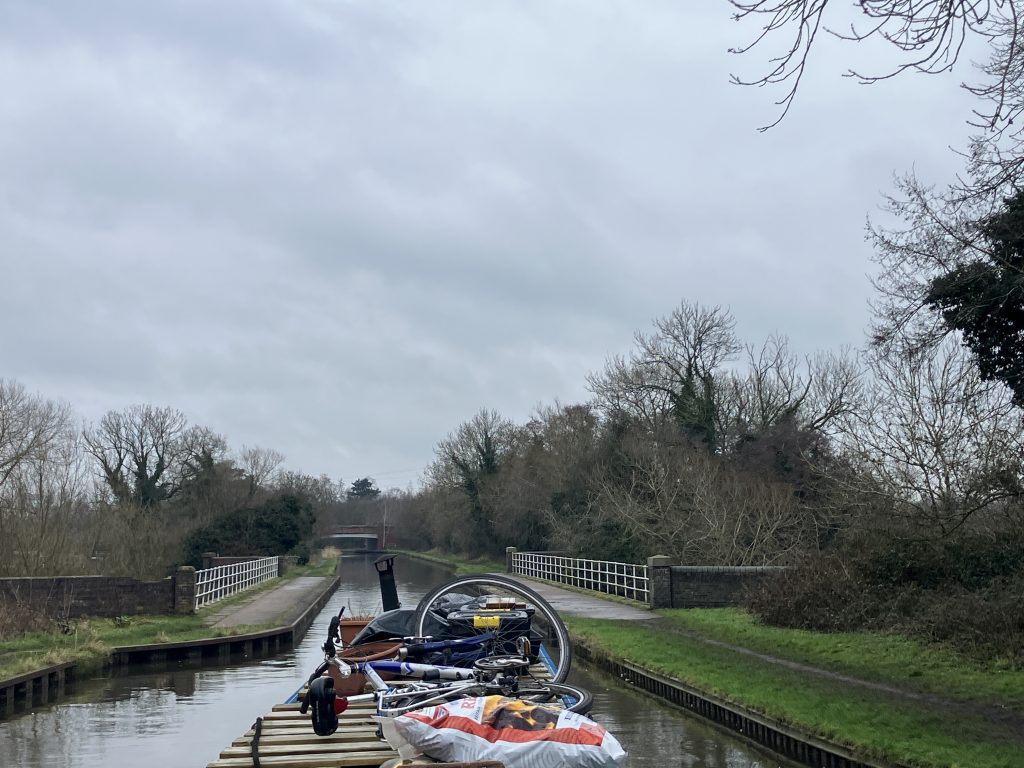
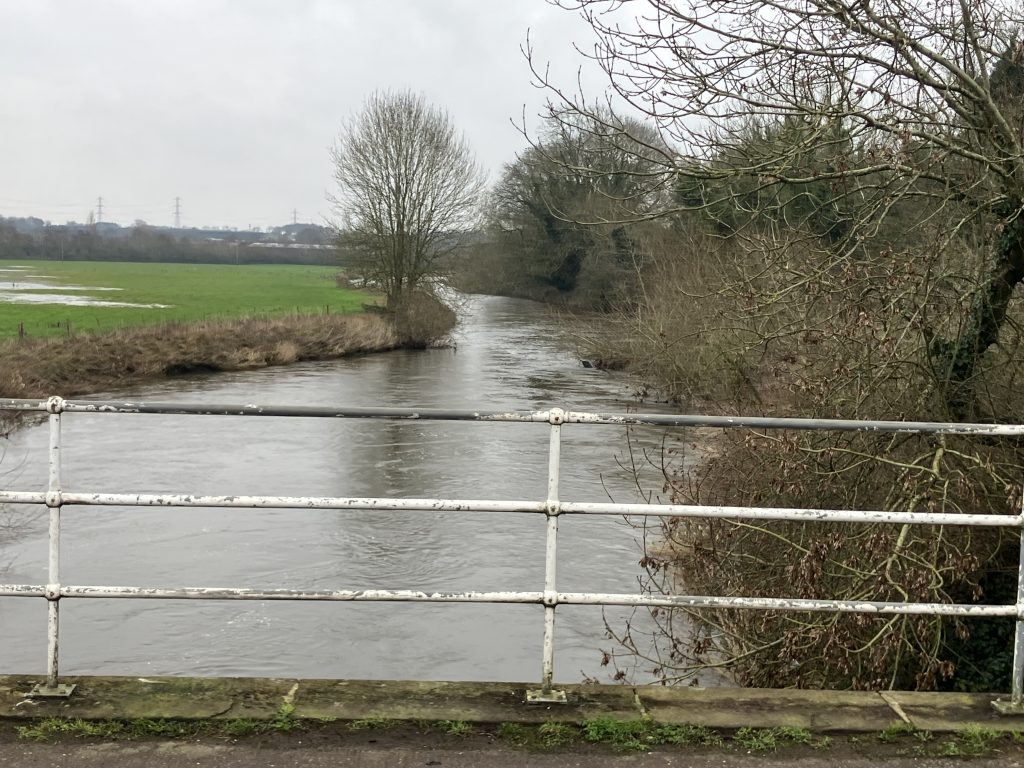
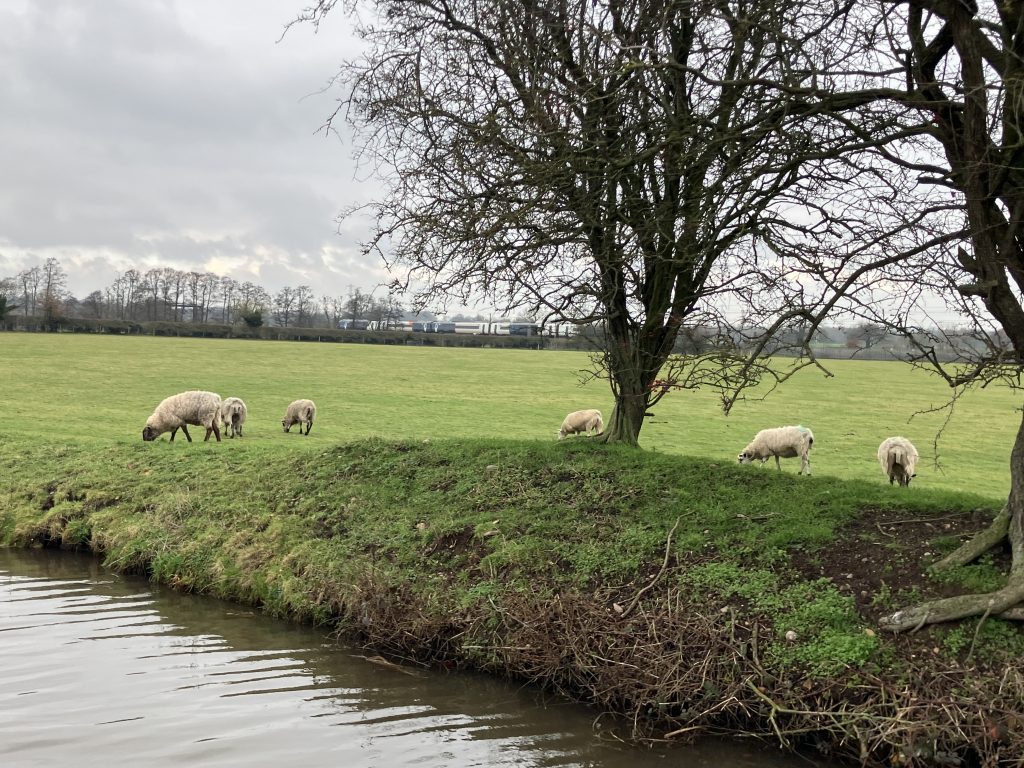
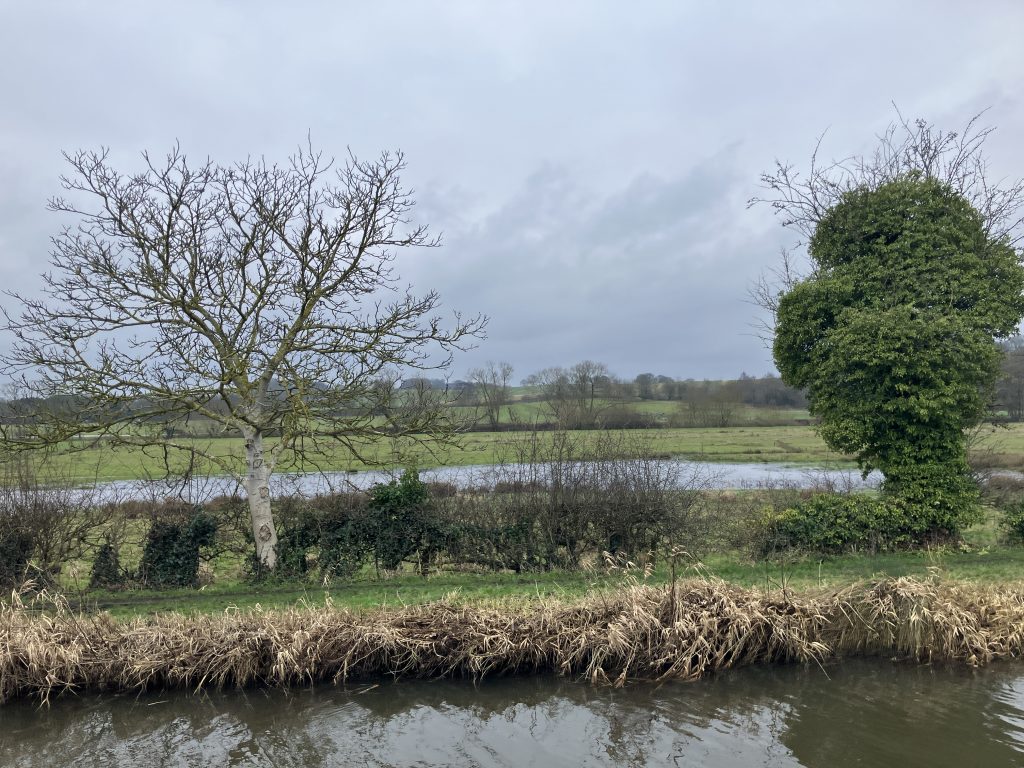
The route from Rugeley to Great Haywood goes through a beautiful area. The river Trent comes very close to the canal shortly after Rugeley and stays alongside the canal almost the whole way. The Trent is narrower than the canal here, but at the time it had a strong flow after all the rain (more on this later). Across the Trent valley there are the hills of Cannock Chase (also more on this later).
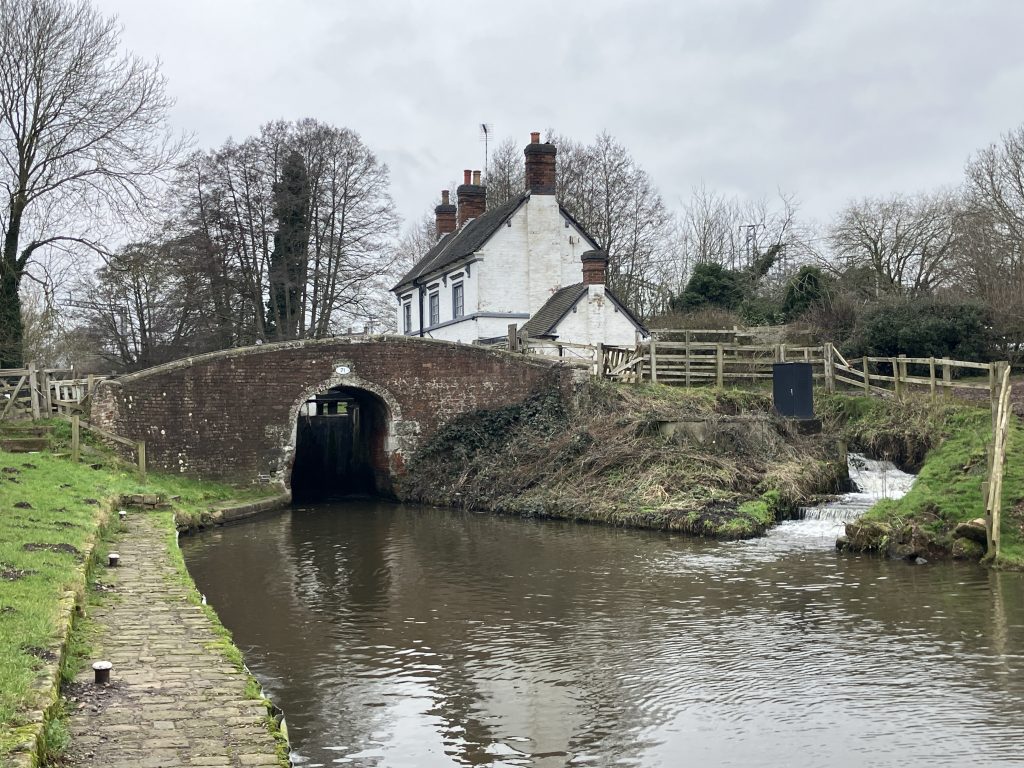
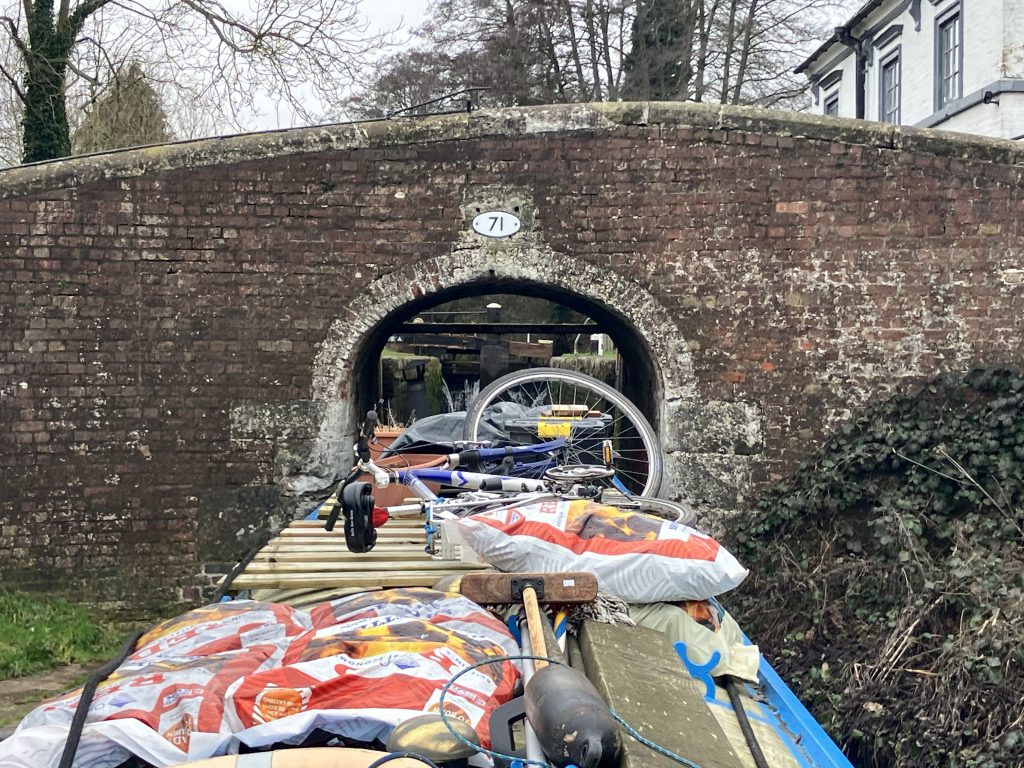
At Great Haywood junction the Staffs & Worcs canal branches off to the left under a pretty bridge.
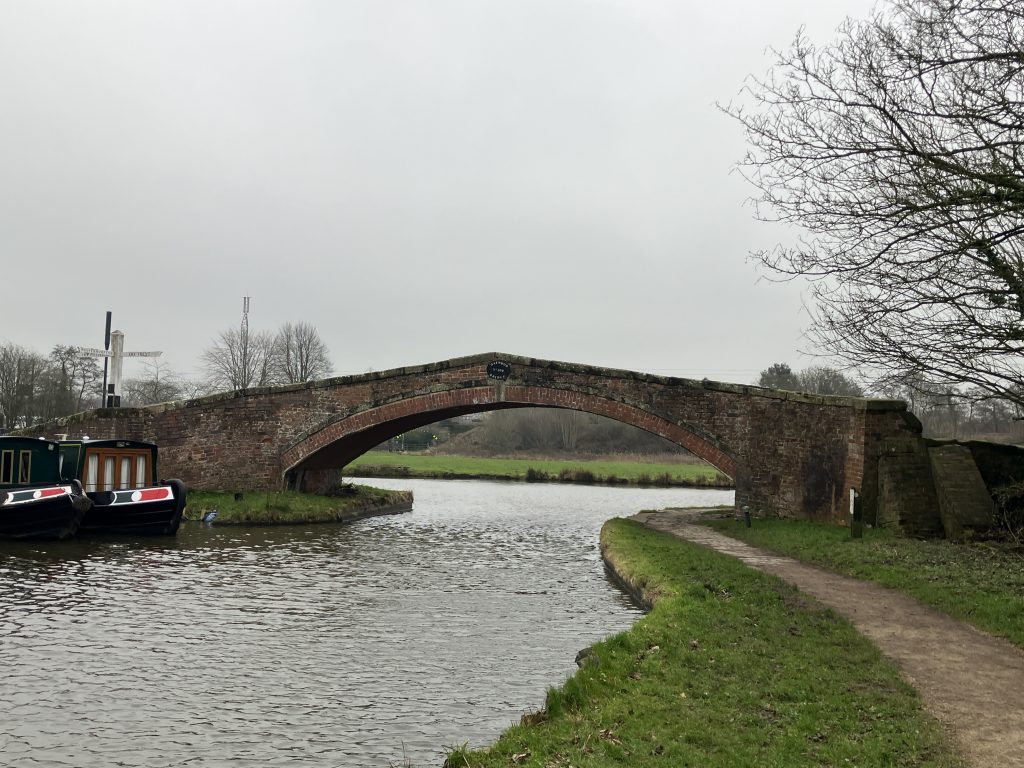
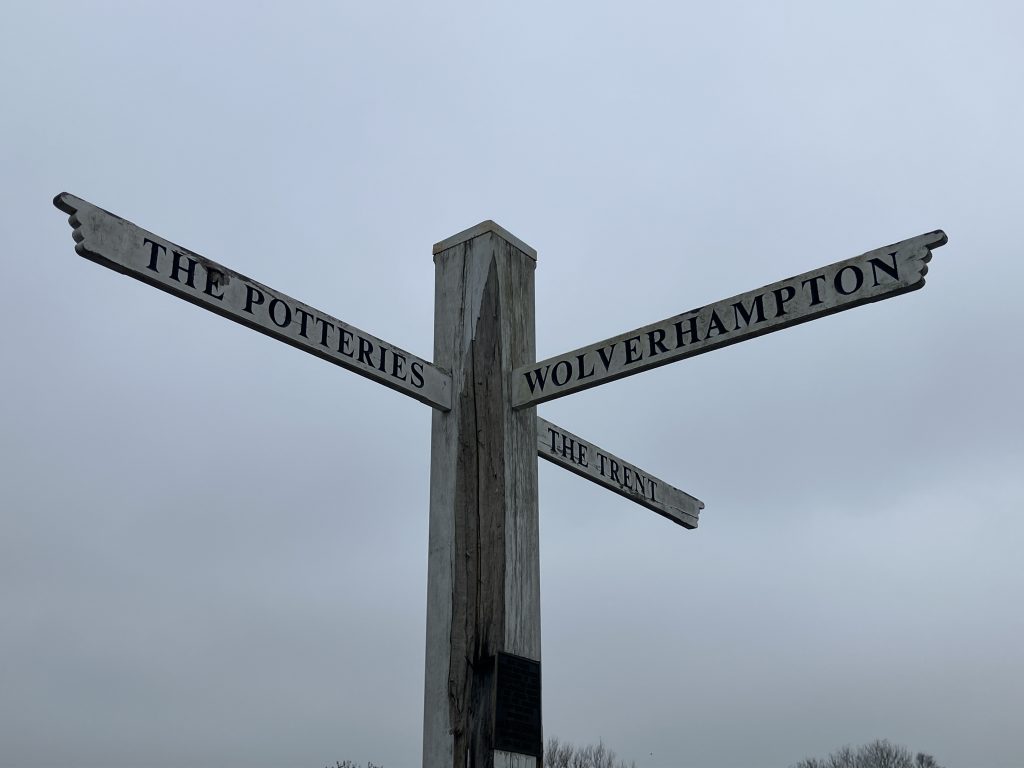
Just beyond the junction is a waterpoint, where I filled up my tank. At the junction the land suddenly opens out from tree cover to open field. It was a very windy day, but before this point I hadn’t really noticed it much. Suddenly I was hit by a massive gust, which almost pushed me into the boat moored on my left. The owners looked out of the window in alarm, but I managed to miss them by a mere 1-2 inches.
After filling up my water tank I contemplated how I would reverse back and turn around to get under the bridge. It involved a turn in exactly the area where the wind was gusting across the water. Too much wind is really not helpful for narrowboats. The situation was not helped by the hire boat company just by the bridge suddenly bringing out boat after boat to rearrange their moorings. I could picture myself being blown into at least one boat and/or the bridge.
The junction is another location popular with gongoozlers, so there was plenty of audience including the hireboat company crew watching me potentially screw up the turn. At moments like this I always hope that nobody notices the signs in my window advertising that I am an instructor!
But in the moment the stars aligned so perfectly. The wind pushed me in exactly the right direction during the turn and I glided effortlessly under the bridge. Big phew!
Tixall Wide
About half a mile on at Tixall Wide the canal broadens into a little lake, which is very popular with fishermen and boaters. This wide area was built to appease the local owner of Tixall Hall (long since gone) in exchange for allowing the canal to pass through his land. He demanded to look at a lake, not a canal! Quite an unusual bargain.
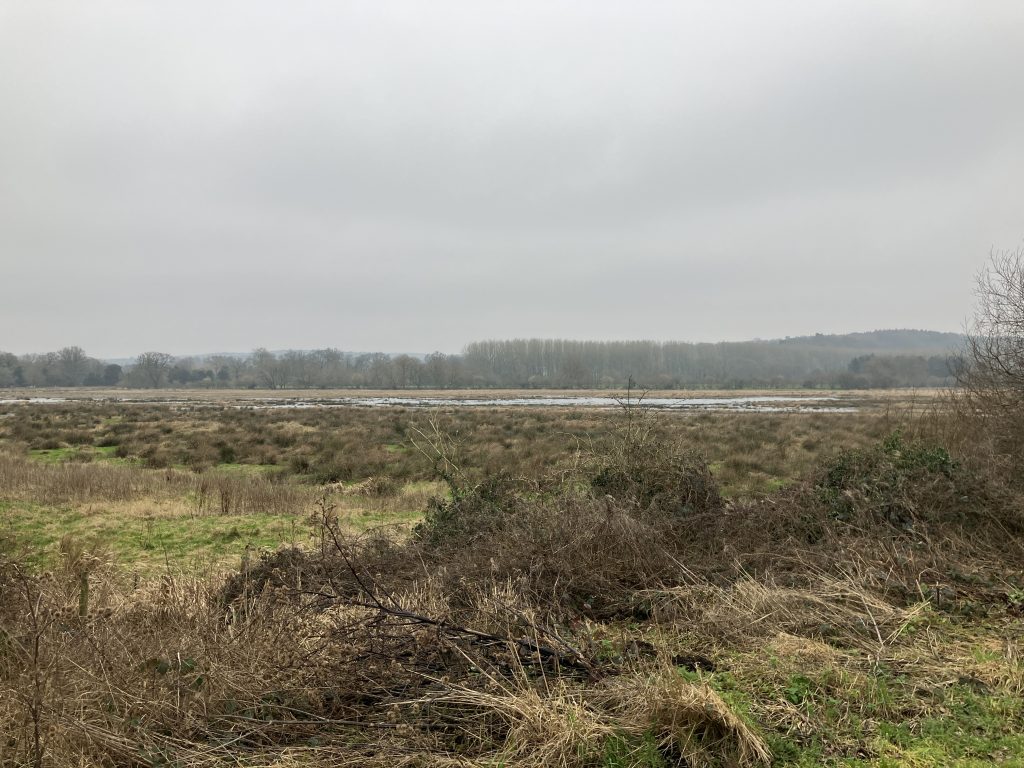
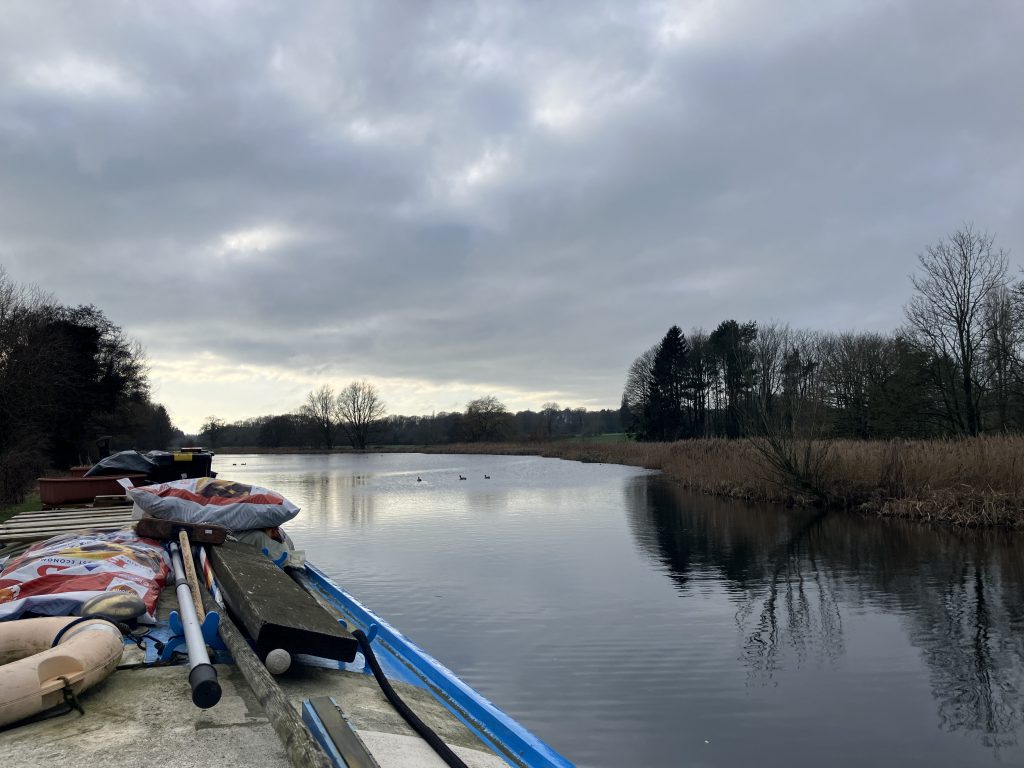
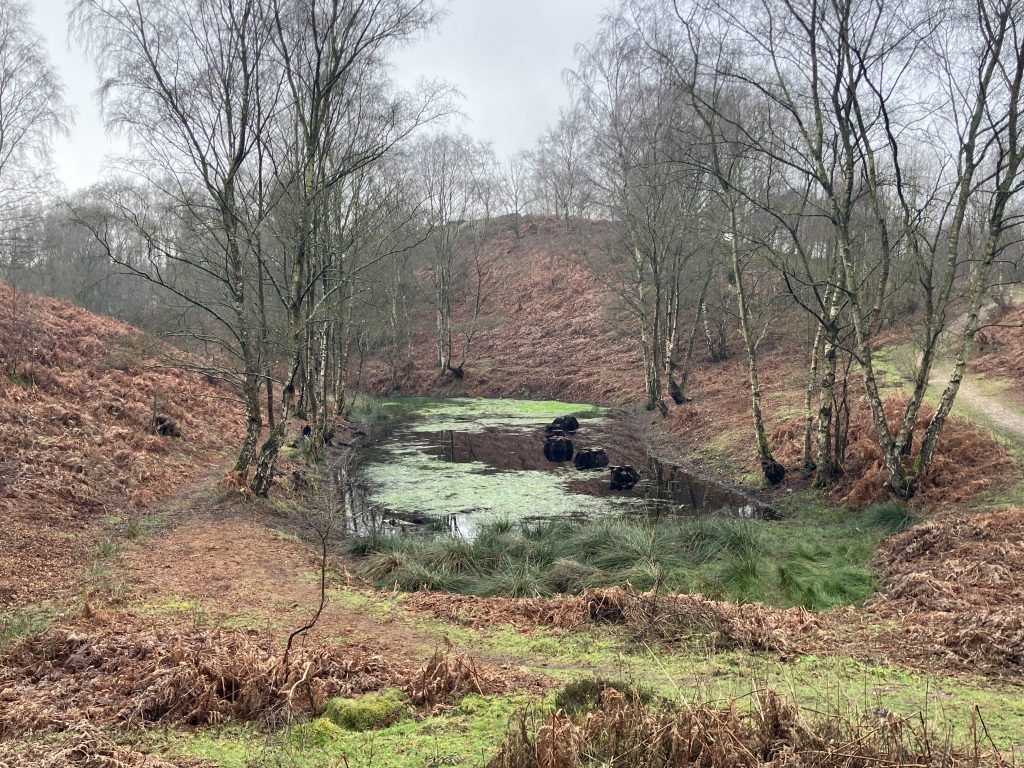
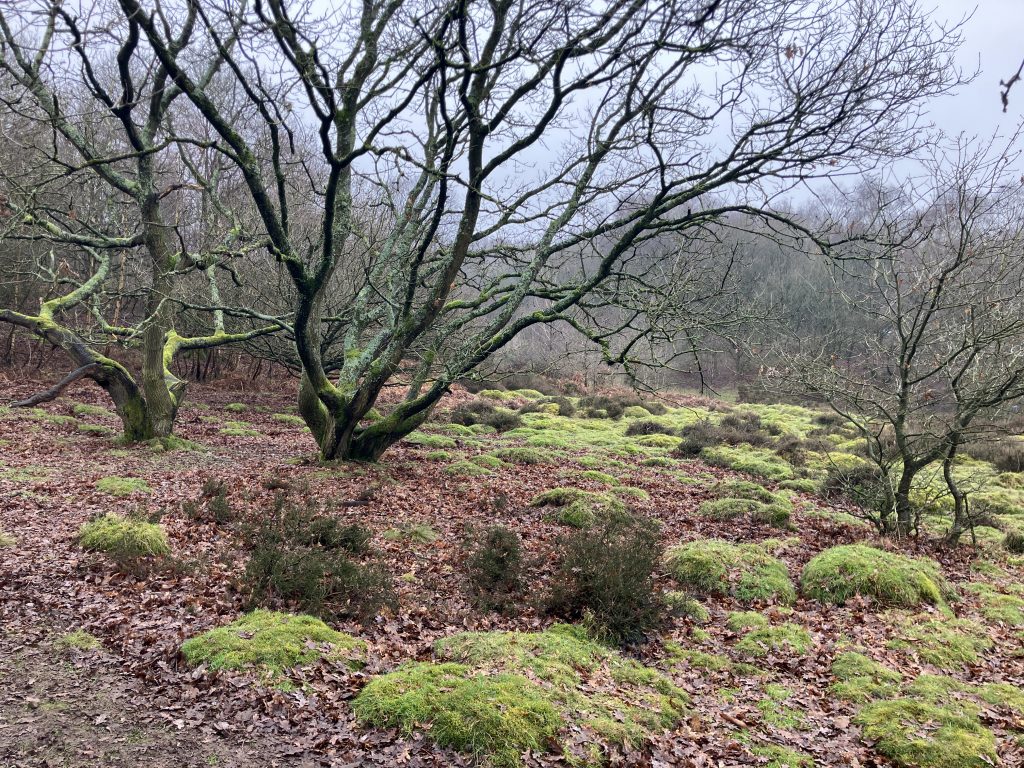
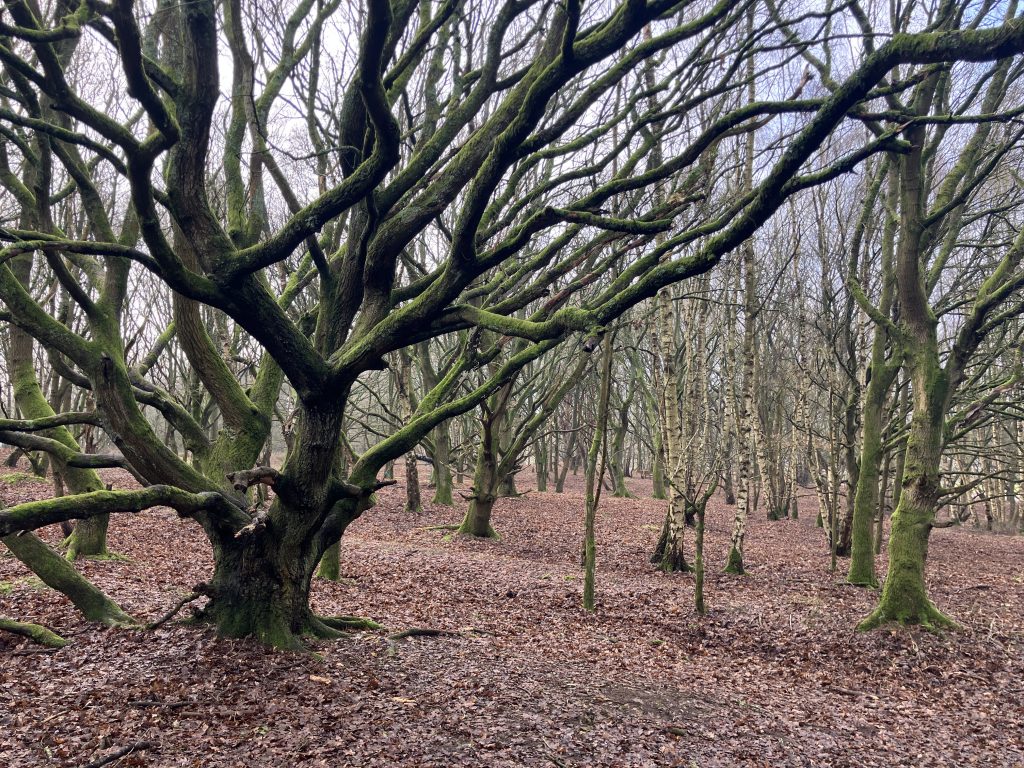
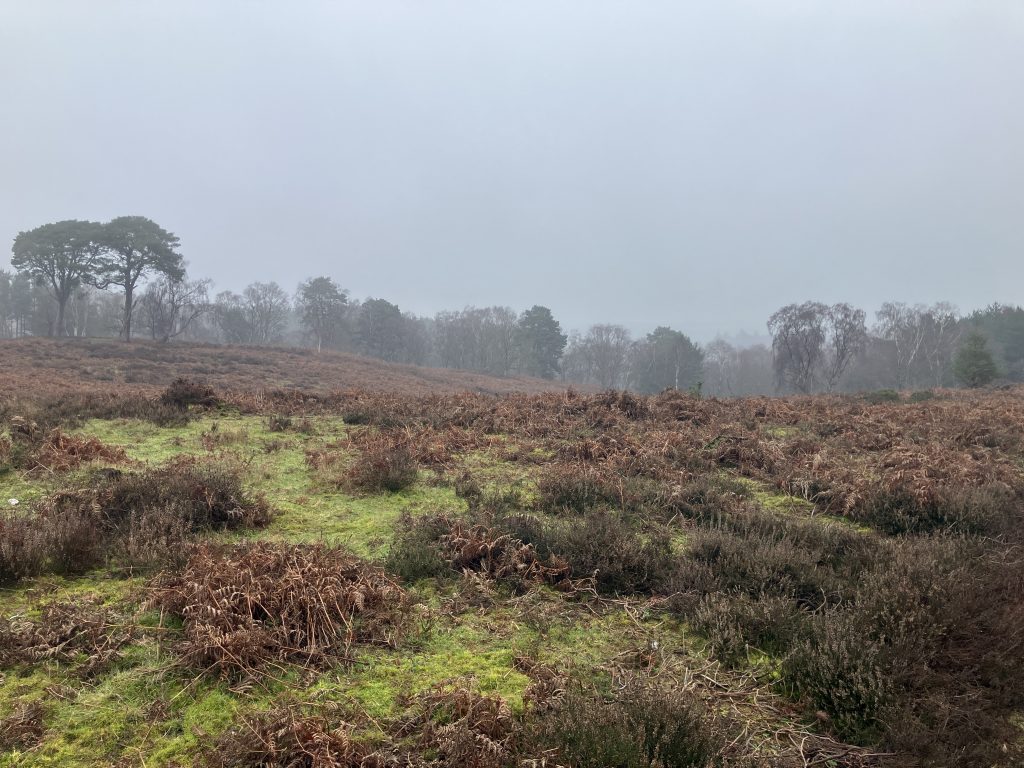
The day after my arrival at Tixall was grey, but dry, so I took the opportunity to explore the heath land on Cannock Chase AONB. I found an undulating area with sweeping views of heath, ferns (all died back at this time of year), and bilberries (sadly no berries in January) interspersed with tall trees. It is an ecosystem like I have not seen before in England. It must be beautiful, when the heather is in flower and the ferns green.
Some impressions of Cannock Chase:
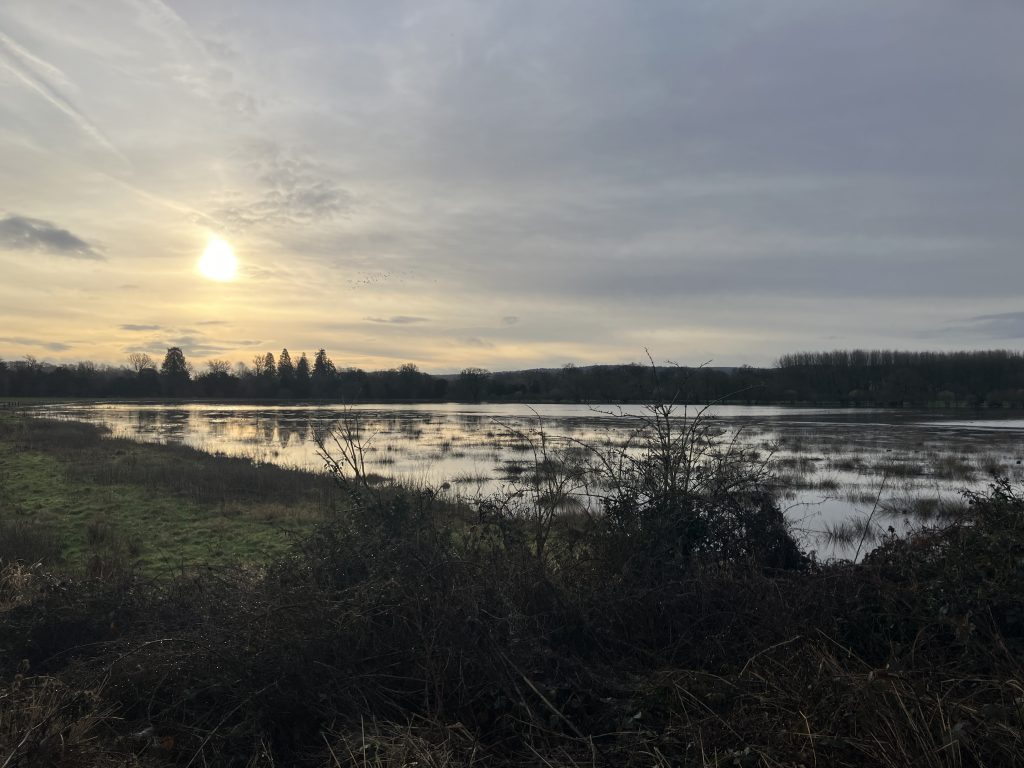
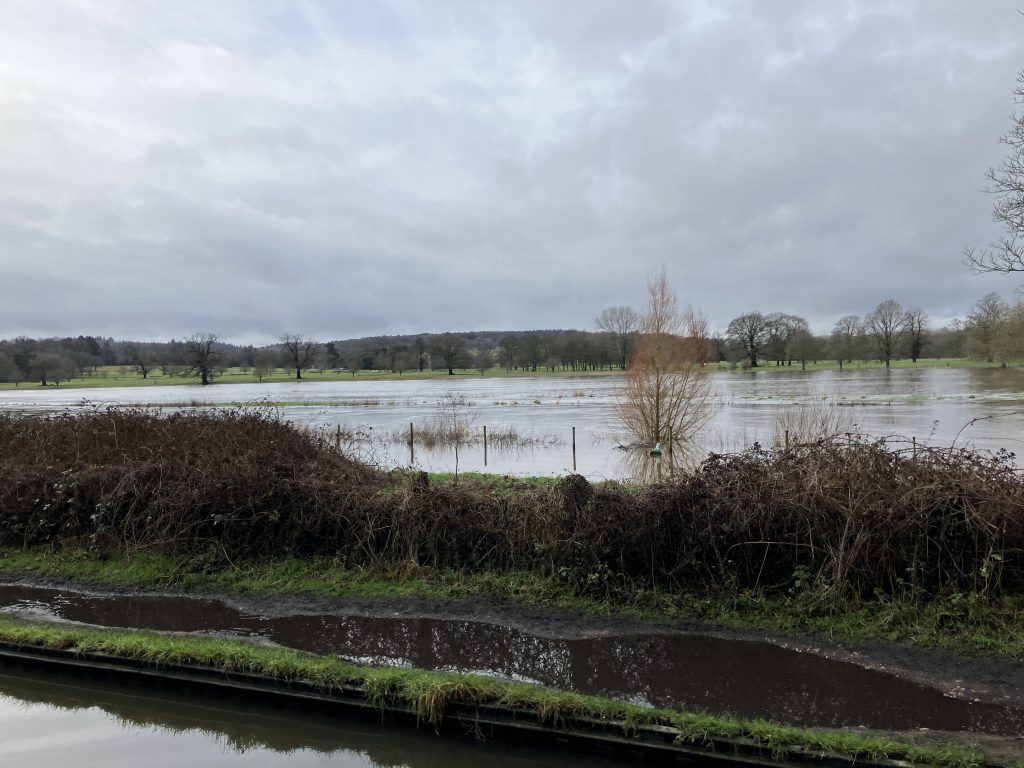
After that one dry day it was back to endless rain and battering winds across the open land. I watched the lake on the land behind the mooring grow and grow (see picture below). The only highlight was the nearby farm shop and cafe.
During a short break in the relentless rain I gave up and returned to Rugeley. On the way back the Trent was unrecognisable. What had been a river narrower than the canal was now endless lakes reaching across the whole valley to the hills. The river level was around the same as the canal. Only the canal bank prevented the river flooding the canal. I heard that that does in fact happen on rare occasions, but at this time it was still about 15cm away.
Rugeley to Barton
Back in Rugeley it rained and rained some more. I don’t really like cruising in the rain obviously, but at some point I would have to or I’d never make any progress towards the actual Trent crossing. Fortunately we got a break of one(!) day in the endless rain, and it was cold and sunny with no wind. A perfect day to cruise back almost to Fradley junction.
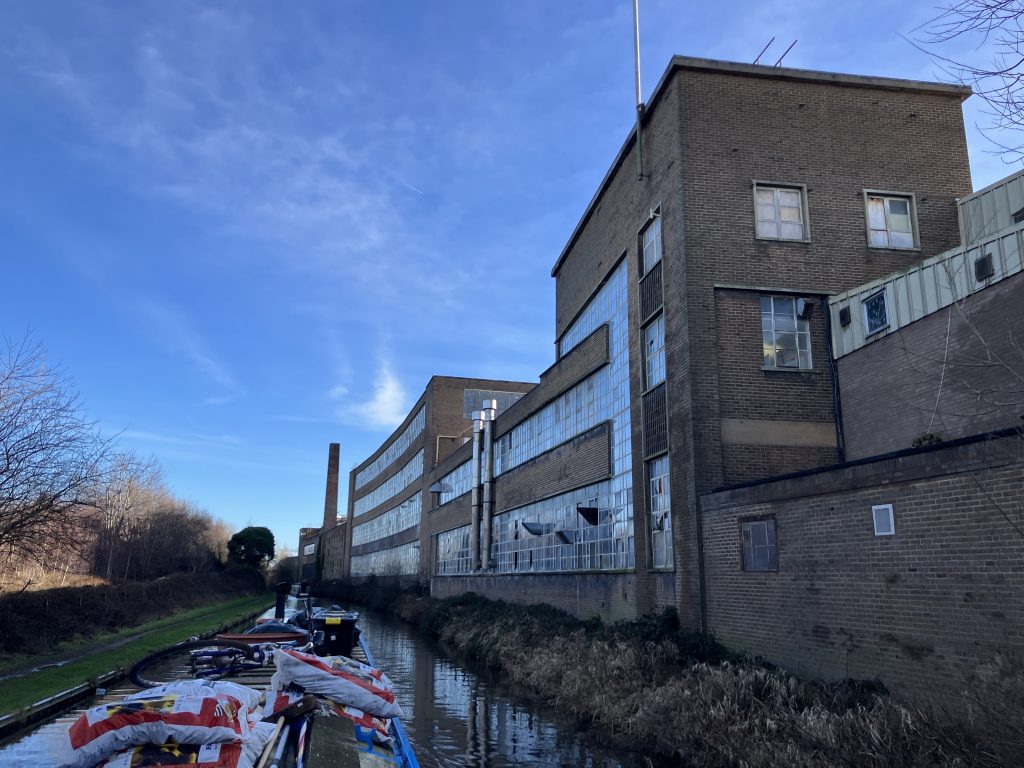
The rain came back of course the next day and I had to take another break. Finally the strange weather pattern that got us the endless rain for weeks broke and it turned into colder and brighter days with even a bit of sunshine and just the occasional shower.
My plan to moor near Fradley junction (a pub, a cafe and nice walks) was scuppered due to lack of space and I had to continue straight to Alrewas.
I had been watching the water situation at Alrewas for weeks already. Just beyond the village the canal joins the Trent for about a mile and unsurprisingly this section had been closed for about two weeks already due to high water level and strong flow.
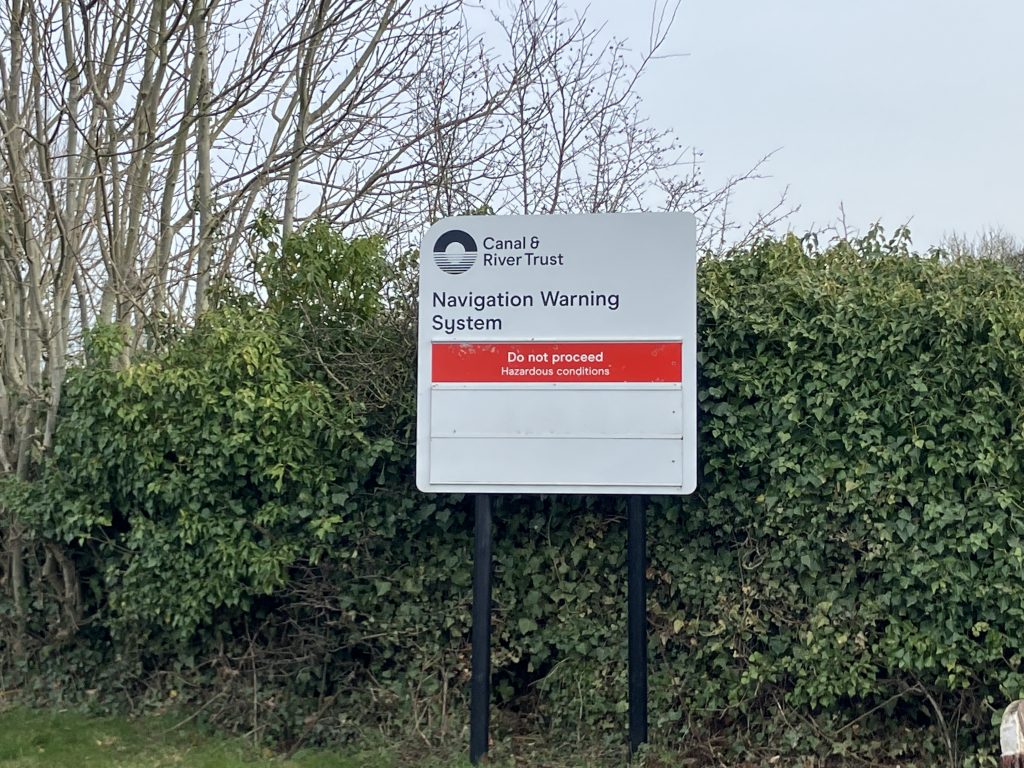
After the weather had gotten a bit less soggy, I was hopeful that the section would reopen soon. And sure enough a day later, the signs went from red to amber (“proceed with caution!”) and the lock was un-locked. The flow over the massive weir was still pretty strong though, so I waited another day for the water to calm down.
The river didn’t come down much more during the extra day, but because it had rained quite a lot again, I was worried that the section might close again soon. So I went for it. My biggest nightmare was debris in the flood water blocking my propeller and the boat being swept onto the weir.
Fortunately when I arrived at the entrance to the river section a boat was just coming up the lock and the skipper reassured me that the conditions were OK. I was happy to be the second and not the first boat to go through since the reopening!
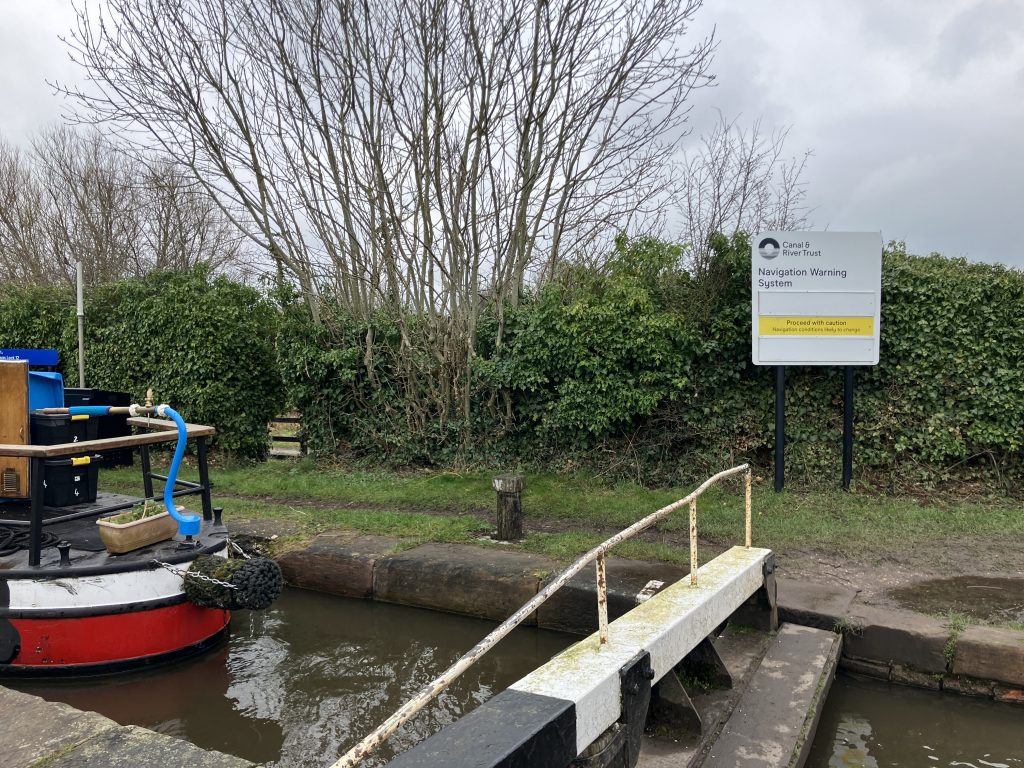
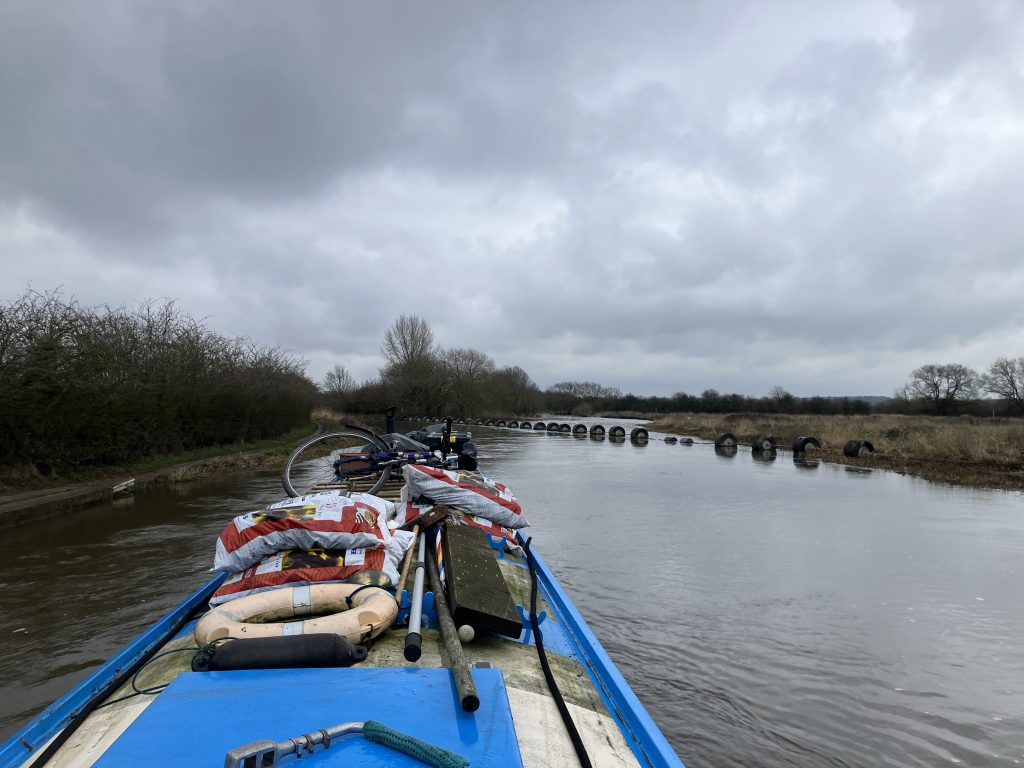
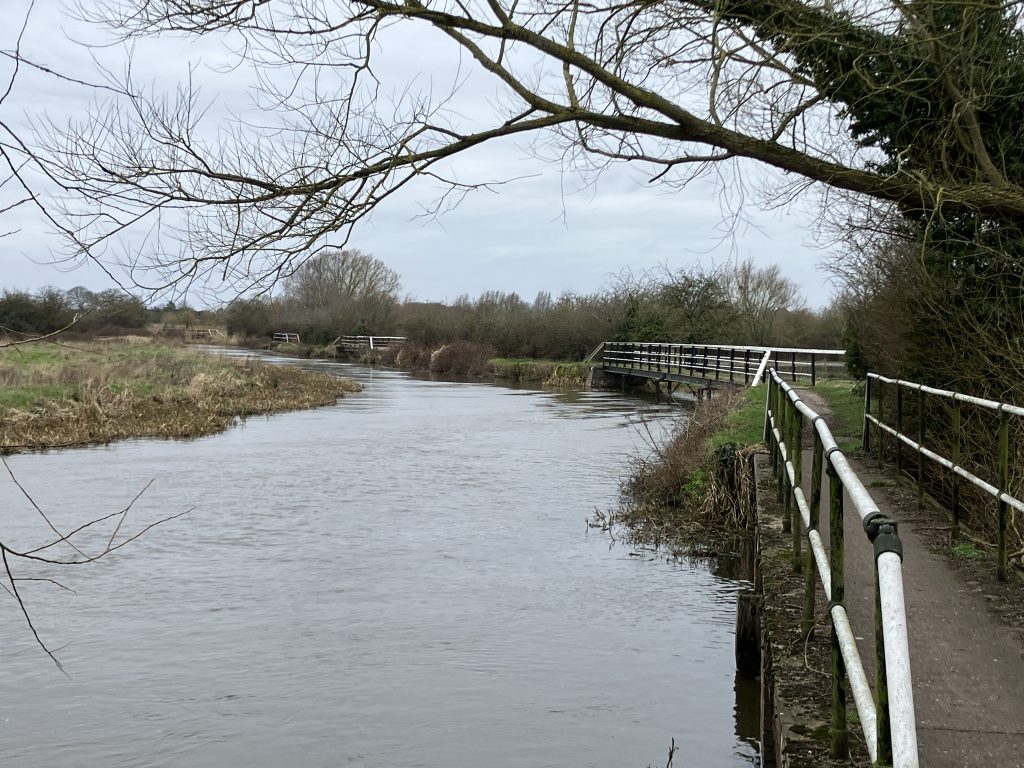
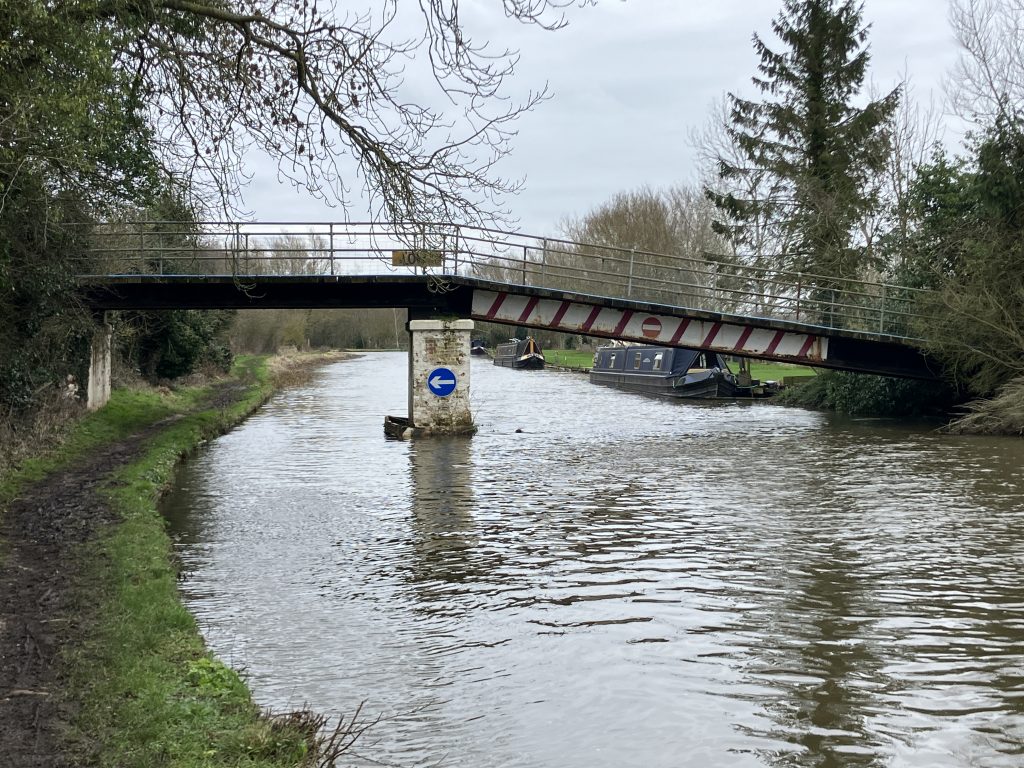
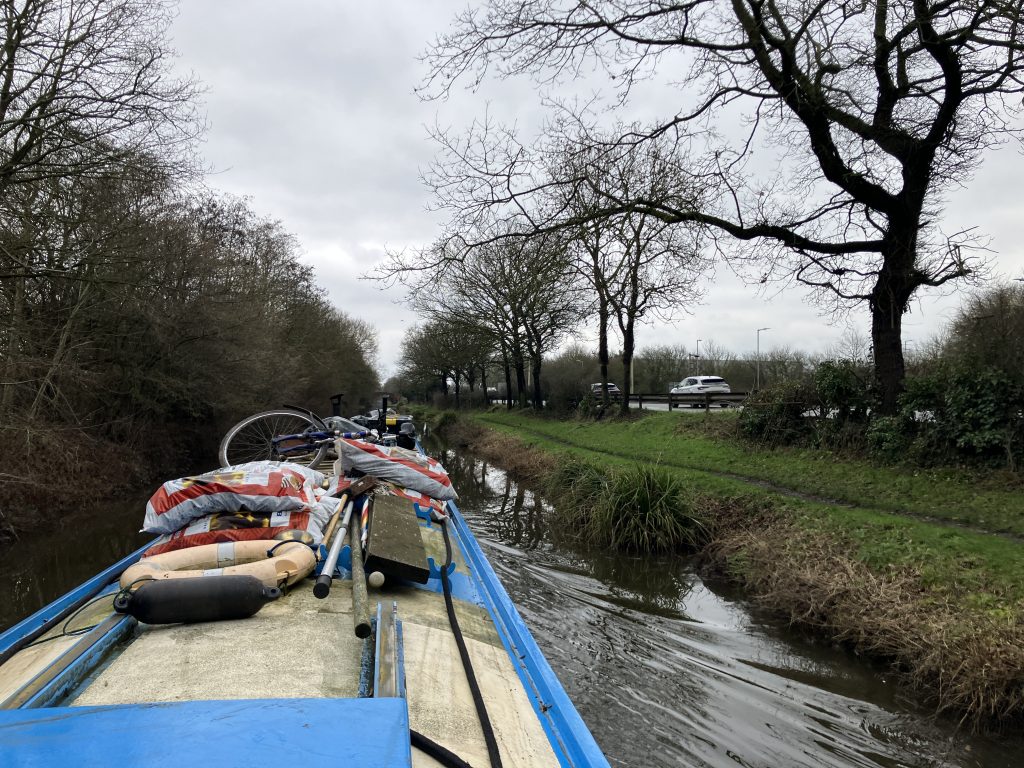
Everything went perfectly fine and I traversed the river section without any issues. After that the canal runs directly next to the A38 for a few miles. The thundering traffic makes mooring there very unappealing. I took the first place where the road moves away a little bit at Barton-under-Needwood.
I am now on the final stretch down to the big river. The next encounter with the Trent will be at Sawley near Long Eaton where the Trent journey will begin in earnest.
Hi. From no water in the summer to an excess of it now!!! Love following your voyage xx
I know. Bet in the summer we will have a drought again. This year I should be a bit safer from shortages as a lot of the navigations in Yorkshire are rivers.
This is great, lovely to read about my home stretch. I used to be terrified of the river section, but I’m braver now.
I have been told that the massive oaks up on Cannock Chase were too small for Henry VIII to cut down to build his navy.